FINDOS Symposium 2026 brought experts to Turku – Poster Prize awarded to Ramaa Balkaran
The FINDOS Symposium 2026 was held on 28–29 May at the Arje Scheinin lecture hall in Dentalia, Turku.
This year’s theme, Oral Health-Related Quality of Life (OHRQoL) – Lessons from Clinical and Population Data, brought together researchers and clinicians to explore oral health-related quality of life from multiple perspectives.
The two-day programme featured both international and Finnish experts. The keynote speaker, Professor Finbarr Allen (University of Cork, Ireland), addressed the measurement of OHRQoL and approaches to improving it, particularly in prosthodontic care and among elderly patients. Other sessions covered topics such as orthodontic patients, TMD, population-level trends, oral appearance, cultural contexts, and dental anxiety. The symposium was chaired by Professor Satu Lahti and Dr. Katri Palo.
Sponsors Cloetta, Plandent, and LM-Dental were also present at the symposium, showcasing their products to participants.
A poster exhibition was held alongside the programme, where FINDOS doctoral researchers presented their work in a concise three-slide digital format. One of the highlights of the symposium was the FINDOS Poster Prize, awarded to Ramaa Lalita Balkaran.
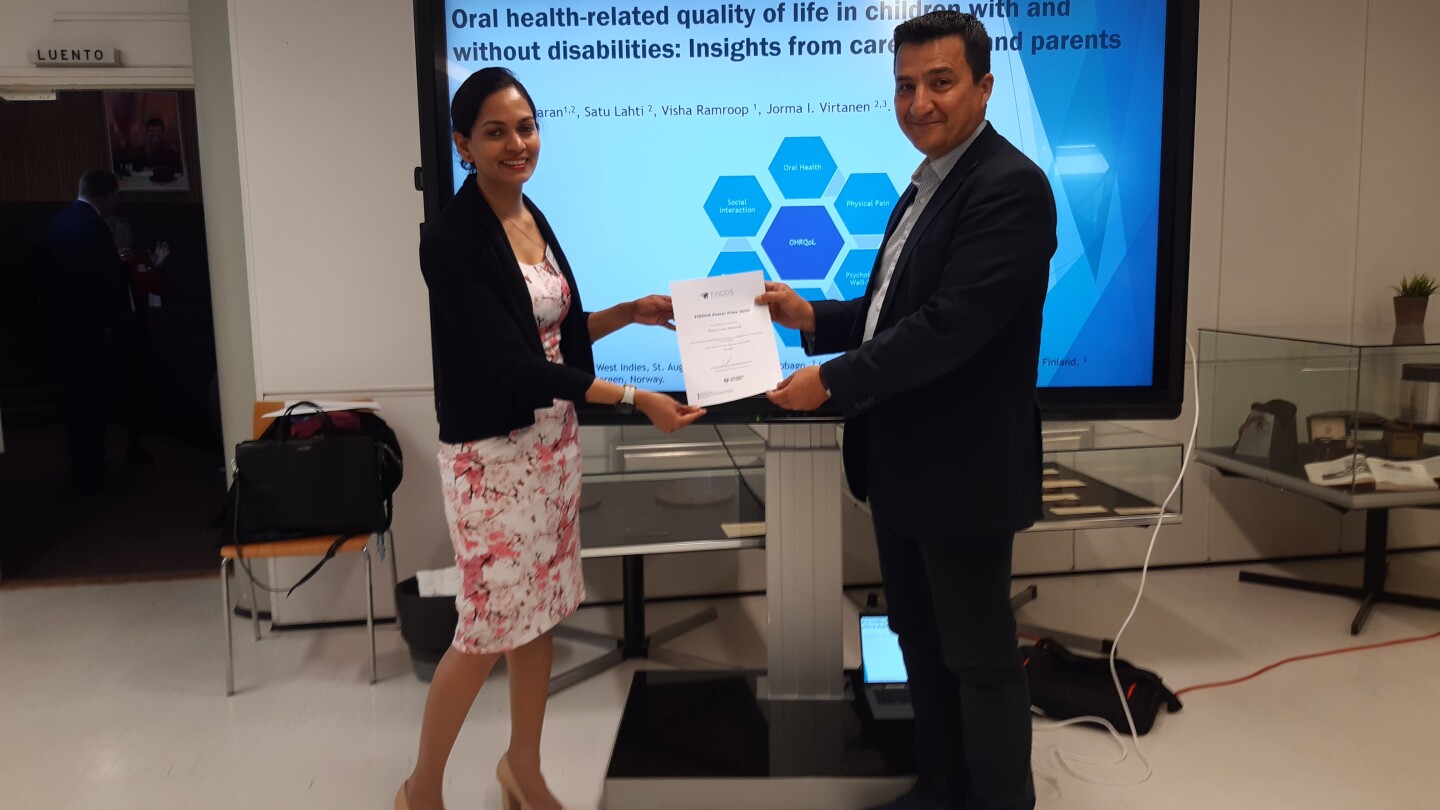
“I am deeply grateful to my co-authors, whose expertise, dedication, and support made this work possible. Winning this award is an immense honour, which also reflects the collective effort of the entire team,” says Ramaa Balkaran, the winner of the FINDOS Poster Prize 2026.
The winner stressed the broader implications of the findings for equity in oral health care:
“The views of the parents, and caregivers on oral-health-related quality of life in children with and without disabilities contribute to a better understanding of how oral health affects their daily lives and overall well-being. This is particularly important since people with disabilities often face additional barriers to accessing oral health care. I hope that our findings help raise awareness of these challenges and support more inclusive approaches to research, policy, and clinical practice.”