Adel
Kim
Contact
Links
Biography
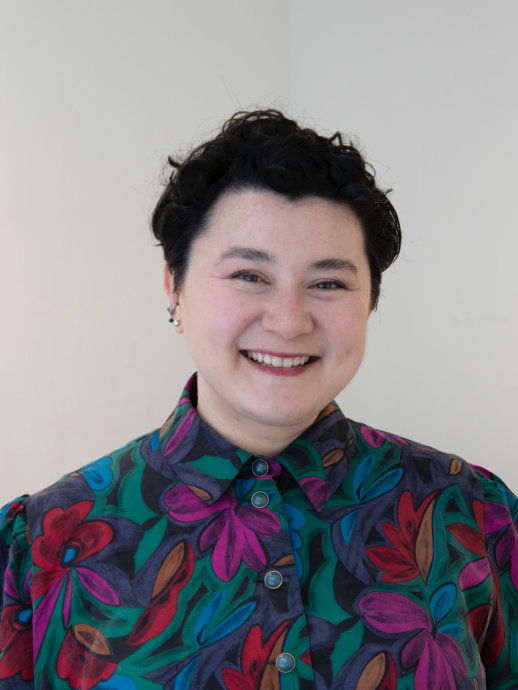
I am a doctoral researcher at the University of Turku, working on the dissertation “Emotional landscape of contemporary art institutions and its role in the decision-making”. I received an MA in Art Studies from Hongik University (Seoul, 2018) and an MA in Cultural Management from the University of Manchester and Moscow School of Social and Economic Sciences (Moscow, 2020).
Previously, I worked as a curator, researcher, and manager in the field of contemporary art. I was a co-founder of SWAMP: Art Material Swap and Waste Management Point in Helsinki (2024-2025) and a researcher in the Reside / Sustain project, initiated by the Connecting Points programme of HIAP (2021-2024). I ran and assisted various residency programs in Russia and South Korea between 2014 and 2022 and wrote texts on art residencies, young artists, and institutional relationships.
Research
“How artistic institutions feel: The emotional landscape of contemporary art organizations and its role in decision-making” is an interdisciplinary research project that investigates how emotions shape contemporary art institutions and their decision-making processes. While emotions have been widely studied in sociology and organizational theory, they remain underexplored within art studies, art management, and cultural policy. Institutions often appear as neutral and rational actors, yet their everyday operations are charged with complex emotional dynamics that affect careers, agendas, and public life.
Drawing on over a decade of professional experience in the art field, I argue that institutions embody emotional landscapes – dynamic environments where emotions are produced, regulated, and negotiated. The study focuses on institutions in Finland engaged in exhibiting, producing, collecting, and supporting contemporary visual art, including museums, galleries, foundations, and artist-run spaces. It examines emotional landscapes on two levels: externally, as perceived by publics and art professionals in the urban space, and internally, as lived by employees in their professional communities. The internal level is analyzed across social (emotional ties and roles), material (spaces such as galleries, offices, and collections), and symbolic (curatorial and strategic meanings) dimensions.