Master's Degree Programme in Immunology
Have you ever wondered why some people recover from an infection in days while others end up in intensive care? Why the same immune system that protects us can also turn against our own body and cause devastating autoimmune disease or ignore cancer? Or how a single breakthrough in immunology made it possible to develop life-saving COVID-19 vaccines in under a year?
Become an expert in the immune system and its role in health and disease
The answers lie in the immune system – the most complex, adaptive, and consequential defence system in human biology. It protects us and remembers. Yet when it fails or overreacts, the consequences shape some of the most pressing medical challenges of our time: from cancer and chronic inflammation to allergies, neurodegeneration, and emerging infections.
But immunology is on the rise. Cancer immunotherapies are revolutionising oncology. Biologic drugs are transforming how we treat autoimmune and inflammatory diseases. mRNA vaccine technology has opened entirely new doors for prevention and therapy. Immunodiagnostics are becoming faster, more precise, and more personal. The demand for experts who understand both the fundamental science and its real-world applications has never been greater – and it is still growing.
What You Will Learn and Do
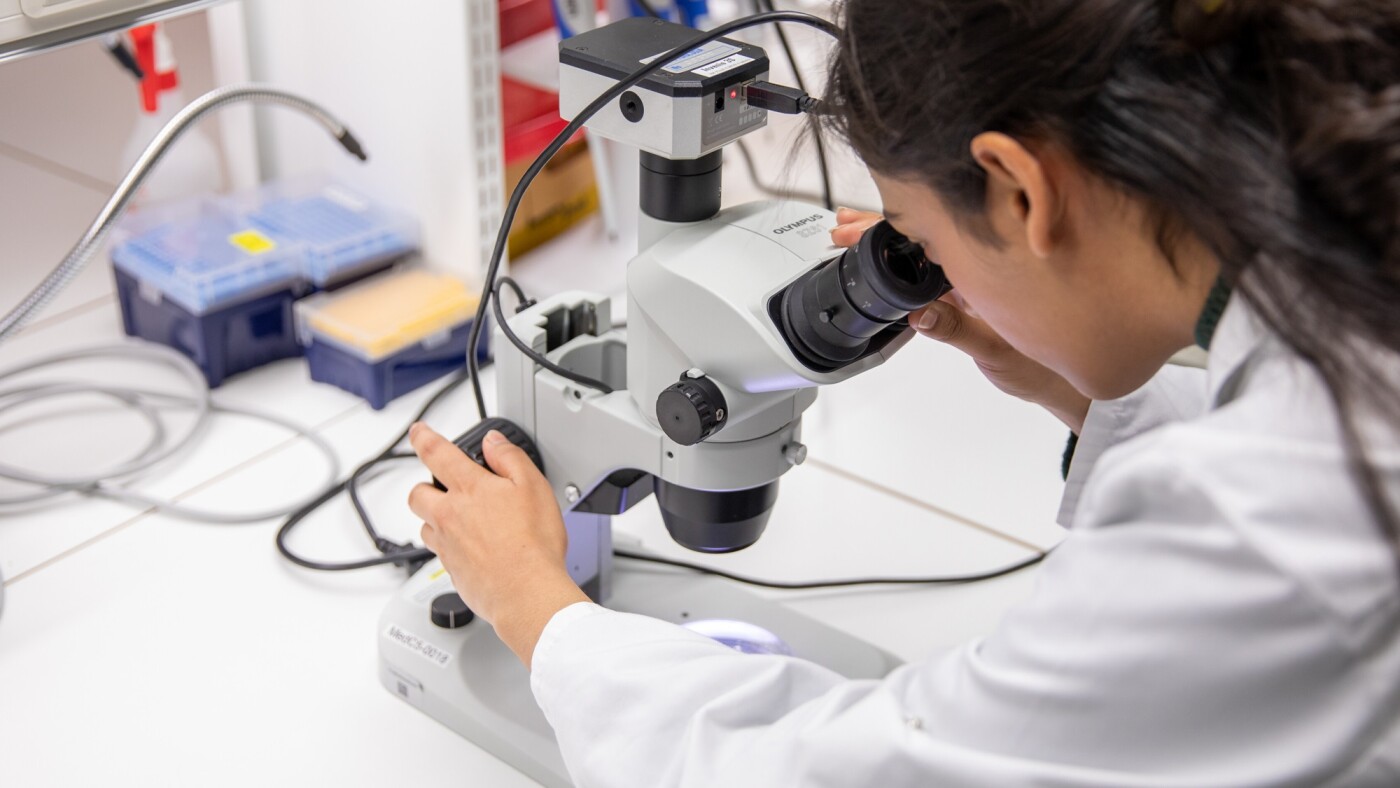
In this programme, you will gain deep knowledge in how the human immune system works – and how it fails. You will explore immune mechanisms at the cellular, molecular, and translational levels, always with a clear connection to human health and disease. Beside theory, you will practically work with drive cutting-edge immunology research: flow cytometry, immunohistochemistry, advanced bioimaging, omics technologies, bioinformatics, functional assays, and computational data analysis.
You will learn to read the scientific literature critically, design experiments, interpret complex data, and communicate your findings – skills that prepare you for a career in biomedical research, drug development, or the life science industry.
Academic excellence and research environment
Many universities teach immunology. However, only very few can offer what Turku offers.
At the University of Turku, you will study at the heart of one of Europe's most integrated and internationally recognised immunology environments. The programme is embedded in a living research ecosystem where fundamental science, clinical medicine, advanced technology, and industry converge on one campus.
The InFLAMES Flagship – one of Finland's prestigious national flagship programmes – focuses on immunology, inflammation, and personalised medicine and brings together over 300 researchers working at the frontier of the field.
The Turku Immunology Centre provides a dedicated hub for immunological research and training.
Turku Bioscience gives you access to state-of-the-art core facilities and technologies.
The Turku PET Centre – a unique resource even by international standards – enables in vivo imaging of immune responses in the human body, a capability that very few immunology programmes in the world can offer.
And with Turku University Hospital next door, clinical relevance is never abstract.
Furthermore, the programme is designed in close connection with the life science ecosystem in Turku and Southwest Finland. The region has a strong concentration of pharmaceutical, diagnostics, biotechnology and health-sector companies. Students will benefit from seminars, guest lectures, networking events, business-sector events and career-oriented studies. Industry collaboration is integrated into the programme through teaching, events, internships and thesis opportunities where suitable. Internships are not mandatory, but they are strongly encouraged and supported. The programme helps students identify relevant academic, clinical and industry-related opportunities.
Career prospects: Where This Takes You?
The world needs immunologists: in academia, in hospitals, in biotech startups, in pharmaceutical companies, in diagnostic development, and in regulatory science. Our programme prepares you for all of these paths. Possible career paths include:
- Doctoral researcher
- Research scientist
- Laboratory specialist
- R&D specialist
- Diagnostics specialist
- Drug development specialist
- Clinical or translational research coordinator
- Scientific project specialist
- Innovation or business development specialist in the life science sector
Many choose to continue to doctoral studies, and the programme provides a direct and natural pathway into the University of Turku Graduate School (UTUGS) and the internationally competitive research groups within our immunology community.
Entry requirements
The detailed admission criteria for the Master's Degree Programme in Immunology are available in the Studyinfo portal. Please see the detailed admission criteria in Studyinfo: Admissions criteria - Master's Degree Programme in Immunology.
The academic backgrounds of admitted students vary, and previous studies do not always fully match the expected level of the programme. To support a smooth transition into Master's level studies, we offer students the opportunity to strengthen and broaden their subject-specific knowledge through supplementary Bachelor-level courses when needed. These studies are designed to build a strong foundation for later Master's studies. These supplementary studies can be included in the degree.
Integration and student support
Students are supported through academic guidance, personal study planning, orientation activities, Finnish language studies and university-level student services.
The programme supports integration into Finnish academic life and society through language studies, career events, networking opportunities and collaboration with local life science actors. Students will also be informed about relevant job fairs, career workshops, International House Turku activities and other opportunities that support professional development in Finland.
Alumni and programme development
Graduates will be encouraged to join the Faculty of Medicine’s alumni network and remain active in the development of the programme. Alumni may contribute through mentoring, career events, feedback, internship opportunities and industry or research collaborations.
Feedback from students, alumni, teachers and working-life partners will be used to develop the programme continuously. The programme follows the Faculty of Medicine’s quality assurance and feedback system, including course feedback, programme-level feedback, alumni follow-up and annual review by the programme steering group.