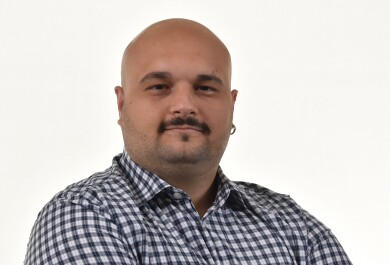
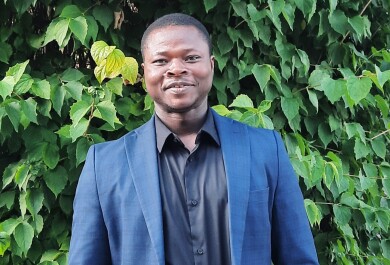
Dissertation defence (Immunology): MSc Luqman Awoniyi
MSc Luqman Awoniyi defends the dissertation in Immunology titled “Unveiling early proteomic events in B cell receptor activation” at the University of Turku on 7 August 2026 at 12.00 (University of Turku, Medisiina D, Säätiö lecture hall, Kiinamyllynkatu 10, Turku).
Opponent: Professor Tuula Nyman (University of Oslo, Norway)
Custos: Docent Pieta Mattila (University of Turku)
Summary of the Doctoral Dissertation:
Every winter, many of us catch a cold or the flu. When germs get past the body’s outer defences, the immune system takes over. One important part of this defence is a type of white blood cell called the B cell. B cells produce antibodies, which recognise and neutralise germs. They also help form immune memory, which is why the body can respond faster after an infection or vaccination.
To do this work, B cells use a sensor on their surface called the B cell receptor. When this sensor recognises something harmful, it switches the B cell on and starts a rapid chain of events inside the cell. This process must be carefully controlled. If it goes wrong, it can contribute to weakened immunity, autoimmune diseases, or certain cancers. Although the B cell receptor has been studied for many years, the very first moments after it is switched on are still not fully understood. My dissertation set out to study what happens during these first seconds and minutes.
The challenge is that these early events are very fast and take place in a tiny, crowded area on the cell surface. To study them, I used and developed three complementary approaches. The first used a method called APEX2, which works like a molecular camera with a timer. It marks proteins near the cell membrane region where the B cell receptor becomes active. By taking these snapshots at different times, I could see which proteins gathered near this active area and which moved away as the response developed. This revealed many proteins involved in early B cell activation and pointed to SUMO, a small chemical label used by cells, as a possible new regulator of this process.
The second approach was a computer program called AutoCoEv, which I helped develop. Experiments like APEX2 can produce long lists of proteins, and testing every protein in the laboratory is slow and expensive. AutoCoEv compares proteins across species and looks for pairs that have changed together over evolutionary time. This can suggest that the proteins may work together. The program helps researchers choose promising candidates for further testing.
The third approach was a new laboratory method for studying the contact point where a B cell meets another cell carrying a target. This contact area is called the immunological synapse. We used tiny magnetic beads to imitate the surface of another cell, allowing the contact point to be isolated and the proteins gathered there to be identified. This method revealed known and less understood proteins involved in early B cell activation.
Why does this matter beyond the laboratory? B cells are central to how we recover from many infections, and they are one major reason vaccines work. Understanding how B cells are switched on helps build the foundation for better vaccines and for treatments of diseases where the immune system is too weak, too aggressive, or has become cancerous. This dissertation does not directly produce a new medicine. Instead, it provides tools and knowledge that help explain how our immune defence is organised at the molecular level. That basic understanding is an important starting point for future medical advances.