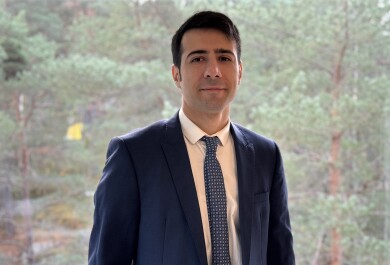
Dissertation defence (Industrial Engineering and Management): M.Sc. Mohammad Reza Akhtari
M.Sc. Mohammad Reza Akhtari defends the dissertation in Industrial Engineering and Management titled “Techno-Economic and environmental evaluation of off-grid hybrid energy systems” at the University of Turku on 20 November 2026 at 12.00 (University of Turku, Agora, Auditorium XXI, Vesilinnantie 3, Turku).
Opponent: Professor Cataldo De Blasio (Åbo Akademi University)
Custos: Professor Oskar Karlström (University of Turku)
Summary of the Doctoral Dissertation:
Most of us never think about where our electricity comes from. We flip a switch, and the lights come on. But for remote communities and industrial sites without a reliable connection to the electricity grid, getting affordable and reliable energy can be a real challenge.
My doctoral research explores how local energy systems can supply electricity and heat by combining renewable energy sources, including solar panels and small-scale wind turbines, with battery storage and backup generators running on biodiesel. I studied not only how much these systems cost, but also how they affect the environment.
There is no single energy system that works best everywhere. The right combination depends on the local weather, the seasons and how much energy people need. This is especially important in northern countries like Finland, where there is far less sunshine in winter than in summer. Wind power can complement solar energy and help provide electricity when sunshine is scarce. My research shows that combining these energy sources can significantly reduce costs in the systems studied.
In the Nordic locations I studied, the best-performing option combined solar panels, wind turbines, battery storage and a backup generator running on biodiesel. Among the configurations I compared, this combination had the lowest costs and life-cycle carbon emissions. Backup generators also remain important for reliability. When there is little sunshine or wind, and the batteries run low, a generator can help maintain the electricity supply.
I also looked at ways to make better use of renewable energy. Sometimes solar panels and wind turbines produce more electricity than is needed right away. Instead of letting this surplus go unused, it can be used for heating or to produce hydrogen, which can store energy for later use.
In another part of my research, I studied pipes buried underground. Because the ground maintains a relatively stable temperature, air passing through these pipes can be warmed in winter and cooled in summer. This can help reduce the energy needed to heat and cool buildings.
Another important finding is that renewable energy is not free of environmental impacts. Manufacturing solar panels, wind turbines and batteries requires raw materials and energy, while burning fuel in a generator also has environmental consequences. By considering both costs and environmental effects of an energy system, my research provides a more complete basis for comparing different energy options.
The findings can help engineers, planners and decision-makers design energy systems that suit the places they serve, rather than using the same solution everywhere. They are relevant to remote communities and industrial sites seeking to rely less on fossil fuels, as well as efforts to expand renewable energy and hydrogen production. Ultimately, this research supports better-informed decisions about how to make energy cleaner, more affordable and more reliable, especially in northern regions where challenging weather makes the transition to renewable energy more difficult.