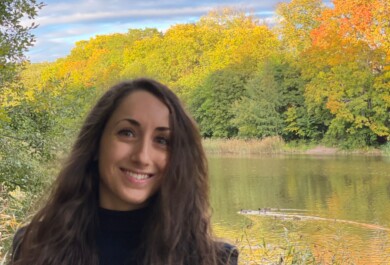
Dissertation defence (Information and Communication Technology): MSc Tech Akwasi Adu-Kyere
MSc Tech Akwasi Adu-Kyere defends the dissertation in Information and Communication Technology titled “Functionality is Short-lived without Security: Securing tomorrow’s Connected, Intelligent, and Autonomous Vehicular Ecosystem” at the University of Turku on 9 March 2026 at 12.15 (University of Turku, Natura, lecture room X, Turku).
Opponent: Professor Vasileios Gkioulos (Norwegian University of Science and Technology, Norway)
Custos: Professor Jouni Isoaho (University of Turku)
Summary of the Doctoral Dissertation:
Vehicles play a vital role and matter to society. For many people, they get us where we need to go and help move things from place to place. For others, their vehicles are a symbol of success or pride. Often, our vehicles feel like a part of our home. No matter how we use them, we can all agree on one thing. We want vehicles that are smart, intelligent, safe, and secure, helping us accomplish tasks easily. My research focused on securing vehicles without risking our safety, privacy, and security for the same smart, intelligent, and autonomous functions and features we need.
My first finding shows how a driver’s blind spot of a heavy-duty truck with an extended trailer is covered with sensors during a right-turn in a city. Avoiding a critical traffic situation that pedestrians and other road users can appreciate to keep them from accidents and harm. Second, I introduced a new idea called Seaming Security Dependency-Chains (SSDC). This concept helps us understand how different parts of security connect and affect each other. It is helpful for anyone working to make vehicle security better.
The third critical finding also presented a hierarchical self-aware security architecture. Vehicle security we will all appreciate in meaningful vehicular functions and features that make our existence safe and secure. A security system in our vehicles that knows of its own security traits and capabilities. It evolves through the application of dynamic monitoring, comprehensive analysis, informed decision-making, visualization, and other advanced capabilities. In an era of predominant AI, this is a suitable blueprint for researchers and organizations involved in in-vehicle security, security as a service, and facilitating integration of multifaceted vehicular security solutions and AI-driven cybersecurity models.
My other findings center on a proposed quantum vehicular ecosystem (QVE). Venturing into the future on quantum-related benefits for both vehicular security and sensor accuracy. For society, our road vehicles benefit from accurate sensor readings in bad weather conditions, security via quantum technologies, advanced computation, path routing optimization, and offloading complex computational tasks.
For the real-world impact, anyone making security better for vehicles and beyond is offered an advantageous means to design, iterate, and improve. Individuals and organizations are offered a reason to trust our digital safety, privacy, and information when we are in our vehicles. In the midst of AI and coded instructions where lines of privacy are often blurred, we as a society benefit from a dynamic, adaptive, and self-aware security solution in our vehicles. With these findings, fluctuating security characteristics, parameters, and requirements, compounded by legacy and external vehicular devices and infrastructures toward vehicle-to-any communication, show a promise of a better security starting point.