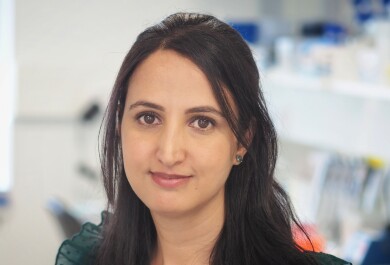
Dissertation defence (Materials Engineering): MSc Bahar Mostafiz
MSc Bahar Mostafiz defends the dissertation in Materials Engineering titled “Role of surface geometry in the electrochemical detection of neurotransmitters” at the University of Turku on 22 September 2026 at 13.00 (University of Turku, Main building, Tauno Nurmela lecture hall, Turku).
Opponent: Professor Katherine Holt (University College London, UK)
Custos: Professor Emilia Peltola (University of Turku)
Summary of the Doctoral Dissertation:
Our brain works through a complex system of chemical messages. Among the chemicals involved are dopamine and glutamate, which play important roles in movement, motivation, learning, and memory. Changes in these chemical signals are also linked to neurological diseases such as Parkinson’s and Alzheimer’s disease. Being able to follow these changes could therefore help us better understand what happens in the brain as these diseases develop.
However, measuring these chemicals is difficult. They are present in very small amounts, their levels can change extremely quickly, and the biological environment contains many other substances that can interfere with measurements. My dissertation investigates how sensor materials could be designed to measure these chemical changes more effectively. In particular, I studied dopamine and hydrogen peroxide, which can be used as an indirect way of measuring glutamate.
The main finding of my research is that the shape and arrangement of the sensor material matter just as much as what the material is made of. I studied rod-shaped particles made from gold and platinum and combined them with carbon-based materials. Changing the surface structure of these particles changed how well they could measure our target molecules. Adding the particles to networks of carbon nanotubes also changed how these tubes were arranged and, as a result, how the sensor performed.
Another important finding is that there is no single “best” sensor surface for measuring every brain chemical. Our target molecules interact with sensor surfaces in different ways. Their measurement therefore depends on different properties of the sensor material and its surface. This means that sensors need to be designed according to the specific chemical they are intended to measure rather than following one universal design rule.
In the longer term, this research provides knowledge that can help develop faster, more sensitive, and more reliable tools for monitoring chemical changes in the body. The work does not itself provide a diagnostic device or a cure for neurological diseases, but it helps us understand how future sensors should be designed. Such technologies could eventually make it easier to follow changes in brain chemistry over time, helping researchers understand diseases better and potentially supporting earlier detection and more personalised monitoring. As neurodegenerative diseases become increasingly common in ageing populations, better monitoring technologies could ultimately benefit patients, families, caregivers, and healthcare systems.