Hanna
Malik
Links
Areas of expertise
- Social harms
- Environmental harms
- Corporate and state-corporate crimes
- Corporate criminal liability
- Regulatory approaches to white-collar and corporate crime
- Analysis of Law-making process
- Legislative pluritemporality
- Comparative legal research
- Critical criminal law
Biography
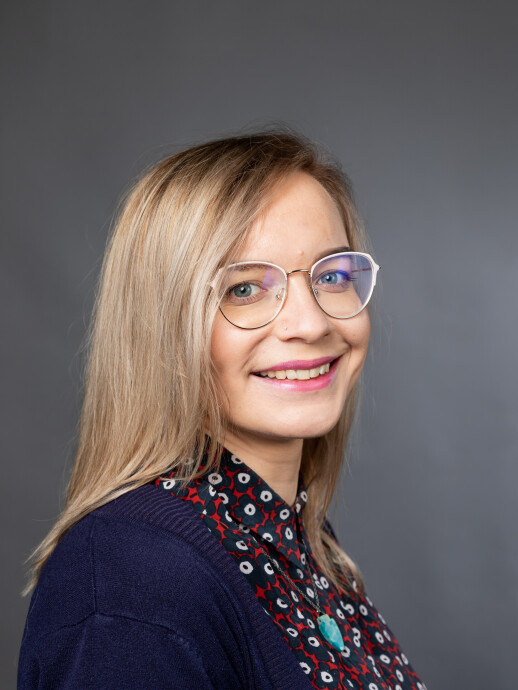
I am a University Lecturer and an Academy Research Fellow at the University of Turku. My scholarly work is situated at the intersection of critical corporate criminology, socio-legal studies, legisprudence and regulation and governance research.
The Faculty of Law at the University of Turku has been my academic home since 2016. During this time, I have developed from a doctrinal criminal law scholar towards a critical socio-legal researcher examining the relationships between law, power, governance, and harm. Originally from Poland, I completed my doctoral studies at the European University Viadrina in Germany. My doctoral research analysed the emergence, development, and implementation of corporate (quasi-)criminal liability laws in Poland and Germany through comparative legal and historical analysis.
Following my doctoral studies, I expanded my research from criminal law towards broader socio-legal investigations of state-corporate abuses of power, regulatory governance, and social harms. My current work combines legal scholarship with interdisciplinary approaches drawn from critical criminology, political economy, posthumanism and political ecology.
Teaching
My research and teaching are informed by critical, law-in-context approaches that view law as a dynamic social, political, and cultural phenomenon rather than a neutral set of rules. I see my role as a teacher not only as creating a supportive and intellectually stimulating learning environment, but also as encouraging students to think critically about law, power, and justice. Central to my teaching is the belief that legal education should equip students to question established assumptions, engage with diverse perspectives, and understand law in its broader societal context.
My own legal education was largely centred on memorisation and legal doctrine. While this provided a strong grounding in legal reasoning, opportunities for critical engagement with the social and political dimensions of law were often limited. These experiences have shaped my pedagogical philosophy. In my teaching, I utilise constructivist, student- and research-centered approaches that encourage active learning, dialogue, and independent inquiry. I seek to move beyond black-letter law and support students in developing the analytical and critical-thinking skills necessary to understand law as a contested and evolving field of social struggle.
My teaching draws extensively on my research in corporate, state-corporate crime, regulation, governance, social and environmental harms. I encourage students to explore how legal systems shape relationships of power and responsibility, how laws emerge through political and social struggles, and how legal frameworks respond to contemporary challenges such as corporate misconduct, technological governance, and ecological crises.
I teach in the areas of comparative law and comparative legal research, criminology of the powerful, and criminal law. My courses include:
- Comparative Legal Research (12 ECTS)
- Corporate Crime, Law and Power (12 ECTS)
- Law, Memory and Social Change (5 ECTS)
- Law-Making Process as a Site of Struggle: The Case of Corporate Crime and Harm Regulation (5 ECTS)
- Legal Cultures of Europe (5 ECTS)
- White-Collar and Corporate Crime Regulation (5 ECTS)
In addition, I represent the Faculty of Law in the EC2U Alliance (European Campus of City-Universities) and contribute to the development of the Joint Master's Programme in Peace, Justice and Strong Institutions. Through this work, I collaborate with colleagues across Europe to advance innovative, interdisciplinary, and challenge-based approaches to legal education while strengthening international learning opportunities and research-based teaching.
Research
I am committed to critical, transdisciplinary, plurilingual, and comparative perspectives on law as a societal, political, and cultural phenomenon. Following traditions of critical criminology, socio-legal and posthuman scholarship, I investigate how legal and regulatory systems shape social, technological, and environmental realities, and how they enable, regulate, or contest different forms of harm to human and more-than-human world.
My research focuses on state-corporate crimes, social and environmental harms, law-making processes, and diverse approaches to regulation and governance of corporate activity. I am particularly interested in the role of law in mediating relationships between states, corporations, technologies, and the environment.
Currently, I lead the project Revealing Hidden Harms in Forest Regulation through Computational and Posthuman Legal Analysis (Corporate Forest II), funded by the Kone Foundation´s Metsän puollela initiative. The project examines how legal and regulatory frameworks governing forests render certain harms visible while obscuring others through particular legal concepts, classifications, and governance practices. Combining computational analysis, socio-legal research, and posthuman approaches, the project investigates how environmental degradation remains within the remits of legal frameworks directed at sustainability and biodiversity protection.
I also lead the Research Council of Finland-funded project Regimes of Permission and Posthuman Harm: Corporate Exploitation in Finnish Forests (Corporate Forest II). This project explores how forest legislation and forest policy shape human-nature relations and how legal systems may unintentionally facilitate environmentally harmful practices while privileging industrial forest use. Drawing on socio-legal, critical and posthuman perspectives, the project seeks to develop new understandings of harm, responsibility, and justice in forest governance.
Together, these projects form part of a broader research agenda examining how law produces, legitimises, regulates, and normalises harms within socio-ecological systems, while exploring possibilities for alternative futures.