Wallace
Moreira Bessa
Contact
Links
Areas of expertise
Biography
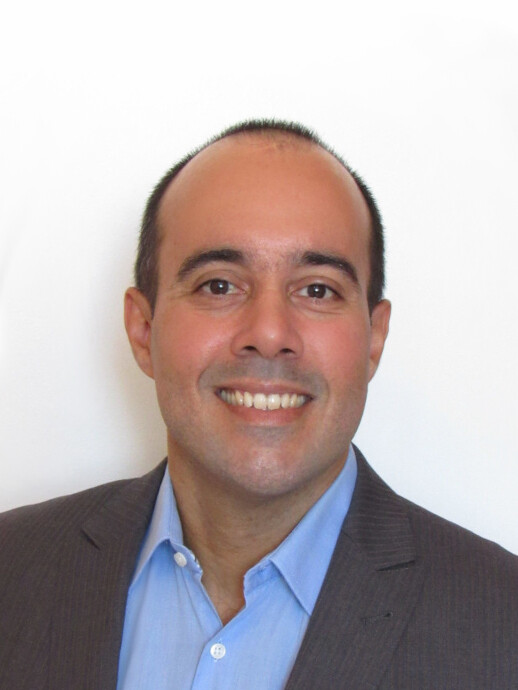
I am a Professor of Mechanical Engineering and Head of Smart Systems at the University of Turku, Finland. Before joining the University of Turku, I served as an Associate Professor at the Federal University of Rio Grande do Norte, Brazil (2008-2021), and as an Assistant Professor at the Federal University of Science and Innovation of Rio de Janeiro, Brazil (2004-2008). In 2014, I was awarded the prestigious Humboldt Research Fellowship for Experienced Researchers, which supported my research stay as a visiting professor at Hamburg University of Technology, Germany, from August 2015 to July 2017. I have authored more than 130 scientific publications in areas including intelligent control, machine intelligence, nonlinear systems, robotics, and mechatronics.
Teaching
I am responsible for the Smart Systems track within the Master's Degree Programme in Mechanical Engineering at the University of Turku.
I am also responsible for the following courses:
- KTEK0038 Intelligent Control
- KTEK0055 Machine Learning for Mechanical Engineering
- KTEK0065 Hands-on Smart Systems
Research
My current research focuses primarily on two areas:
- Intelligent Control: Intelligent controllers play a key role in developing more precise and energy-efficient smart systems, thereby enhancing safety, productivity, and sustainability. By combining advanced nonlinear control techniques, such as sliding mode control, adaptive control, and feedback linearization, with soft computing and machine learning methods, including artificial neural networks, fuzzy logic, reinforcement learning, and Gaussian process regression, it is possible to develop control strategies that effectively handle uncertainties and external disturbances in complex, unstructured environments.
- Autonomous Systems: As smart systems interact increasingly closely with humans, they must be prepared to handle unexpected situations that cannot be fully anticipated during their design. Autonomous systems must therefore be capable of making rapid, reliable decisions while respecting societal values and ethical principles. This rapidly evolving research field lies at the forefront of technological innovation and offers opportunities for multidisciplinary research, encompassing topics ranging from biologically inspired approaches to fundamental philosophical questions.