Attracting international talent and supporting company growth go hand in hand. In this UNICOM+ podcast episode, we explore the International Voucher in the City of Turku as a practical tool to connect companies with international expertise and support regional development. The International Voucher is designed to support employers recruiting international talent.
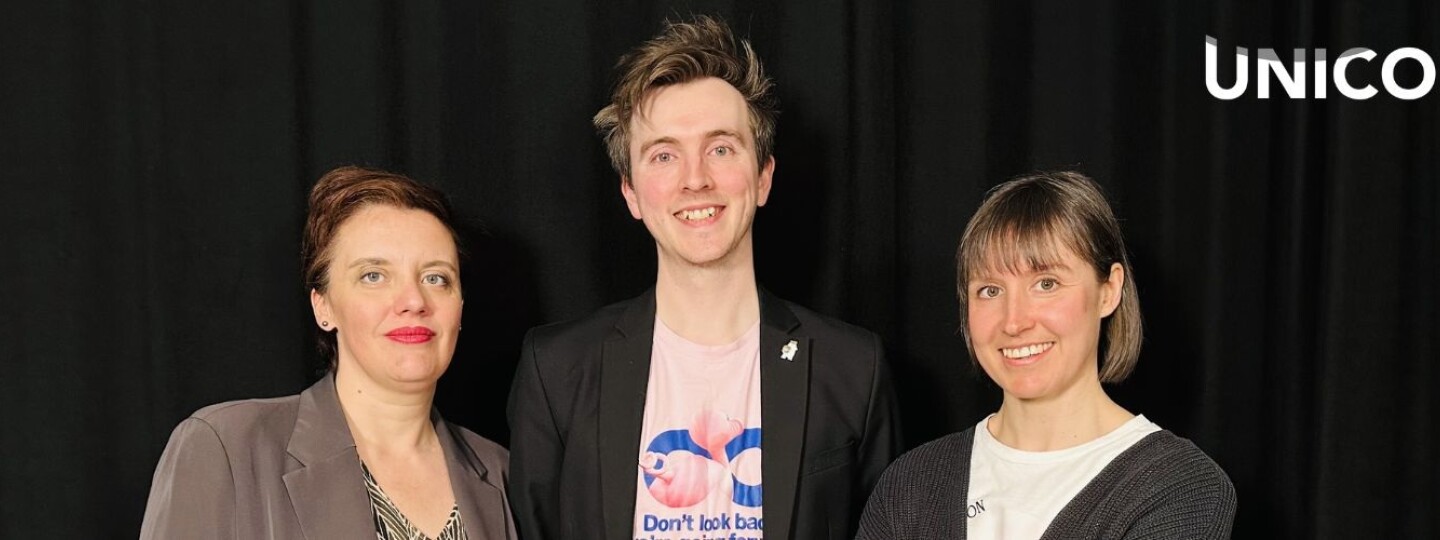
The episode is hosted by Lotta Metsärinne, Career Counsellor and Project Planner at the Career Services of the University of Turku, and Lucia Vuillermin, International Relations Coordinator at Turku University of Applied Sciences. They are joined by Jonathon Murphy, Project Coordinator at the City of Turku, who shares insights into how the International Voucher works in practice.
Topics covered:
- The purpose and structure of the International Voucher
- How companies can utilise the International Voucher to access international expertise
- Examples of collaboration enabled by the International Voucher
- The role of international talent in regional business development
Find more information:
The UNICOM+ podcast series is designed to help international talents residing in Finland navigate their transition to Finland and, later on, to the Finnish job market. The podcast series is produced in collaboration with the University of Turku, Turku University of Applied Sciences and Åbo Akademi University. UNICOM+ project (2025–2027) is co-funded by the European Union.
This episode has been co-produced in collaboration with PURJE project.
UNICOM+ podcast series is produced by Junaid Raza.
Podcast episode length is 30 minutes.
You can also listen on:
Text alternative for the episode:
Lucia: Hello, welcome to a new UNCIOM+ podcast. I'm Lucia from Turku University of Applied Sciences and today we have with me
Lotta: Hello, my name is Lotta Metsärinne. I work at the University of Turku. If you have been looking at this podcast, you probably know I'm a career counsellor and yeah, we are working with Lucia to help international students
Lucia: As much as we can.
Lotta: Yeah. Find a way in the local working life and today we are focusing on an initiative by the city of Turko. So we have Jonathan here with us. Jonathan, do you want to shortly present who you are and what the city is working with at the moment?
Jonathon: Hi. Hi everyone and thank you very much for the invitation to be here. So, my name is Jonathan Murphy. I am a project coordinator at the city of Turku, former University of Turku student. So, it's always very nice to come back here and things haven't changed too much maybe in the hundreds of years since I was studying here. But as part of my work at the city of Turku, I work as part of international house Turku, a service which aims to help local residents with everyday affairs and also entering the job market. And recently I've been part of a project PURJA work and vitality for southwest Finland. And one of our goals is to really kind of support students and their family members as much as possible, particularly kind of when they're about to graduate. Of course, from the city's perspective, we would love more students to stay here and kind of use their skills and help Finnish companies grow. So, to do that, we have different initiatives, which I'm sure many of the viewers will be familiar with. We have our one-to-one advice service, the international student support service, which runs at Monitori, our customer service point, an international house Turku we also have networking events that we try and link students and other stakeholders together. And now we have the international voucher which we're talking about today.
Lucia: Today hot topic
Jonathon: A hot topic and a great initiative because as we will see there are benefits not just for the students but actually for companies and again this is something we were always asked I think at many of our events. What are we doing for companies? We can pull the curtain back a little bit in in how we are kind of trying to convince companies of the value of hiring international students. Yes.
Lotta: You mentioned the project PURJA that you're working for and I just want to point out that UNICOM+ is also collaborating with PURJA,
Jonathon: Yes.
Lucia: Yes.
Lotta: Together to find employers in the region and make them more aware of international students what kind of different talents and strengths and also like field specific knowledge and skills students have.
Jonathon: Yeah, and I think from our perspective of course the universities you know in terms of thinking about immigration and kind of why people are moving to Turku and of course studies is and and research and working at the higher education institutions is such a big part. So, we're very happy to have a close collaboration with you.
Lucia: Yes, I think we tackle both like the students and the employers. But now how can we join them together with this international voucher? What can we do for them?
Jonathon: That is good. So the international voucher well really this is financial support financial support not for the students but actually financial support for the companies. So this is kind of effectively money given to from the city to companies to kind of encourage and help them to hire international students or recent graduates. The idea here is that we are making the process kind of easier because we know from our work and we've surveyed lots of companies and we've spoken to companies at events and of course many companies are kind of interested on paper in hiring international talents. They can kind of, or you can make the arguments and they can understand the arguments but maybe when it comes to the actual practical step of hiring that first international they just need a little push.
Lotta: Yeah.
Jonathon: And again that was one of the things that we were trying to make as easy as possible and of course we were thinking that usually when you are hiring any employee but especially an international employee perhaps there are some costs associated with that. So the voucher can be used to kind of cover the costs and part of the salary as well for international worker.
Lotta: Here, I'd like to point out that this voucher is different from the university's internship subsidy right so,
Jonathon: Yeah.
Lotta: They work in a similar way but the money source is different it doesn't have to be an internship right it can be any kind of
Jonathon: Yes ideally it would be would be a full contract and we're going to talk a little bit more later about the eligibility But again I think this is one of the challenges maybe when we are communicating what we offer to companies is that maybe from the company perspective if they don't have any knowledge of the higher education environment it's like okay well we have the voucher and then the subsidy and then there are other grants as well. So again, it's what we're trying to kind of bring out in this discussion is actually as a student or a job seeker, you can play a role to in kind of informing companies that you're applying to of what is available to them and again making it as easy as possible for that recruiter to be like oh okay actually we can yeah we can go with this.
Lotta: Actually I know this has already happened so from an employee I've heard that they have u they have gotten an email of the sums. So,
Lucia: But just to clarify the money go directly to the students or to the employer because this is the first question that when we mention to our students like who gets the money?
Jonathon: Simply follow the money, that is, yes the voucher is paid to the employer. So the if the an eligible student or job seeker is found with an eligible company and we'll talk in a moment about who exactly is eligible but yes then the the company would apply directly to the city and the city would give that money directly to the employer. So the student is involved with the information but the student is not involved with the financial,
Lucia: No transaction towards the student.
Lotta: But of course the student will get a salary.
Jonathon: Yes, most likely yes, that money would be used to cover to cover the initial salary costs.
Lucia: That's great. And now we've been talking how does money flow, but how much money?
Jonathon: Well, there are two levels of the voucher. The kind of the basic level is a €3,000 financial support and this is for placements that are between three and six months long. So if a company hires an international student or graduate for three to six months, then they'll receive uh €3,000 from the city. If they would like to go further and if they would like to commit to a six-month or longer contract, then the amount will be €5,000.
Lucia: Okay.
Jonathon: So I think I you know for three months maybe €3,000 would work but really if a company is thinking about four or even five months then it would be maybe better if they could stretch to six months because then they would hit the higher tier of the financial support but €3,000 or €5,000 depending on the length of the contract. Yeah.
Lotta: And it's not a monthly subsidy. So it's for the entire duration of the contract.
Jonathon: Yes. For the duration of the contract. So of course we know that it won't cover necessarily the full salary for the whole time. Again I think it will that.
Lucia: And just if the company apply for the first shorter period can they then apply for the longer period or should they apply once? How does it work?
Jonathon: Usually they would apply once I think during that time if it then became apparent that they really liked the international worker and it was a good fit then I'm quite sure they could contact our team at the city of Turku. we have a full kind of support team for employers regarding the voucher and some of the other services that we offer. So I'm sure during the internship they could speak to the team there and extend but usually that the application form, initial application form you would say the length of contract before.
Lucia: Okay, that's great.
Lotta: And from the student perspective if we switch to that who is eligible?
Jonathon: Sure. So there are two categories of people who are eligible. The first would be international students who are in the final year of their studies. So if you are within one year of graduation so again so usually if you are a bachelor's or master student for example you kind of have this schedule mapped out that you submit your thesis and then you have your graduation date. So if you're within one year then you are eligible for that. And I guess when you're applying for the voucher you'd probably have to show your transcript of records to make sure you were on track to graduate in that time even with the addition of the placement and the work that you would be doing. Of course, if you are a doctoral student, doctoral candidate or kind of PhD researcher, then you are also eligible again if you are expecting to finish your PhD within the next year. So people who are about to finish and then the second category would people who just have finished. So if you have graduated within the last year then you are also eligible. So kind of plus or minus one year. Yeah. About to graduate or recent graduates. So certainly if you are a first year student unfortunately you are not eligible for this round but hopefully there will be something in the future for you.
Lotta: All right.
Lucia: And just to specify we are talking about higher education.
Jonathon: We're talking about higher education. Yes. So bachelor's degree, master's degree, doctoral studies. So unfortunately for this particular voucher, if you are on a vocational school doing a vocational degree, then yes, for this particular voucher, you would not be eligible. Yeah. But anything at kind of Yes. higher education level as long as full-time education.
Lucia: So for our students basically
Lotta: Basically for ours. Yeah.
Jonathon: Yeah. I would think that the most.
Lotta: And this is why we are here.
Lucia: Having this conversation,
Lotta: And including Jonathan to this UNICOM+ podcast. Yeah.
Jonathon: But of course, it is also people who maybe are outside of your institutions they would also be eligible as long as they were living in Turku
Lotta: And have a higher education.
Jonathon: and have a higher education. So for example, if you've just graduated from another university in Finland or even a university in your home country in the last 12 months and then you moved to Tuku and are registered as living here with your DVV municipality of residence then you would actually be eligible as well. So if there's anyone watching who's moved here as a spouse for example then if you've just graduated from your home country then actually you may well be eligible as well. Yes. So it's I think with the eligibility criteria on the website you can see the full kind of checklist and flowchart and if you have any questions you can always contact international house or the international voucher team and they can kind of clarify and if you are unsure I would always recommend asking to see you know maybe not putting the full application in if you're not sure but maybe you could ask because in many cases actually people who don't think they are eligible then turn out to be eligible.
Lucia: Yes
Lotta: And have I understood correctly that the process goes like the company they choose to hire you first and then apply for this voucher.
Jonathon: Yes. Yes. So ideally you would have that agreement with the company kind of before and of course you can the way that the application form is listed on the website is that you can kind of prefill some of that form out. So you can kind of get the ball rolling. At the same time, like if you've had kind of a verbal agreement, but you haven't received the contract yet with the company, then you can kind of start the application process to make sure that the company gets the money as soon as possible. I believe as well, I would like to check the website, but I think if the if the placement has kind of just started, you actually can apply sort of retrospectively like you started like a week ago and now you're just hearing about the voucher and you're eligible, then actually we can quickly rush the voucher through as well. But usually yes, you would have at least this verbal agreement with the company that they would like to hire you before you actually submit the final.
Lotta: So can both uh employees and employers start the process?
Jonathon: Yes, both can start the process. I think ideally the company because the company has to kind of end the process if you like. So either party can start the process, start the application form, but only the company can really submit the application itself. But the reason we did it like this is because we know that companies are very busy and they already have their own HR paperwork to do. So again we're trying to kind of make things facilitate the process and make it as easy as possible. And often the student there are certain things they can just fill in like their personal details very quickly and then send it to the company and the company can do their section and then send it to the city.
Lucia: Is this one time occasion or can companies ask repeatedly for the voucher?
Jonathon: Companies can ask repeatedly but it has to be different candidates. Okay. So if the idea is that you as the as an applicant you cannot work at the same company twice and you cannot work for a company that's previously hired you. So for example if you wrote your thesis with a company or they paid you for an internship when you were studying. Unfortunately you cannot use this voucher to then continue working for that company. It has to be you it's kind of like a new fresh opportunity.
Lotta: Okay. So new relationship.
Jonathon: New relationship. Yeah. Exactly and similarly yes that I think in the idea is that of course if we had one company he was applying for like 20 vouchers then maybe we would look at that but usually yes if it's a different relationship then companies should be able to apply for multiple candidates.
Lucia: Thank you Jonathan. And now we talk a lot about companies but which kind of companies are actually eligible because we talk about the students now the other side of the coin.
Jonathon: Yes. So companies so as I mentioned the students themselves regardless of their their where they studied like when at the time of application they have to be living in Turku that's specifically in Turku through the municipality of residence but the company does not technically have to be in Turku it can actually be anywhere in Turku employment region again I was very worried that you got to quiz me and get some infographic of the Turku employment region is the largest employment region in Finland
Lucia: Is it?
Jonathon: Yes, 23 municipalities, so I can never remember all 23 but basically it's kind of most of the of Turku and the surrounding areas. So Naantali, Kaarina, Loimaa, Uusi Kaupunki, I think basically everywhere I think Salo is maybe the biggest local place that has its own employment services. So companies in Salo are not eligible unfortunately but company anywhere else. So again you can be living in Turku and you can go to work in let's say Uusi Kaupunki or Loimaa or Kaarina.
Lucia: Yeah.
Jonathon: But as long as the company is there in terms of the companies it does not have to be a big company. It it can be any company as long as it has a business ID. So it could be an organization it could be an NGO. It could be a startup again as long as it's a fully registered company. I think the only exception is municipal or kind of government work. So unfortunately the city we can't use our own voucher to hire people. It's a shame because I would definitely think of some great candidates for the city of Turku. But yes, you can't work for the city and I guess this includes like um any government offices like “Elinvoimakeskus” for example or “Business Turku” too I think would also be public offices. Yes. But otherwise you know it can be a large company with with hundreds of staff members or it can be a micro company as well. And again, I think from the city side, we're kind of hoping that many smaller companies will use this. It'll be a tool to maybe get them to hire their first incentive, their first ever international hire, you know, could be through the voucher, which would be which would be great for us.
Lucia: So register company in the Turku area, that's a must.
Jonathon: Yes. And again, if you again, the website has the full list of the municipalities and the cities that are part of the employment region. Again if you find a company they themselves might not know if they are the right fit for the voucher. So again you can contact the the international voucher team and they can clarify for you.
Lotta: Yeah because the city has several different kinds of support services as well. So I' I've understood that in some cases maybe the “Palkkatuki” what's it in English? could be more,
Jonathon: Yeah kind of a wage subsidy or support. Yes, the employment region and the employer services we have a lot of different options. This is kind of just one of many incentives that they're working on. And yes, usually we would have professionals who would then leers with the company and offer them you the information or training about those initiatives and together they would work out the best one for a particular candidate that they wanted.
Lotta: If a company is interested in in hiring an international, they could have a chat with with you to kind of find out the best opportunities for them.
Jontahon: Yes, absolutely. So again, and if you have if you're as a student or as a job seeker, if you meet a company and again they are kind of on the fence, but they just want more information, then absolutely please do put them in touch with with the city's employer services and share the links to those as well.
Lotta: How about the voucher and the situation at the moment? Has it had a lot of question like has it sparked interest in companies are they using it?
Jonathon: It has definitely sparked interest in companies and again it's a kind of, this is a pilot that actually is happening in a few different cities in Finland so it's not just a Turku thing
Lucia: Yeah, like in Helsinki.
Jonathon: Helsinki is giving out vouchers, Lappeenranta, we have to give a shout out to Lappenranta, so Lappeenranta I think had the pilot last year and that really got a lot of other cities paying attention of like okay this seems like a great idea we could also do something similar. So they were sort of the pioneers if you like in Lappeenranta. But yes, I think most of the major cities now are either launching a voucher or have it in their kind of upcoming schedule. So again, we're hoping that that the companies might have also heard about the voucher through other cities or connections or even in the press in the media for example. So there has definitely been a lot of interest. We are still doing a pilot. Yeah. So the pilot lasts one year. So it started just before Christmas and it ends uh 30th of November 2026 this year. So in a way it sounds like a long time but actually to kind of develop the voucher and a marketing campaign and give the information out and then find the company and then do the placement it's not a huge amount of time from perspective.
Lucia: It's quite short.
Jontahon: So we are but we're hoping that this will be you know the start of something many of these pilot initiatives that we will review how the voucher is working kind of at the end of the pilot and I am confident that whether it's the voucher or something slightly different the city will build upon this,
Lotta: Yeah well that would be really great.
Jonathon: That’s the idea there has been been well I guess what we're really looking for is that we when we have people coming through the voucher it would be great to get these kind of testimonials and get the experience or people who examples and that I think will make it clearer as well. So at the moment we're you know speaking to companies who are really these kind of like test subjects in a way you know but we would like when we have more and more people through the voucher that then we can kind of use that fold that into the marketing campaign whether for students or for companies. Yeah.
Lotta: Okay. What can students do to promote or make companies aware of this? Is there something that students can do?
Jonathon: I think really just equipping themselves with the information about the voucher is such a great thing because again I've met through international house through our support services. We have met with people who have gone to a recruitment fair and spoken to companies or even had an interview with companies but neither of them knew about the voucher. And of course, I'm not saying the voucher will guarantee that you will be hired. But of course, it's such a good tool to be able to bring to an interview and say, "Well, here I am. Here are my skills and my credentials, but I will also bring with me €3,000 to €5,000 like as part of the package."
Lucia: It's an incentive.
Jonathon: It's a great incentive. And again, as we've discussed, you know, from the company perspective, they just do not always have the time to follow all of the channels of the city of Turku or attend any of our training courses. So again, kind of we're hoping that that from the applicant perspective, this will really help with the pitch that you have to companies that go in there. And of course, you know, you don't need to have like all of the information. You know, we have the information on the website and the other kind of promotional materials as well. But I think for any, like I guess we talked about or I'm sure you've talked about on previous episodes, you know, the way that the job market is at the minute, like anything that can give you a slight edge or slightly increase the chances, whether it's your background, whether it's internships, whether it's your Finnish language level, we're hoping in the voucher will be just something to add an extra little few percentage points to the chances of being employed because you have to be maybe quite or at least I remember when I, you know, was looking for work in Finland, you have to sort of maybe go further. You can't just apply for a job and expect them to come to you. You have to kind of go Yeah. to the employer.
Lucia: Be proactive. That's what we say all the time to our students. You cannot expect things fallen from the sky and jobs arrive to you.
Jonathon: Yeah.
Lucia: And this is this is a good opportunity to approach company and said by the way I have all the skills and uh and I'm interested in the company plus I have this so it's like good plus for our international students I would say.
Lotta: You mentioned again international students how do you define international students?
Lucia: That's a good question
Jonathon: That's a good question, I think the way the of course we know that like the term international is quite broad really. So it would be someone who is not a Finnish citizen. I think that would be the starting point. And I think generally it would be also someone who does not have Finnish or Swedish as a native language. Okay. Of course if you have someone from Sweden who is studying here then that kind of borderline case I think the project team would maybe have to evaluate but ideally you know the voucher is redesigned for people who do not speak fluent Finnish or Swedish and have an international you know nationality. Yeah. And I hear kind of you know on a on a permit or EU registration for example. But in terms of if you are not finished like any other nationality is is eligible. So again I've dealt with this myself in a way like you know I've lived here for a while now and then and I got the Finnish passport and it's like okay am I international? Am I Finnish? It's difficult to say identity crisis.
Lucia: I'm still waiting for mine. So I'm still a foreigner.
Jonathon: I'm sure it's I'm sure it's but even when you do even when it does come you do consider yourself international. So again you don't have to self assess like we will help you if you are concerned if you think you know if you have like a two passports or if you've lived in Finland a long time but you don't have Finnish passport then again you can contact the team but I imagine the majority of people who get the voucher would be yeah people with different nationalities and yeah other than Finnish.
Lucia: Okay, great. One question. You mentioned the deadline which is 30th of November,
Jonathon: Yes.
Lucia: Does it mean that uh the work experience has to end before the 30th of November or the application? So they can maybe apply the last day and then still do their.
Jonathon: That is a good question. My understanding is that uh that the placements can continue after that date.
Lucia: Okay.
Jonathon: So ideally we would probably not want you from a logistical bureaucratic level. We would not really like to process an application on the 29th of November. Just because again how often it takes some time for that kind of funding to get released. So my advice, my strong advice to everyone looking in the camera now, strong advice is to do it as soon as possible to at least even if the even if your placement might not take place till the autumn for example you can apply to the voucher like as soon as you have that that verbal agreement with the company you can make the get the ball rolling and then of course if it needs to get delayed it'll get delayed like that's fine it's better to apply early and have a slight delay than apply too late.
Lucia: Last minute. We know our students they always do last minute
Lotta: And employers as well like situations change very much. So sometimes employers need quick hires and it might be October but of course the earlier the better maybe.
Jonathon: Yeah, I think so. I mean, one thing as well to emphasize with that is that of course there are the number of vouchers are limited. Unfortunately, the city's pot of money is not, you know, completely bottomless like eventually that I don't think we've we haven't committed to a particular number of vouchers, but of course there is a limit. It will get to a stage where, you know, it could be the case before November that we might have to close the voucher scheme if we have enough vouchers applicants. So again, if you are kind of thinking about it, your company's thinking about it, then maybe that's another reason not to leave it until November to maybe start the process earlier because otherwise it could run out and then that would be you'd have to wait till the next the next pilot, the next thing that comes after this, I suppose.
Lucia: Okay. But I think Jonathan is coming even to our university to talk to our students. So you will find him in campus with your colleague, right? In the next week.
Jonathon: We're normally we're normally around. So myself and uh my colleague uh Sari Sainio who is the project manager for the international voucher. So yes we are doing kind of a campus road show between now and the end of the semester. So we're going to have be having some pop-ups and a few kind of mini presentations where we'll be able to talk about the voucher in more detail. Again, like this is like a good interview. I feel very like challenged because you're right that there are so many cases with the company and the students that are what I would call sort of borderline cases and for those maybe we do need to have a longer discussion with the applicant or look in more detail at the company but again that's totally fine we are totally open to that it's not just a closed door if you are if you are not eligible.
Lotta: I think it's like really important in all these kind of initiatives and subsidies to kind of see what is the end goal of the what we are doing. So here for example getting someone employed and then maybe this is the pilot stage you need to be evaluating like individual situations individually so yes and I think that's a really nice approach from you from the city's side.
Jonathon: Yeah, I I agree. And you know, I think we know of course this one particular pilot is not going to solve all the problems that we have as internationals and finding work. But if we can just you can start to maybe change a few attitudes through the voucher like I mentioned earlier, especially with smaller companies who are just not as experienced in hiring internationally. Maybe they've never hired a nonfinish or Swedish speaker before. So, if we get if we can just try and break through the ice with some of those companies. I know that recently this is like a plug for our own podcast but on the international house tour podcast available on all streaming platforms we just interviewed the “Elinvoimajohtaja” like the the city of Turku's economic development director where he was talking in more detail about the city's strategy for internationals and really this kind of you know working like clearer working pathways was number one and then equally the city has kind of integration and anti segregation kind of stuff they're doing as well, but really working in life and a clearer a clearer model and a clearer pathway especially for people who've studied here and have kind of integrated in a way and have learned some language and maybe their family have settled here for the last two to four years like really they are a big priority for the city moving forward. So I'm always optimistic. I'm always cautiously optimistic about the activities that we're doing and hopefully this can be like I said the start of something larger which is what we would like to see and I think as well from your side.
Lotta: Yes.
Jonathon: What we are all working towards.
Lotta: Yes definitely. Well thank you Jonathan very much for joining us to go through this international voucher.
Lucia: Yes and thank you to our listeners. So, we hope we give you all the information that you need to know now about this international voucher. And again, if you are doubting or in this borderline gazes you can always contact the city of Turku. We will actually add the link about the website that you were mentioning. So,
Jonathon: That would be great.
Lucia: Our listener can find it a bit more straightforward.
Jonathon: Yes I think it's got a full flowchart and bullet points and you know you can you can see which category you fall into. But again, if you have any difficulties, you can contact Sari or you can always contact International House Turku.
Lucia: Yes. Let's make it happen.
Jonathon: Yes.
Lotta: Thank you. This was the UNCIOM+ podcast and see you next time.
Lucia: Bye.
Lotta: Bye.
Jonathon: Bye.