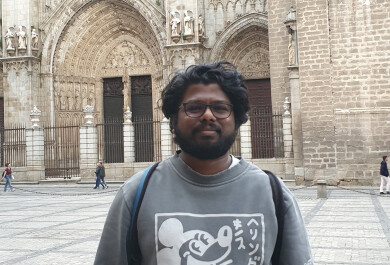
Dissertation defence (Clinical Neurosciences): MSc Albert Bellmunt Gil
MSc (in Human Neurosciences) Albert Bellmunt Gil defends the dissertation in Clinical Neurosciences titled “Neurobiological correlates of gambling disorder: A multimodal brain imaging approach” at the University of Turku on 16 January 2026 at 12.00 (University of Turku, Publicum, Pub3, Assistentinkatu 7, Turku).
Opponent: Associate Professor Ruth J. van Holst (University of Amsterdam, the Netherlands)
Custos: Professor Juho Joutsa (University of Turku)
Summary of the Doctoral Dissertation:
Gambling disorder is a brain condition in which gambling becomes difficult to control and leads to harm in a person’s wellbeing, relationships, or everyday functioning. It affects approximately 1–2% of adults worldwide and is the only behavioral addiction currently recognized in diagnostic manuals, due to its similarities with substance addictions.
The aim of my doctoral dissertation was to increase understanding of the brain mechanisms underlying gambling disorder. The research focused on a brain network involved in decision-making, reward processing, and self-control, which includes areas in the frontal cortex, the striatum, and the thalamus. This network is known to play an important role in substance addictions, but its involvement in gambling disorder has been less well understood. The dissertation was based on two independent studies comparing individuals with gambling disorder to healthy control participants, using different brain imaging methods (structural MRI, functional MRI, and PET).
The results showed that gambling disorder is linked to altered communication between brain regions involved in inhibition and reward, particularly between the prefrontal cortex and the striatum. These functional changes were related to differences in the serotoninergic system. Individuals with gambling disorder also showed stronger brain responses to gambling-related cues in the dorsal striatum, a brain area important for habit formation, and this response was associated with the brain’s opioid system. In addition, structural brain changes were observed, including reduced thickness of the orbitofrontal cortex, smaller thalamic volume, and abnormalities in frontal white matter pathways.
These findings provide novel information about the biological basis of gambling disorder by using multiple methods to image the brain. By improving understanding of how brain function and structure are altered in this condition, this research helps clarify this complex disorder and may support the development of more effective prevention and treatment strategies.