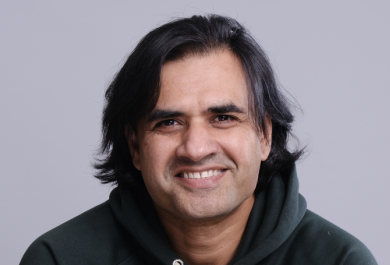
Dissertation defence (Computer Science): MSc Farshad Farahnakian
MSc Farshad Farahnakian defends the dissertation in Computer Science titled “Digital Maritime Monitoring: Enhancing Situational Awareness in Shipping Traffic using AI-based Models” at the University of Turku on 27 February 2026 at 12.30 (University of Turku, Natura, lecture hall X, Turku).
Opponent: Professor Ari Visa (University of Tampere)
Custos: Professor Jukka Heikkonen (University of Turku)
Summary of the Doctoral Dissertation:
Every day, thousands of ships travel across our oceans, constantly sending out digital signals (AIS data) about their location and speed. While this data is available, there is simply too much of it for human operators to monitor effectively in real-time. My research focuses on using Artificial Intelligence (AI) to act as a digital eye, automatically analyzing this massive amount of information to keep our seas safer and more organized.
One of the key findings of my work is that AI can be incredibly effective at spotting "suspicious" behavior without needing constant human guidance. I developed a system that can automatically identify "dark ships"—vessels that intentionally turn off their tracking signals to hide—as well as ships performing unusual maneuvers that might suggest smuggling. By looking at a ship’s position, speed, and course together, the AI can distinguish between a normal journey and a potential threat much more accurately than traditional monitoring methods.
I also developed a tool that predicts a ship's position in the future, whether for a few hours ahead or over a longer voyage. My research shows that by training AI to recognize historical patterns, we can predict future ship movements with very high accuracy. This is a game-changer for port authorities who need to manage busy docks and for the Coast Guard, who need to know exactly where to send help or intercept a vessel during an emergency.
The real-world impact of this research is a move toward more secure maritime borders and a more efficient shipping industry. By using these AI tools, authorities can detect illegal activities more reliably, even in crowded waters such as the Baltic Sea. Ultimately, this work helps turn overwhelming amounts of data into clear, actionable information, ensuring that our global trade routes stay safe, predictable, and well-protected.