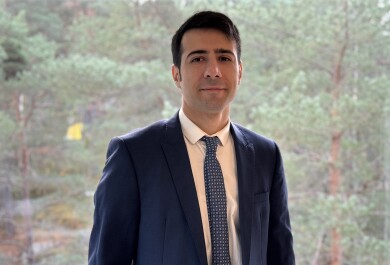
Dissertation defence (Economic Sociology): VTM Sami Ahonen
VTM Sami Ahonen defends the dissertation in Economic Sociology titled “Economy before the environment? Environmental policy support and political trust in times of crises” at the University of Turku on 13 November 2026 at 12.00 (University of Turku, Educarium, Edu1, Assistentinkatu 5, Turku).
Opponent: Professor Ingemar Sevä (Umeå University, Sweden)
Custos: Docent Aki Koivula (University of Turku)
Summary of the Doctoral Dissertation:
Political trust is an important factor in explaining public support for environmental policies that impose additional costs. This is particularly evident for policies that entail direct costs for citizens and in which the government plays a central role in implementation, such as carbon taxes. In international comparisons, the role of political trust is strongest in countries with high quality of government.
In addition to the country context, respondents’ political preferences shape the relationship between trust and policy support. In most European countries, political trust increases support for carbon taxes particularly among voters of more environmentally oriented parties, while little association is observed among other voters. Finland and Sweden stand out in this respect: political trust increases support for carbon taxes particularly among voters of right-wing populist parties, whereas support among voters of greener parties remains high regardless of their level of political trust.
In Finland, during economically challenging times, political trust can serve as an anchor that sustains support for environmental policies even when economic concerns take priority on the political agenda. Citizens with high political trust respond more favourably to environmental policy communication, whereas those with low trust may react negatively to different justifications. The research also found that different reasons for reducing carbon emissions resonate differently among certain groups. Reducing energy dependence on countries outside the EU, such as Russia, emerged as the most popular and effective justification for increasing support for the road transport emissions trading system.
The research extends previous studies on the relationship between political trust and support for environmental policies by examining the factors that shape this relationship: country-level institutional contexts, individual ideology, and the characteristics of policy measures. Furthermore, the section of the dissertation focusing on Finland provides new insights into how political trust influences changes and stability in climate policy support during times of crisis, as well as how trust shapes responses to climate policy communication.
The broader societal message of the research is that even the most effective environmental policies may face opposition if citizens do not trust political institutions. Political trust can mitigate the perceived economic risks associated with these policies. At the same time, the findings shed light on potential reasons why environmental policy communication may fail. These insights are valuable for policymakers, communicators, and those responsible for implementing policies, as well as for the political system and citizens more broadly. The research also contributes to understanding how political trust can help sustain environmental policy support during future societal crises, which are expected to become more frequent as a result of climate change and biodiversity loss.
At the same time, the dissertation challenges the academic community: the effects of political trust cannot be directly generalized across countries or population groups, as they vary considerably. The research highlights the need to account for this variation in future studies. It also emphasizes the importance of how political trust is measured in large-scale international surveys.