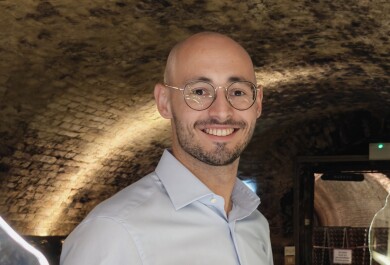
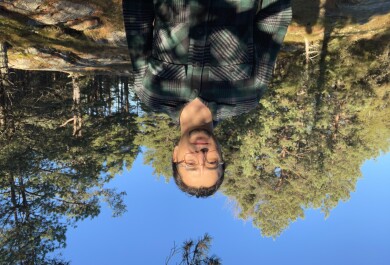
Dissertation defence (Information and Communication Technology): MSc Dipak Kumar Nidhi
MSc Dipak Kumar Nidhi defends the dissertation in Information and Communication Technology titled “Contrastive Representation Learning for Mineral Prospectivity Mapping: Bayesian Spatial Fusion with Uncertainty Quantification for Prospectivity Targeting under Class Imbalance” at the University of Turku on 30 November 2026 at 12.00 (University of Turku, Agora, XXI lecture hall, Vesilinnantie 3, Turku).
Opponent: Professor Álvaro Rocha, Ph.D. (Lusófona University – Porto University Centre, Portugal)
Custos: Docent Rajeev Kanth, Ph.D. (University of Turku)
Summary of the Doctoral Dissertation:
Finding mineral deposits is difficult because only a few locations are known, while large areas remain unexplored. My dissertation develops a machine-learning approach that combines geological and geophysical information to help identify promising places for further investigation.
The method learns patterns from known occurrences of minerals and ranks the exploration targets. It also indicates those places where predictions are uncertain and where measurements have an impact on the results. This helps geologists understand the recommendations and decide where more information is needed.
The research used data from Finnish Lapland and South Australia. In the Finnish study, the model recognized all 17 known occurrences when each was tested in turn using the remaining occurrences for training. The final map in Australia only ranked 6 of 7 known occurrences in the highest ranked 1% of the study area. However, more rigorous testing revealed that making predictions for previously unseen instances continues to be difficult when few examples are available.
One key finding is that the method of testing a model is as important as the model itself. Predictions often seem more accurate on a site near the area where the geologist has worked before than in a new site, due to similar geology. There was a recommendation for greater uncertainty testing and reporting in a review of 89 studies.
The research provides tools that could help exploration teams focus surveys and sampling on smaller, more promising areas. This may minimise unnecessary work and facilitate more rational allocation of exploration expenditure. The approach helps with geological judgment and in-field and drilling are still required to verify new deposits.