Dissertation defence (Art History): MA Murat M. Türkmen
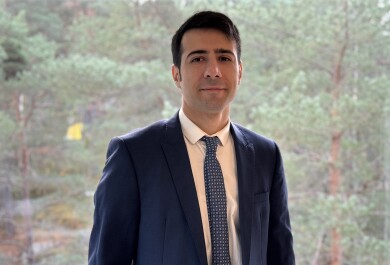
MA Murat M. Türkmen defends the dissertation in Art History titled “More-than-human in Ecocritical Art: Negotiating between Politics and the Autonomy of Art” at the University of Turku on 1 December 2026 at 16.00 (University of Turku, Main building, Tauno Nurmela lecture hall, Turku).
Opponent: Professor Emeritus Mark A. Cheetham (University of Toronto, Canada)
Custos: Docent Katve-Kaisa Kontturi (University of Turku)
Summary of the Doctoral Dissertation:
This article-based dissertation examines how contemporary ecocritical art challenges the still-persistent human-centered perspective in artmaking and in broader social, political, and ecological contexts. To investigate this topic, I focus on the artworks of three internationally exhibited Finnish contemporary artists, Hanna Saarikoski (b. 1978), Heini Aho (b. 1979), and Tuomas A. Laitinen (b. 1976). Their artworks raise questions about the human ecological impact on the local environment, such as the carbon footprint in Finland and the precarious condition of the Baltic Sea, with also global implications for the human-caused imbalance in Earth’s carbon and water cycles.
The term more-than-human is central to this dissertation and refers to the understanding that almost every event and phenomenon necessarily involves interaction between human and nonhuman actors. I explore how more-than-human actors, such as wood, charcoal, textiles, glass, and copper, participate in the artmaking along with the (human) artist and how they affect artistic processes. To understand this, I use a collaborative methodology that includes visiting the artists’ studios, conducting interviews with them, observing artmaking processes, and experiencing the artworks during exhibitions. This diverse research material allows me to examine my main research question: how does acknowledging more-than-human actors in ecocritical art challenge human-centered perspectives in art and the socio-political sphere?
In this dissertation, I discuss the notion of the autonomy of art, linked to human-centrism to some extent. This notion commonly refers to the view that an artwork’s autonomy depends on its aesthetically pleasing qualities. Sometimes it is also understood as artworks arising from the artist’s fully independent creative act. These views disregard the social, political, and material factors involved in processes of artmaking. However, I focus on how artworks emerge through material and socio-political webs of interaction. I ask, for instance, to what extent the materialities of art obediently follow the artist’s aims, and in which ways they can perhaps act partly independently.
My findings show that artmaking processes are open to the influence of all actors involved, mainly the artist and the artistic materials (even those no longer visible at the artwork's exhibition stage). The findings suggest that artmaking processes are open-ended, unfixed, and thus partly autonomous. This is important because it highlights that humans are not the center of everything, especially in artmaking. The dissertation proposes new perspectives (conceptual and practical) to help us develop ways in which humans can coexist with more-than-human actors in the world more attentively and responsibly.