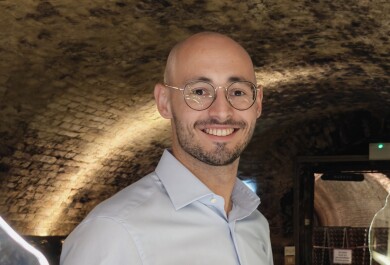
Dissertation defence (Physiology): MSc Ammar Ahmedani
MSc Ammar Ahmedani defends the dissertation in Physiology titled “Decoding the chromatoid body: Functional insights into RNA regulatory networks in male germ cells” at the University of Turku on 4 December 2026 at 13.00 (University of Turku, Medisiina C, Osmo Järvi Auditorium, Kiinamyllynkatu 10, Turku).
Opponent: Assistant Professor Pei-Hsuan Wu (University of Geneva, Switzerland)
Custos: Professor Noora Kotaja (University of Turku)
Summary of the Doctoral Dissertation:
Infertility affects millions of couples worldwide, with male-related factors contributing to approximately half of all cases. Despite advances in reproductive medicine, the underlying causes of male infertility often remain unknown. Understanding how sperm develop and what can go wrong during this process is therefore essential for improving our knowledge of male reproductive health.
Sperm production, known as spermatogenesis, requires precise regulation of gene expression as male germ cells differentiate into sperm. During this process, developing germ cells regulate thousands of messengers RNAs (mRNAs), which carry the genetic information needed to make proteins. Some mRNAs are stored for protein synthesis at later stages, while others are selectively degraded as development progresses. The coordinated regulation of mRNA storage and degradation helps ensure that proteins are produced at the appropriate stages of sperm development.
My doctoral research explored how chromatoid body (CB), a small structure rich in RNA and proteins, helps regulate messenger RNA (mRNA) during sperm development. One of the proteins concentrated in CB is SMG6, an enzyme involved in RNA degradation. When we removed SMG6 from male germ cells in mice, the cells stopped developing before they could form mature sperm. Our findings also suggest that SMG6 works with another protein, PIWIL1, to help remove selected mRNAs, and that chemical modification of RNA can influence this process. Together, these results help explain how CB supports normal sperm development.
This research helps explain how defects in RNA regulation can disrupt sperm development. The findings in mice provide a basis for investigating whether similar defects contribute to unexplained male infertility in humans. If further studies confirm this link in humans, they could help identify new ways to diagnose and treat male infertility caused by defects in RNA regulation.