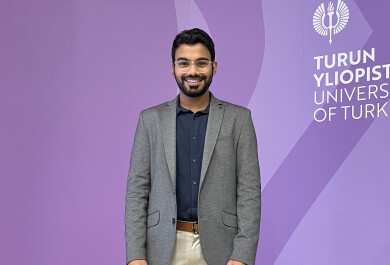
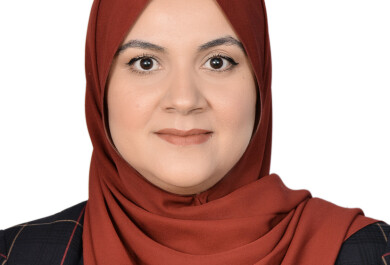
Dissertation defence (Information Systems Science): MSc Shan Feng
Time
MSc Shan Feng defends the dissertation in Information Systems Science titled “Sleep Tracking: Health Advisor, Stressor, or Both?” at the University of Turku on 10 April 2026 at 12.00 (University of Turku, Turku School of Economics, Lähitapiola (Lecture hall 16), Turku).
Opponent: Professor Harri Oinas-Kukkonen (University of Oulu)
Custos: Professor Matti Mäntymäki (University of Turku)
Summary of the Doctoral Dissertation:
Adequate sleep is essential for overall health and well-being. Despite advances in understanding sleep and the development of sleep-tracking technologies, insufficient and poor-quality sleep remain widespread. Sleep tracking, a form of self-tracking, refers to the practice of using technological tools to monitor, record, and measure an individual’s sleep. However, there is limited understanding of how users’ psychological needs shape engagement, how they interpret and respond to advice, and how negative effects, such as stressors and health anxiety, may emerge.
This dissertation sheds light on how people engage with sleep tracking technology. Overall, the findings across six articles reveal that sleep tracking can be understood from a sociotechnical perspective, embodies a duality as both advisor and stressor, and involves complex, asymmetric relationships between its antecedents and outcomes. Specifically, this dissertation demonstrates that feature-enabled technology affordances can both satisfy and frustrate users’ basic psychological needs in the context of sleep tracking. Moreover, the satisfaction of autonomy and competence needs plays an important role in sleep tracking, whereas relatedness needs are less central. In addition, the dissertation identifies several configurations of technology affordances and psychological outcomes that contribute to high and low levels of advice-compliance behavior. The findings highlight that obtaining sleep-related guidance and triggering behavioral changes are an important pair of affordances associated with advice-compliance behavior. Finally, this dissertation identifies, develops, and validates the measurement items for eight potential stressors associated with sleep tracking. The results indicate that invasion, unreliability, pursuit of perfect data, and vague guidance have direct and positive effects on health anxiety, while complexity, inaccuracy, and data–perception discrepancy have indirect effects on health anxiety.
Accordingly, this dissertation contributes to both theoretical understanding and practical applications while also outlining research agendas for future studies. Theoretically, it advances sleep-tracking knowledge by conceptualizing sleep tracking as a sociotechnical practice and clarifying the pathways that influence sleep-tracking outcomes from the information systems perspective. This dissertation also enriches and expands the sociotechnical perspective and existing theories to better fit the sleep-tracking context.
From a practical standpoint, the findings offer insights for designing a user-centered sleep-tracking technology by enhancing detection accuracy, implementing transparency mechanisms, providing personalized feedback, offering nonintrusive notifications, and rethinking social features and comparative metrics. This dissertation also guides users to engage more proactively, remain attentive to their own feelings and perceptions, and avoid overreliance on technology.
For future research, scholars should strive for a balance between qualitative and quantitative approaches, strengthen theoretical foundations, and promote interdisciplinary collaboration. Moreover, researchers are encouraged to explore individual differences, the evolution of technology, user-centered design, stakeholder roles, and the broader impacts of sleep tracking, including underlying mechanisms of use, effective use, behavioral change, and potential side effects.