Dissertation defence (Mathematics): MSc Joel Sjöberg
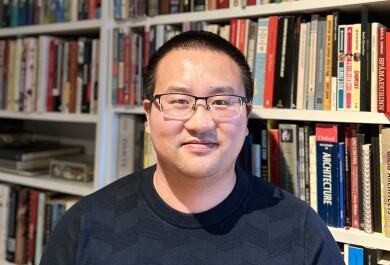
MSc Joel Sjöberg defends the dissertation in Mathematics titled “Artificial intelligence unveils tumor diversity in brain cancer through Raman spectroscopy: Machine learning for glioma subtype classifications” at the University of Turku on 13 March 2026 at 13.00 (University of Turku, Agora, XXI lecture hall, Vesilinnantie 3, Turku).
Opponent: Professor Adrian Iftene (Alexandru Ioan Cuza University of Iasi, Romania)
Custos: Professor Ion Petre (University of Turku)
Summary of the Doctoral Dissertation:
Gliomas are cancerous brain tumors with diverse characteristics. This diversity can prolong efficient diagnosis and treatment, which worsens patient prognosis. A possible improvement to current analytical methods can be found through Raman spectroscopy. This technique can efficiently scan entire tumor environments, resulting in large datasets of spectra for analysis. However, due to the wide variety of information present in Raman spectra, extracting genetic information becomes a laborious task.
In my thesis, I present mathematical methods through AI for efficient processing and classification of Raman spectra. This is achieved through mathematical modeling and the computational efficiency of machine learning. The thesis focuses on a dataset of Raman spectra extracted from glioma tumors, provided by a team from the National Cancer Institute of the NIH, USA. My results show the promise of utilizing AI on medical data to help experts analyze gliomas in greater detail. The resulting models, trained on a dataset of over 250,000 tumor spectra, are capable of high accuracy predictions of tumor labels. Furthermore, I show how my methods are capable of identifying non-tumor areas in tumor environments, identifying feature importances within Raman spectra, synthetic generation of Raman spectra, and removal of erroneous Raman components. To ensure the usability of this work on novel datasets, my work also seeks to reduce the so-called “batch effect” through deep learning. Reducing the batch effect lessens learned data-bias in mathematical modeling and enables their use on novel datasets, which is an essential part of all medical analyses.
This work contributes to the field of neuro-oncology by demonstrating how tumor surfaces can be visualized and analyzed according to their biological properties through AI. In so doing, we seek to aid analysts in deepening their understanding of the nuances in sub-spatial glioma heterogeneity.