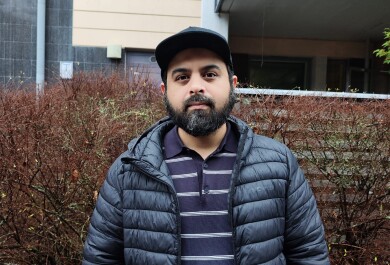
Dissertation defence (Psychology): MSc Yuriy Nazar
Time
MSc Yuriy Nazar defends the dissertation in Psychology titled “Socio-psychological determinants of posttraumatic growth among practising psychologists during the full-scale war in Ukraine” at the University of Turku on 20 November 2026 at 12.00 (University of Turku, Publicum, Pub1 (Mauno Koivisto lecture hall), Assistentinkatu 7, Turku).
Opponent: Professor Emeritus Aarno Laitila (University of Jyväskylä)
Custos: Professor Kirsi Peltonen (INVEST Research Flagship Centre, University of Turku)
Summary of the Doctoral Dissertation:
This dissertation examines posttraumatic growth (PTG) – positive psychological changes resulting from war-related traumatic experiences among Ukrainian practising psychologists. These professionals face dual exposure: personal and work-related secondary traumatisation. The study advances an innovative axiological approach, proposing that posttraumatic adaptation is related to the transformation and reprioritization of basic human values.
The aim of the research is to explore how personal, professional, and contextual factors interact within a proposed axiopsychological model of PTG. Specifically, to verify the role of trauma exposure, value orientations, psychological resources (resilience, coping strategies, self-efficacy), professional environment factors, as well as psychological well-being in the dynamics of PTG. Empirical data were collected through a survey of Ukrainian practicing psychologists (N=214). Statistical methods included correlation analysis and comparative analysis of mean differences, as well as regression, factor, and discriminant analyses.
Key findings reveal that age (35–40 years) and living abroad at the time of the survey were associated with higher mean PTG rates. Value orientations proved to be significant correlates and predictors of growth, with traditional values emerging as the strongest unique predictor of overall PTG. Regarding psychological resources, factor analysis showed that resilience, self-efficacy, and problem-focused coping integrate into a proactive cognitive and behavioural system. Discriminant analysis indicated that a high PTG profile is characterized by resilience combined with cognitive restructuring, social support seeking, and tactical problem avoidance, whereas rigid problem-solving strategy predicts low levels of growth. In the professional domain, the group of psychologists with increased client load was characterised by higher mean PTG rates; compassion satisfaction and secondary trauma were positively associated with PTG. Furthermore, cognitive restructuring, compassion satisfaction, and self-efficacy served as the strongest predictors of overall psychological well-being.
The findings confirm the axiological nature of posttraumatic adaptation, showing that value-based PTG is connected to cognitive flexibility, proactive self-regulation, and social integration.