The old-fashioned information society is dead, long live the digitally intelligent society! This change brings many revolutional challenges to the futures of working life. Digital development started three decades ago when information and communication technology (ICT) liberated us from geographical location. At the same time, new tools are constantly becoming available to us, some of them shifting to obsolence, from tabloid computers, IPods, IPhones, zooms, avatars and AI to cloud services and ever mushrooming social media platforms. The work of the future will be increasingly networked, mobile, hybrid and lubricated by digital services.
Hybridisation and multi-locality
Work will become more and more hybrid and multi-locational, we can work anywhere: at office, at home, at summer cottage, while travelling, in a cafeteria, park, co-working space or at a customer's premises. A work space can even be located into a forest.
Time- and place-independent work is actually work performed in several times and places, while the importance of place is once again emphasised. This became evident in our interviews and Futures Cliniques within the T-winning Spaces 2035 Project (Heinonen & Viitamäki 2025: Heinonen et al. 2024; see also Heinonen 2025). In Turku at FFRC Conference this June we conducted a special Millennium Project Session where we presented for actor-based narratives of knowledge hybrid work. Participants elaborated and evaluated these narratives where the great variety of places for work as well as for work motivations clearly emerged (di Berardo et al. 2025). Jerome Glenn, CEO of the The Millennium Project, emphasised the self-actualisation economy (see Glenn 2019) and reminded us that ‘nobody can be a better you than you’.
He also accentuated the challenge of not only AI but of the transition of AI into AGI (Artificially General Intelligence), hugely impacting work life. He told us that the greatest investment in the history of finance is currently going into Artificial General Intelligence (AGI). If we do not set the guardrails for this development, it will be too late in terms of negative implications and risks involved (Glenn 2025). The UN has now understood this heeding and appointed Glenn as Chair of a High-Level Artificial General Intelligence (AGI) Expert Panel by the UN Council of Presidents of the General Assembly. This panel is working to develop a global framework for UN action on AGI governance, with a report released in May 2025 providing recommendations to prevent negative outcomes and ensure safety (see also Kuusi & Heinonen 2022).
In information and knowledge work, employees can increasingly choose where they want to work. The workplace is an interactive intersection of the meeting places of the physical and virtual worlds. Multi-location requires time skills. In addition to managing one's own time, it means being able to utilise the desynchronisation of society — you no longer have to do everything at the same time as everyone else. In a global world, people working in different time zones can take advantage of the time difference. A text written in the evening by a colleague who spends long periods or lives permanently in California reaches me in the morning - and the text I have worked on returns to him just in time for him to continue. We have also written a paper especially on temporal aspects of hybrid work (Virmajoki et al. 2025).
In the future, work will be organised according to the notes of purposefulness and work-life balance — not to the rhythm of traditional hierarchical orders. Clock-controllers (in Finnish ‘kellokallet’) no longer have a position, work will be evaluated on the basis of quality. Otherwise, we will not be able to meet productivity goals and efficiency requirements. Understanding this requires a fundamental renewal of management culture and work practices.
With the development of the Internet and social media, peer production and the ethos of sharing are spreading throughout society. At the same time as consumers become producers, many other roles are also being mixed: customers become sellers, students become teachers, citizens become suppliers, patients become doctors. Employees become supervisors. Employees seek the same things from their work life as they do from their free time — inspiration, enthusiasm, and playfulness.

Why not create spatial oases?
There is also untapped potential in design of space. Why do we accept dreary, cramped, sterile and harshly geometric spaces when we could transform workspaces into creative, multisensory socio-cultural spatial oases? Creating such spaces does not require excessive costs, but above all ingenuity, experimentation and good will from the employer.
In the future, the need for meaningfulness will be accentuated as a future skill. More and more people are seeking purpose and meanings in their lives — not just in their working lives. I have noticed a longing for people feeling themselves as whole beings trembling in the air. Therefore, not even digitally intelligent society is enough! We yearn for Digital Meanings Society (Heinonen 2020).
Good (work) life in digital meaning society
A good life — and a good work life — consists of understanding and balancing the whole. The key challenge is how to combine work, free time, family life, hobbies, and social impact into a whole without any of them suffering. Furthermore, work space constellations and frequencies to visit office also depend on the family and private life situation of the person in question. Holistic view is needed and indeed an employee’s work arrangements could be carefully evaluated once a year. This would guarantee fulfilling the required level of flexibility and sense of wholeness. A good work life is not just about efficiency and productivity. Time rhythms should allow plenty of room for rest as well. Perhaps in the future, rest is considered an integral part of work hours because they nourish the wellbeing of employees? Too high demands for productivity may drive an employee in the corner.
Seeing one's own work as meaningful, as part of a whole, should also be a fundamental right for everyone. Supporting employees' self-organisation and increasing connections through social technologies, as well as encouraging free, independent activity, can significantly develop meaningful competence. During the COVID 19 pandemic people were forced to teleworking due to restrictions to enter offices. Even those usually reluctant to work remotely found out that it is feasible to have their work done. (Karjalainen et al. 2021.) Now when we are no more constrained by such regulations, the pendulum has swung to the opposite position. Some companies have started to order back-to-office mandates. This is against the best practices of teleworking which emphasise that it should be allowed (if nature of work and personality is suited to it), while it should be always voluntary in order to get the best results (i.e. efficiency + wellbeing). (Heinonen & Saarimaa 2009). Companies and employers are now facing a golden opportunity – making offices in terms of their physical design and social stage so attractive that employers prefer to spend at least a couple of days at office and the rest at hoffice (home office) or third place without having to force them into strict patterns. The more tailor-made the frequency of teleworking is made, the more effective it is for employees’ wellbeing.
Sirkka Heinonen
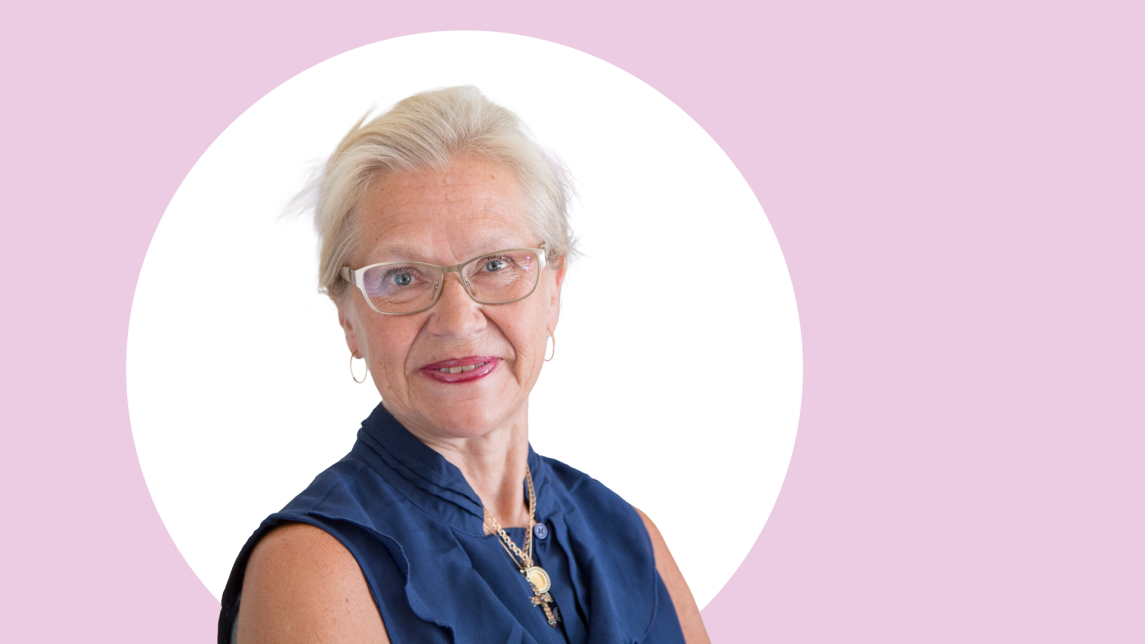
The writer is a Professor Emerita at Finland Futures Research Centre (FFRC).
References and readings:
di Berardo, Mara, Heinonen, Sirkka, Taylor, Amos, Viitamäki, Riku & Virmajoki, Veli (2025). Exploring Socio-Technical Futures of Work: A Narrative-Based Foresight Approach. Report of the Millennium Project Session at the Futures of Technologies Conference 2025. FFRC eBooks 4/2025. Turku.
Glenn, Jerome (2025). Global Governance of the Transition to Artificial General Intelligence: Issues and Requirements, published by De Gruyter Brill.
Glenn, Jerome (2019). Work/Technology 2050. Scenarios and Actions. The Millennium Project. Washington D.C.
Heinonen, Sirkka (2025). Futures Consciousness as Vaccination Against Misplaced Futures. In: Johannes Glückler, Matthias Garschagen & Robert Panitz (eds.) Placing the Future. Springer.https://link.springer.com/book/9783031768408
Heinonen, Sirkka (2020). Bioeconomy as Proponent of Digital Meanings Society, 507-544. In: Bio#Futures-Foreseeing and Exploring the Bioeconomy, edited by Emmanuel Koukios and Anna Sacio-Szymanska. Springer. https://link.springer.com/book/10.1007/978-3-030-64969-2
Heinonen, Sirkka & Viitamäki, Riku (2025). Society, Skills and Spaces – Curated Conversations on Futures of Work with Foresight Experts. FFRC eBooks 1/2025. Finland Futures Research Centre, University of Turku. ISBN 978-952-249-623-2 (pdf), 978-952-249-624-9 (print). ISSN 1797-1322. https://urn.fi/URN:ISBN:978-952-249-623-2
Heinonen, Sirkka, Viitamäki, Riku, Taylor, Amos & Ebrahimabadi, Samaneh (eds.) (2024). On Futures of Work, AI, and Narratives. Roundtable Discussion with Mariana Bozesan, Member of the Club of Rome and Jerome Glenn, Executive Director of the Millennium Project. https://www.utu.fi/sites/default/files/public%3A/media/file/Roundtable_Session-140624.pdfVideo: https://youtu.be/vBjPMWiYshY
Heinonen, Sirkka & Taylor, Amos (2025). On Futures of Work, AI, and Narratives Roundtable Discussion with Mariana Bozesan, Member of the Club of Rome and Jerome Glenn, Executive Director of the Millennium Project.
Heinonen, Sirkka & Saarimaa, Riikka (2009). Työelämän laadulla parempaa jaksamista – Kuinka etätyö voi auttaa? Työ- ja elinkeinoministeriön julkaisuja Työ ja yrittäjyys 25/2009. https://tem.fi/documents/1410877/2106637/Et%C3%A4ty%C3%B6raportti+2009.pdf/07c1a658-b3d3-49ee-9762-6b6f4d05ed2c/Et%C3%A4ty%C3%B6raportti+2009.pdf
Karjalainen, Joni, Mwagiru, Njeri, Salminen, Hazel & Heinonen, Sirkka (2021). Integrating crisis learning into futures literacy – exploring the “new normal” and imagining post-pandemic futures. On the Horizon, October 2021. DOI 10.1108/OTH-10-2021-0117 https://urn.fi/URN:NBN:fi-fe2022081154254
Kuusi, O., & Heinonen, S. (2022). Scenarios from Artificial Narrow Intelligence to Artificial General Intelligence—Reviewing the Results of the International Work/Technology 2050 Study. World Futures Review, 14(1), 65–79. https://doi.org/10.1177/19467567221101637
Virmajoki, Veli, Heinonen, Sirkka, Viitamäki, Riku, Taylor, Amos & Ruotsalainen, Juho (2025). When We Work. Delphi Results on Time and Temporality within Futures of Work. Futures & Foresight Science (accepted for publication 30 August 2025)