My Experience with the eMAMA Project.
A silent crisis behind the smiles
Across Sub-Saharan Africa — in Namibia’s windswept clinics, Malawi’s rural health centers, and Zambia’s bustling maternity wards — life begins every day. Yet hidden behind the laughter of newborns and the relief of safe deliveries is a silent, deadly crisis: the mental health of mothers is being neglected.
In many African communities, mental health problems are misread as weakness, witchcraft, or moral failure. Mothers suffering silently from postpartum depression are told to “pray harder” or “be grateful” — a cruel misinterpretation of a serious medical condition. Some are abandoned, stigmatized, or even harmed by families and communities who do not understand what is happening.
A personal and professional mission
As a trained midwife, I’ve spent years supporting women through pregnancy and birth. While my clinical experience comes from Finland — where maternity care is comprehensive and well-resourced — I’ve learned that mothers everywhere share more than just the physical journey of pregnancy and childbirth. Whether in Turku or rural Malawi, women carry the same fears, hopes, and emotional vulnerability during pregnancy and postpartum.
I’ve seen how difficult it can be for women to speak about their mental health. But in settings where stigma runs deeper and support is harder to find, silence can become dangerous. We now know that untreated maternal mental health problems affect not just mothers but their babies too — influencing everything from birth outcomes to long-term child development.
Acting nowadays as a teacher of Midwifery and being a PhD candidate, I’ve spent the past few years immersed in a mission that’s both professional and deeply personal: giving voice to the often-overlooked mental health struggles of mothers in Sub-Saharan Africa. Shared humanity is what drew me and our research team to develop the eMAMA project — a powerful collaboration between institutions in Namibia, Malawi, Zambia, and Europe to strengthen maternal mental health education across Sub-Saharan Africa.
Listening, learning, and seeing the gaps
In the first phase of the project, I conducted focus group interviews with university educators in the partner countries. These sessions — which also form the foundation of my doctoral research — revealed a major gap: maternal mental health is almost entirely missing from current healthcare training programs.
The examples told in the interviews, for example, about the treatment of depressed mothers in communities, really opened my eyes. Something in all truth needs to be done for changing attitudes. Despite the high rates of depression, anxiety, and trauma among new and expecting mothers, providers are often left without the tools or knowledge to respond.
Co-creating a curriculum for change
Together with our African university partners, I was closely involved in developing a new postgraduate training curriculum designed to fill this gap. Our approach was collaborative and locally grounded — informed by both international evidence and the real-world challenges educators and clinicians face in their settings.
This training, which launched in June 2025, will increase healthcare professionals’ skills and knowledge to recognize and support women struggling with mental health challenges during and after pregnancy. In addition, education will hopefully change attitudes towards mental health challenges during motherhood to be less negative and reduce the stigma associated with the phenomenon. Over 800 professionals have already enrolled — this is a clear signal that this training meets a real need.
Education matters
Education is vital. When healthcare workers can recognize early signs of distress, offer compassionate care, and refer women appropriately, we don’t just prevent suffering — we create stronger, healthier communities.
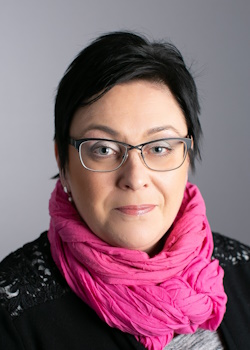
Mari Berglund
The writer is a Midwife, MNSc, Doctoral Researcher and Senior lecturer at the Turku University of Applied Sciences and Project coordinator in the Research Centre for Child Psychiatry at the University of Turku. Her research topic and interests are in the field of perinatal mental health. Her doctoral dissertation will be done in the 3-year project eMAMA, funded by the European Union.
References:
Anokye R., Acheampong E., Budu-Ainooson A., Obeng E.I. & Akwasi A.G. (2018) Prevalence of postpartum depression and interventions utilized for its management. Annals of General Psychiatry 17(18): 2-8.
Dennis C.L, Falah-Hassani K. & Shiri R. (2017) Prevalence of antenal and postnatal anxiety: systematic review and meta-analysis. The British Journal of Psychiatry 210: 315-323.
eMAMA Project’s official website: https://emama.turkuamk.fi/about/
Hanlon, C. (2013). Maternal depression in low- and middle-income countries. In International Health (Vol. 5, Issue 1, pp. 4–5). https://doi.org/10.1093/inthealth/ihs003
Herba C.M., Glover V., Ramchandani P.G. & Rondon M.B. (2016) Maternal depression and mental health in early childhood: an examination of underlying mechanisms in low-income and middle-income countries. Lancet Psychiatry (3): 983-992.
Howard L.M. & Khalifeh H. (2020) Perinatal mental health: a review of progress and challenges. World Psychiatry 19: 313-327.
Korhonen M. & Luoma I. (2017) Äidin masennuksen vaikutus lapsen kehitykseen. Suomen lääkärilehti 15-16 (72):1005-1009.
Karimzadeh M., Rostami M., Teymouri R., Moazzen Z. & Tahmasebi S. (2017) The association between parental mental health and behavioral disorders in pre-school children. Electronic Physician 6: 4497-4502
Support science and research
Support science and research
You might also be interested in
NordCAP Conference brought international experts to Turku to discuss the changing landscape of child and adolescent mental health