Community Dentistry
At undergraduate level, the topics include such health promotion, ethics, communication, dental fear, legislation, health care organizations and their financing, health policy, occupational well-being, and working within the oral health services community. The department is also in charge of training of specialists in oral public health, one of the five specialities in Finland. This three-year training leads to leadership and expert positions in health care.
University of Turku, Institute of Dentistry, Lemminkäisenkatu 2, FI-20520 Turku, Finland
Office Assistant Sari Heikkilä
Professor and Chair, DDS, PhD, Dental Specialist in Public Health Satu Lahti
Docent (Adjunct Professor), Senior Lecturer, DDS, PhD, Specialist in Cariology Vesa Pohjola (part-time)
University Teacher, MSc Auli Suominen
University Teacher, DDS, Dental Specialist in Public Health Katri Palo
University Teacher, PhD (Biochem.), DDS, Dental Specialist in Public Health Anu Kallio (part-time)
University Teacher, DDS, Dental Specialist in Public Health Sanna Seppänen (part-time)
Senior Researcher, DDS, PhD, Specialist in Dental Anesthesiology Mika Kajita
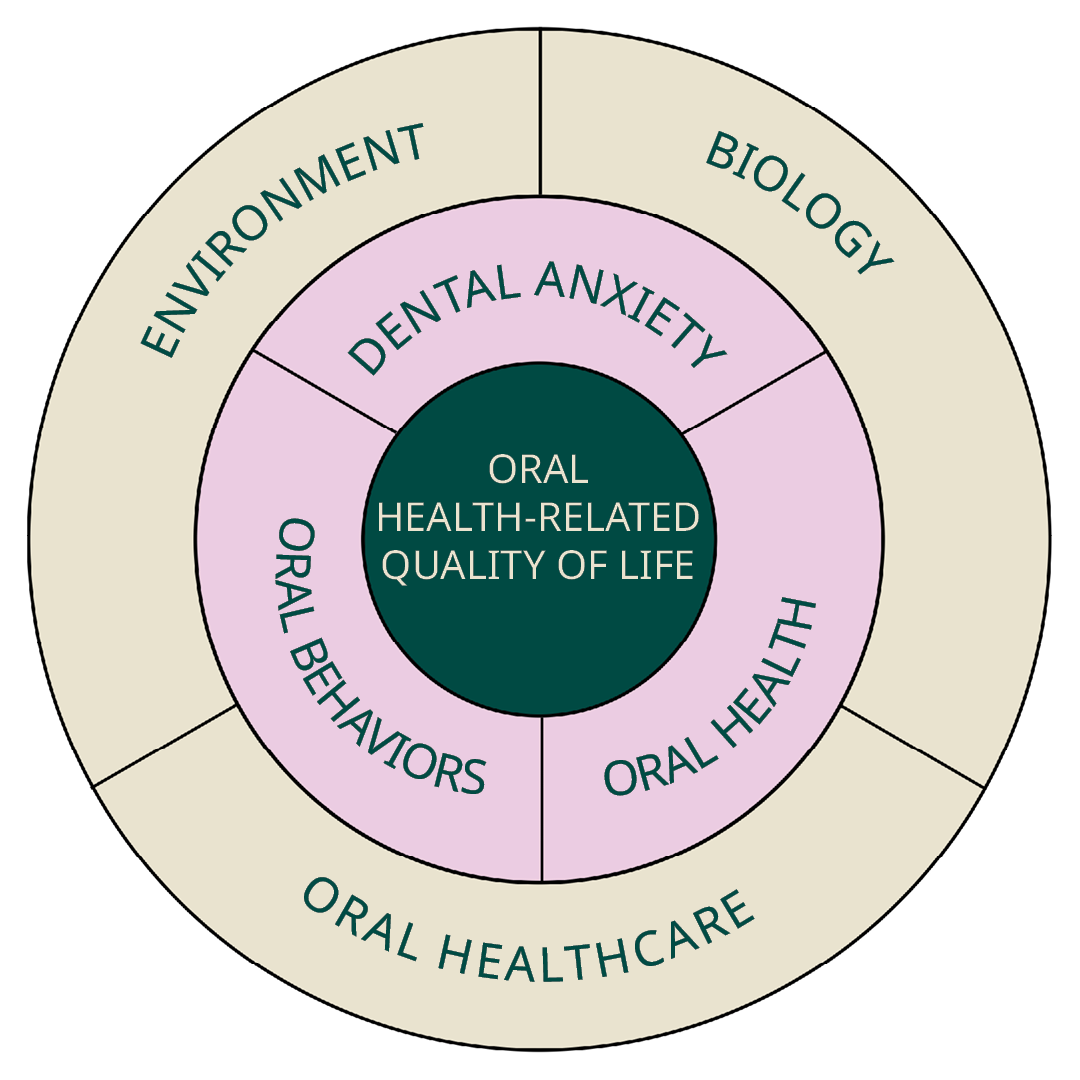
The main research projects in the Department of Community Dentistry focus on dental anxiety, oral health-related quality of life, and the oral health and related habits of children and adolescents. The research utilizes extensive national datasets from the FinnBrain Birth Cohort Study (finnbrain.fi) and the Northern Finland Birth Cohorts 1996 and 1986. The studies are conducted in collaboration with these projects and with international experts.
In children, the incidence and development of dental anxiety are examined, with particular attention to key factors underlying the development of dental anxiety: biological vulnerability, the family as a developmental context, and oral health care procedures and experiences. The aim is to identify children who are most susceptible to developing dental anxiety and, based on this knowledge, to focus on the most important issue, namely the prevention of the onset of dental anxiety.
In adults, in addition to the determinants of dental anxiety, the main consequences of dental anxiety are investigated: avoidance of oral health care, poor oral health and related quality of life, as well as potential comorbid health conditions.
With regard to oral health and oral health-related quality of life, the research explores how they are associated with the oral health behaviours, knowledge and attitudes of children and adults, with dental anxiety, and with the use of oral health services. Changes in these factors and their interrelationships are also examined. A particular focus of interest is how these associations are transmitted within the family.