Practical training in special education launched Sofia Virta's exceptional career path
At the time of the interview, Sofia Virta, an alumna of the Faculty of Education, is serving her second term as a Member of the Finnish Parliament and her second year as the Chair of the Greens party. Sofia wanted to learn about human growth, development and the factors that influence it, education, teaching, dealing with challenging situations, and supporting the learning of pupils with additional needs. Special education was therefore a natural choice.
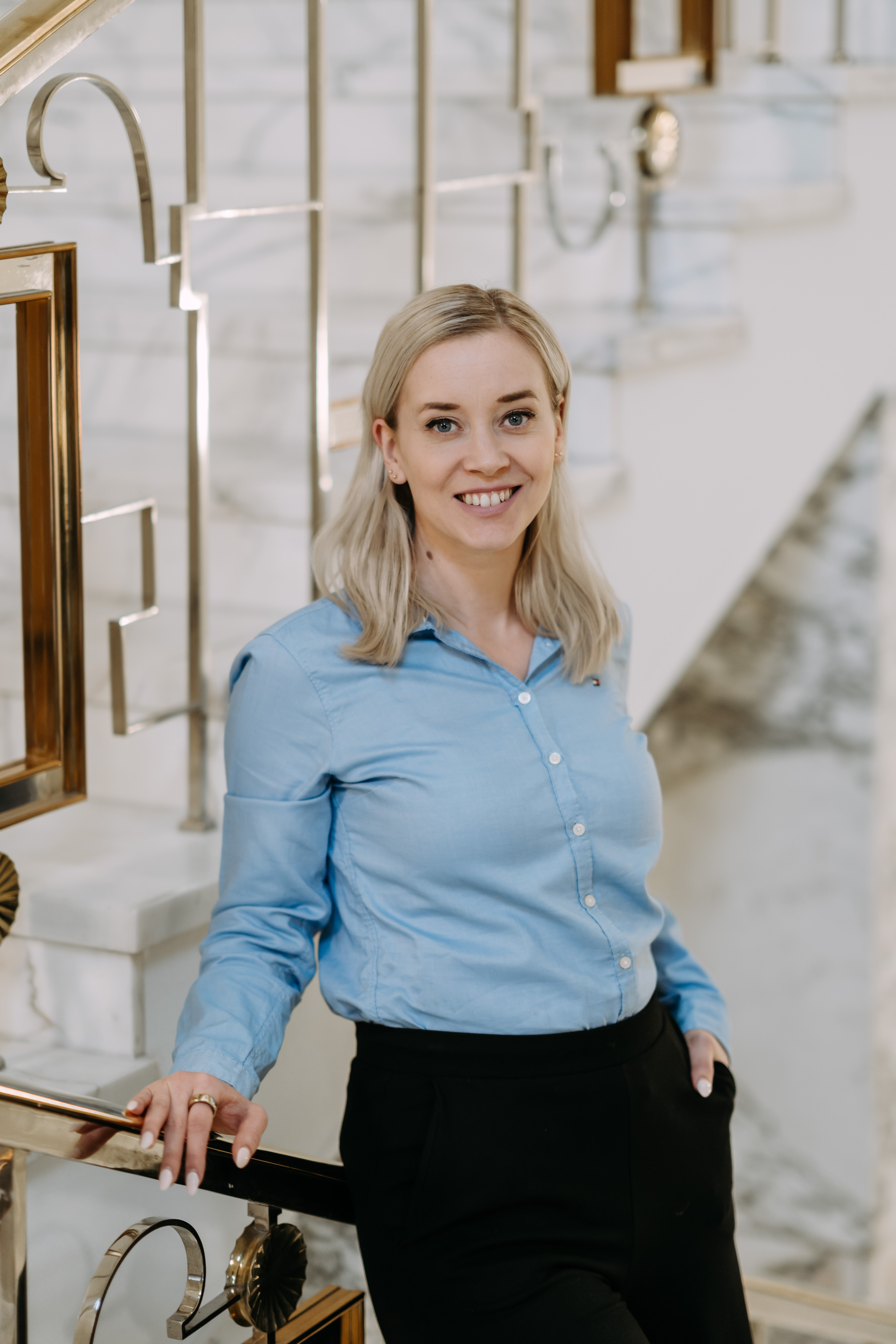
Photo: Katri Haavisto Photography
Why did you select your major subject? What minors did you select?
I wanted to learn about human growth, development and the factors that influence it, education, teaching, dealing with challenging situations, and supporting the learning of pupils with additional needs. Special education was therefore a natural choice. I selected psychology and social work as my minor subjects. I wanted to understand how the human mind works, and I was also interested in dealing with challenging situations and issues as well as children's rights.
What was the most meaningful experience during your studies?
The most meaningful experience was definitely that through my studies I was able to apply for an internship as a young adult to a specialised child protection unit. During my internship, I learned so much about the world – and I was able to start a career path where I met amazing young people (and still get to be a part of their lives) and I gained competence to advocate for children and adolescents.
Did you face any challenges during your studies? How did you overcome these challenges?
I did indeed. During my studies, a long and important relationship that started in my teenage years ended, my parents divorced, and at the same time, I was doing a huge amount of work in child protection alongside my studies. As a result, I was exhausted. My life turned upside down many times during my studies, and in a big way. As an overachiever, I compensated by trying to do even more, and eventually I was so anxious and exhausted that I felt the only option was to end my own life to escape these feelings. Fortunately, that didn't happen and I always say that the best choice I ever made was to choose to live even when I no longer wanted to.
Getting help was challenging, which did not make the situation easier. Even at the time, mental health services were overcrowded. I was lucky to have a mother who eventually referred me to a private practice, where I met a great therapist. This helped me to get back on my feet. My cherished dogs also helped me to cope.
A song that describes your time as a student?
Definitely Mohombi’s Bumpy Ride which we danced to at student parties!
What was your path to your current job?
It has been exceptional.
When I worked in child protection, after one night shift, the teenagers suggested that I should run for president and tell everyone about the things they had been through so that no one else would have to experience what they had.
That was when the idea of politics first came to mind, but I soon buried it. I thought that politics was not for people like me. I thought that you should have a political background in the family, to “know the ropes” in politics, to be wealthier etc.
Later, people close to me suggested it again and that is when I took up the challenge and stood as a candidate for the 2017 municipal elections. I had no idea how election campaigns were run – I just printed flyers I had made myself and handed them out in front of shops and put them in people's mailboxes. I also posted my thoughts on social media and, amazingly, I was elected third to the Kaarina City Council and first from my own list of candidates. It meant that I got a seat on the City Council and other major responsibilities, which was quite something for a newcomer.
But at the time, little did I know what was to come. Just one and a half years later, I almost accidentally became a Member of the Parliament as a mother of a very young baby and with the third smallest election budget in Finland. My budget was less than €2,500 (€0 of my own money), while the average budget of the other candidates who were elected to the Parliament was €38,000. I was in shock and that first night I googled how to turn down the job. I struggled with imposter syndrome and was afraid I wouldn't know enough.
I got a seat on the Social Affairs and Health Committee and got to work on the social welfare reform and coronavirus legislation. It was quite a whirlwind. At the same time, I worked in the Committee on Working Life and Equal Opportunities on the TE24 reform of working life services, visited Ukraine in the middle of the war, and was involved in bringing Finland into NATO. My life changed enormously when I became an MP. At the same time, I became a single parent to a young child, I discovered my home was damaged by mildew, and I was struggling to get out of an abusive relationship. Everything was quite overwhelming.
In the first regional elections in Finland's history, I became the Green group leader of my own district, and in the municipal elections I was re-elected to the City Council by breaking my home town's voting record. I often wonder how funny it is that people vote for me, even though I'm just an ordinary person fighting for children's rights. So I’m still dealing with imposter syndrome.
In the 2023 parliamentary elections I was re-elected, and when I was asked to run for the chair of my party, I declined. But then I felt obliged to try to help the party so that we could advance important issues, and now I've been walking in these boots for 1.5 years. It hasn't been easy, and it certainly won't become any easier, but we will not give up. After all, it is about the future we leave for this country and this planet.
Can you describe your typical day at work?
I am currently (02/2025) serving my second term as a Member of Parliament and my second year as the Chair of the Greens party.
Each day is different. The common factor is probably fast pace, unpredictable situations, and a sense of urgency. My days consist of meetings on different policy topics. As far as committee responsibilities are concerned, I am currently a member of the Grand Committee on EU Affairs. In addition, I chair the following parliamentary working groups: the parliamentary working group for the promotion of safe pregnancy and babyhood, the parliamentary animal assistance working group, and the parliamentary anti-violence network. As the party chair, I am pretty much responsible for everything and my working days include chairing the party board as well as the management group and attending numerous events and functions as the representative of the party. In addition, TV or radio interviews, for example, can be requested at a very short notice, so this job requires the ability to adapt to rapidly changing situations.
What inspires you in your work?
Encounters. It is a great privilege to meet people from all parts of society, different sectors, walks of life, etc. Moreover, the endless amount of information satisfies my curious mind. Of course, what also inspires me about my job is that I can at least try to make a difference so that everyone in Finland would have a safer and better life.
How have your studies prepared you for your current job?
The most important things for me have been the development of holistic thinking, an understanding of cause and effect, an awareness of the importance of growth and development, and how much we can influence the future by safeguarding childhood and stable youth.
During my studies, I got an internship in child protective services and stayed on to work there. I have expansive experience from child protection and it has definitely been a great asset in my current role.
What do you think are the most important professional life skills?
Definitely interpersonal skills – and luckily you can practice them. If social situations do not come naturally to you, don't give up. Being willing to listen to others and setting limits for yourself is very important in order to succeed in collaborating with different groups and so that you do not exhaust yourself.
What would you say to your student self? What advice would you give to students for their studies/professional life?
Take it easy, less will also do. You are enough as you are. Take time for your studies, spend more time in the student community, give yourself permission to be a student.