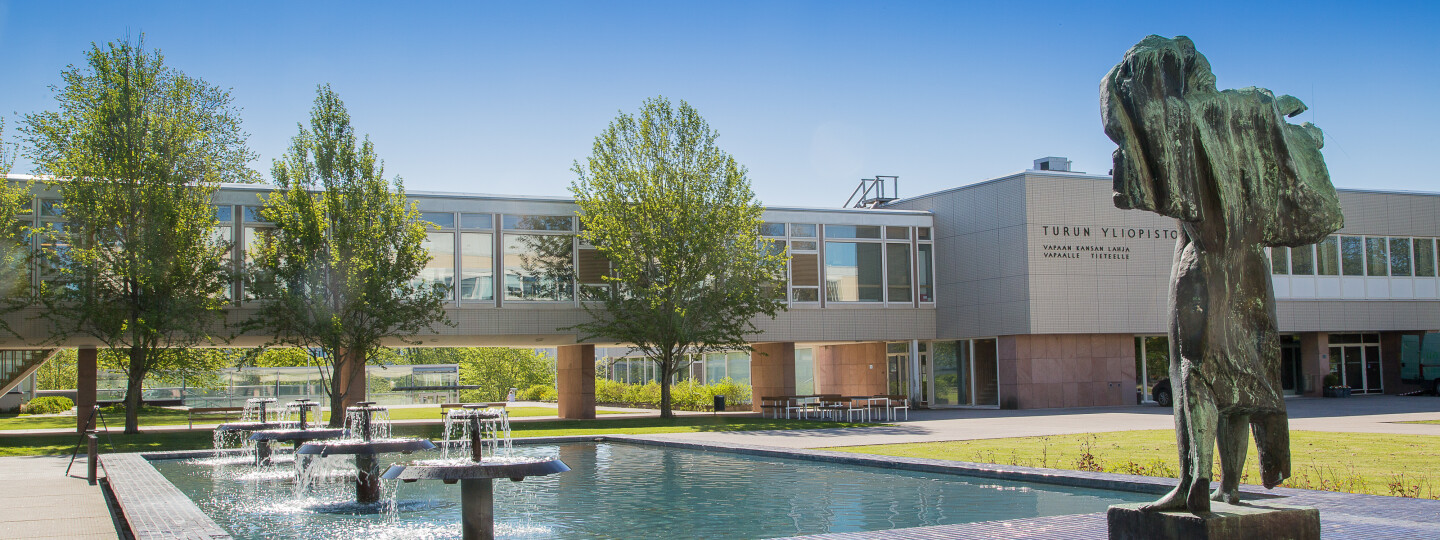
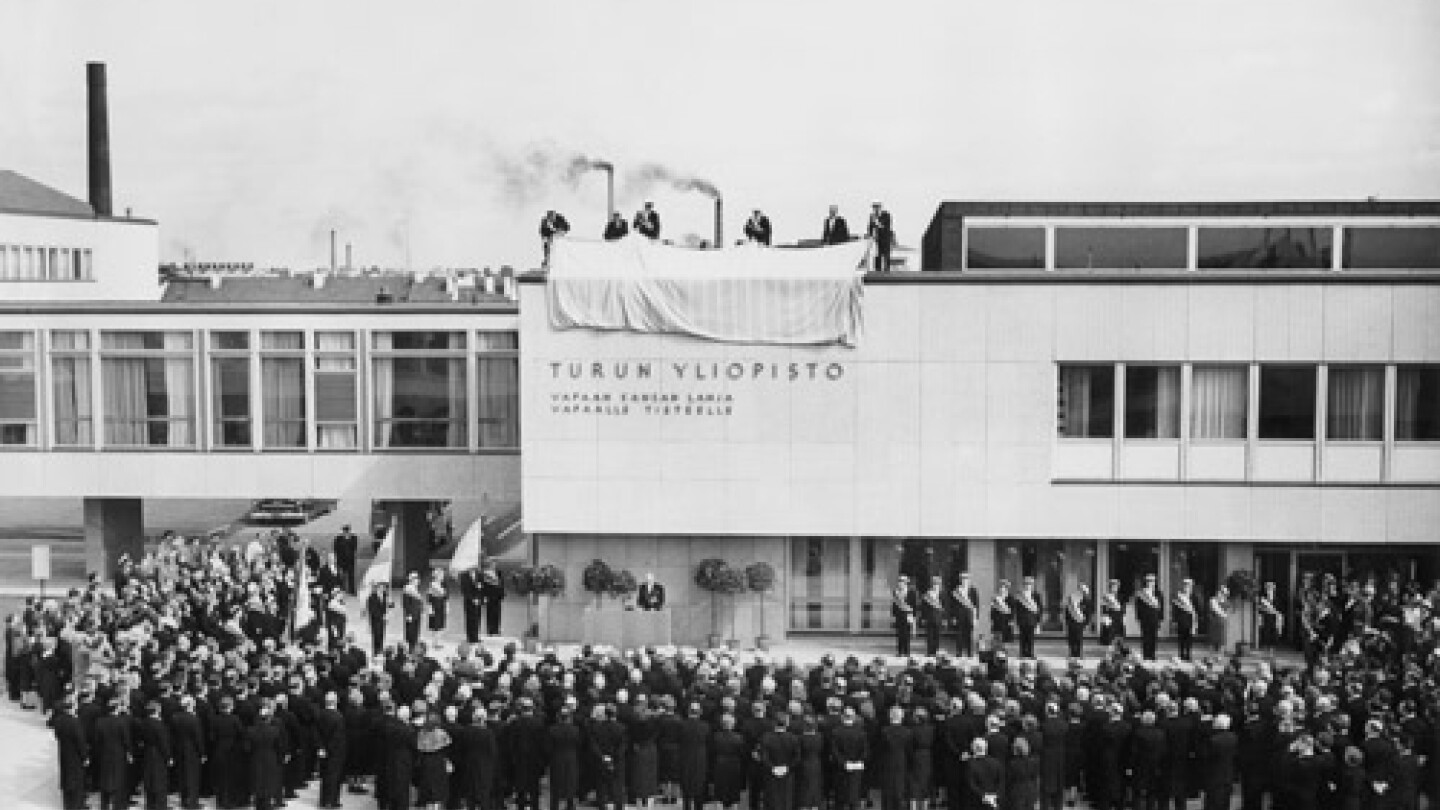
The motto of the University of Turku – From a free people to free science – refers to our University’s unique history.
The University of Turku is the first Finnish-language university in the world. The aspiration to establish the first Finnish-language university had emerged already at the early days of Finland's independence. At the time, the University of Helsinki was the only university in the country, but its language was Swedish.
Turku had rich academic traditions for establishing a new university. The history of Finnish education began with the country's first school, Turku Cathedral School, which was founded in the 13th century. Finland’s first university was also established in the city: the Royal Academy of Turku was founded in 1640 and moved to Helsinki after the Great Fire of Turku in 1827.
When Finland gained independence, the initiative to establish a Finnish-language university expanded from a project among national romantics to a mass movement in the nation. The Turku Finnish University Society organised a fund-raiser for founding a university. In three years, 20 million Finnish marks were raised for the Finnish-language university in Turku.
A total of 22,040 individuals contributed to the campaign, 8,000 of whom listed their occupation as farmers, women who ran the households, landowners, or similar. Approximately 2,000 of the donors were teachers, merchants, and businessmen, but among them were also clerks, shop assistants, tailors, shoemakers and tenant farmers. On Kalevala Day in 1920, the University of Turku was founded. Its creation was the achievement of ordinary people who cherished education.
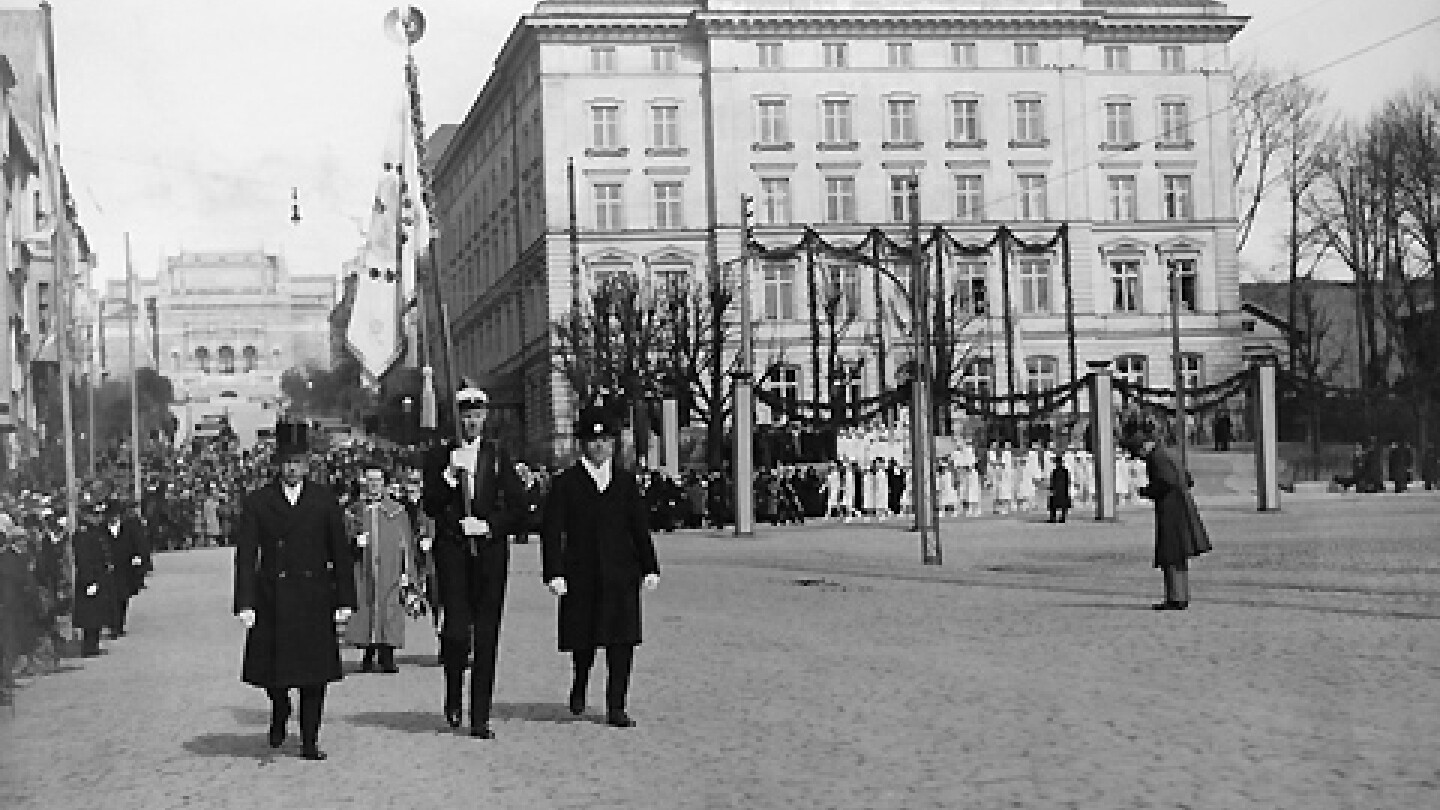
The private University of Turku was at first a small university. The University initially consisted of the Faculty of Humanities and the Faculty of Mathematics and Natural Sciences, but new faculties were established at a steady pace after the University had overcome its financial difficulties in the early 20th century.
The existence and success of the University of Turku has always been based on strong community support. The most notable example of this was when, in the late 1940s, the University received a substantial bequest in the midst of economic hardship of the post-war austerity period. Blacksmith's sons, the Johnsson-Joutsen brothers had made their fortune as gold miners in the Klondike gold rush at the turn of the century. As the brothers had no heirs, Karl Fredrik Joutsen bequeathed his estate to the University to cherish the future of his home town.
With the help of the donation, the University was able to expand from the old cramped teaching buildings to Vesilinnanmäki, now known as the University Hill, where the new Main Building was inaugurated in 1959. With the relocation and increased state support, the number of students grew rapidly: in 1955, there were only 1,000 students at the University of Turku, but ten years later, the number had increased fivefold.
In 1974, the University was nationalised and transferred under the Ministry of Education: the private University of Turku became a public university. The number of basic degrees continued to grow and postgraduate education became more efficient. By 1980, there were already nine thousand students.
At the same time, the University’s international activities were also expanding. Throughout its history, the University of Turku has conducted international-level research and made bold new advances in numerous fields. A significant example of this was when in 1974 the University of Turku, Åbo Akademi University, and Turku University Hospital established a unit representing the future of medicine and imaging, the Turku PET Centre. Finland's EU membership in 1995 gave a further boost to internationalisation, and students began going on Erasmus exchanges more often than before. In the same year, the University also joined the Coimbra Group, a network of traditional European universities.
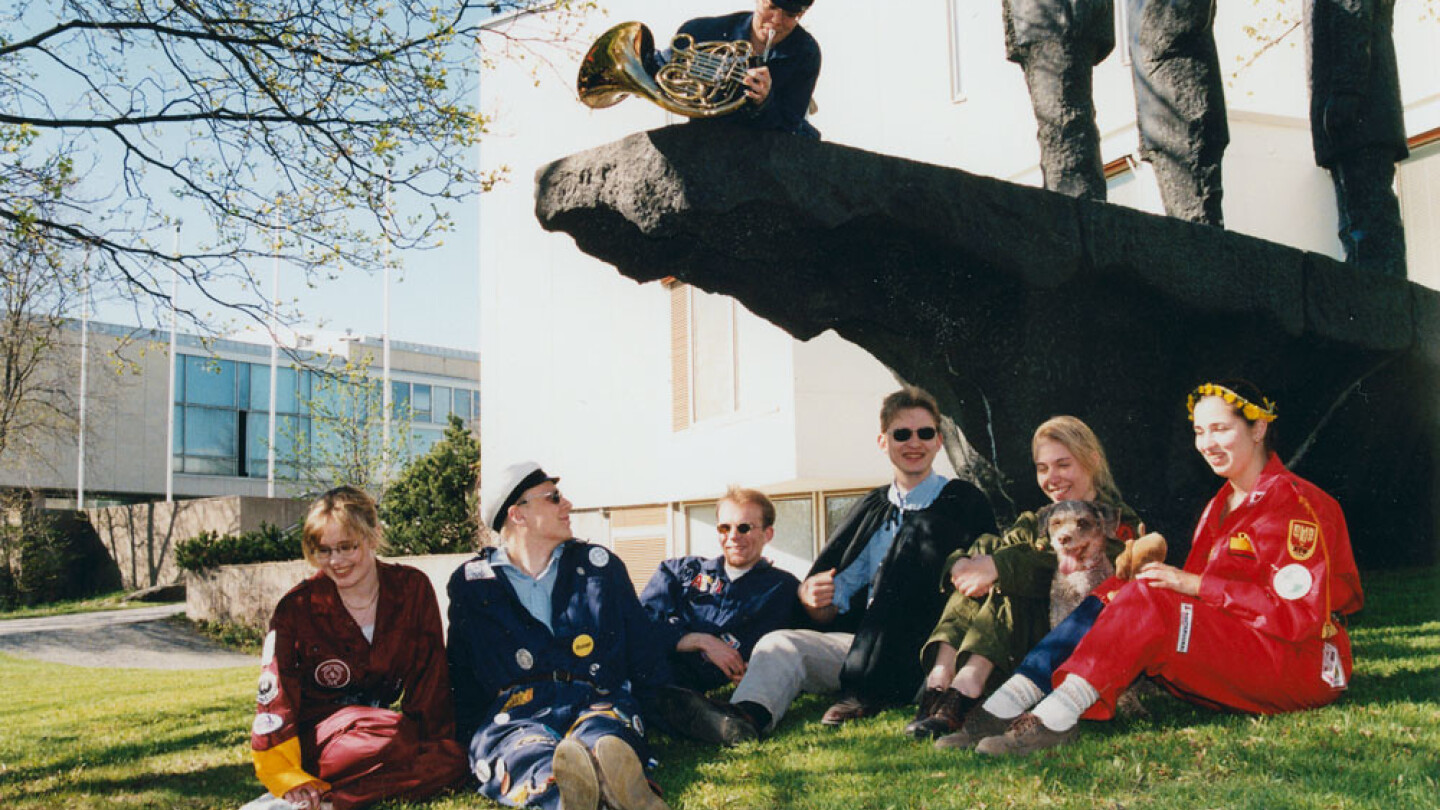
The University has continued to grow nationally and internationally into the 21st century, building social well-being and a sustainable future. In 2010, the Universities Act governing the activities of higher education institutions was amended, after which the University was no longer a state-owned but a public-law entity. With the new law, around half of the members of the University Board were elected from outside the University. In 2010, the University of Turku also merged with Turku School of Economics. The University's long-standing wish to expand its engineering education as its own faculty was realised when the Faculty of Technology began operating on 1 January 2021.
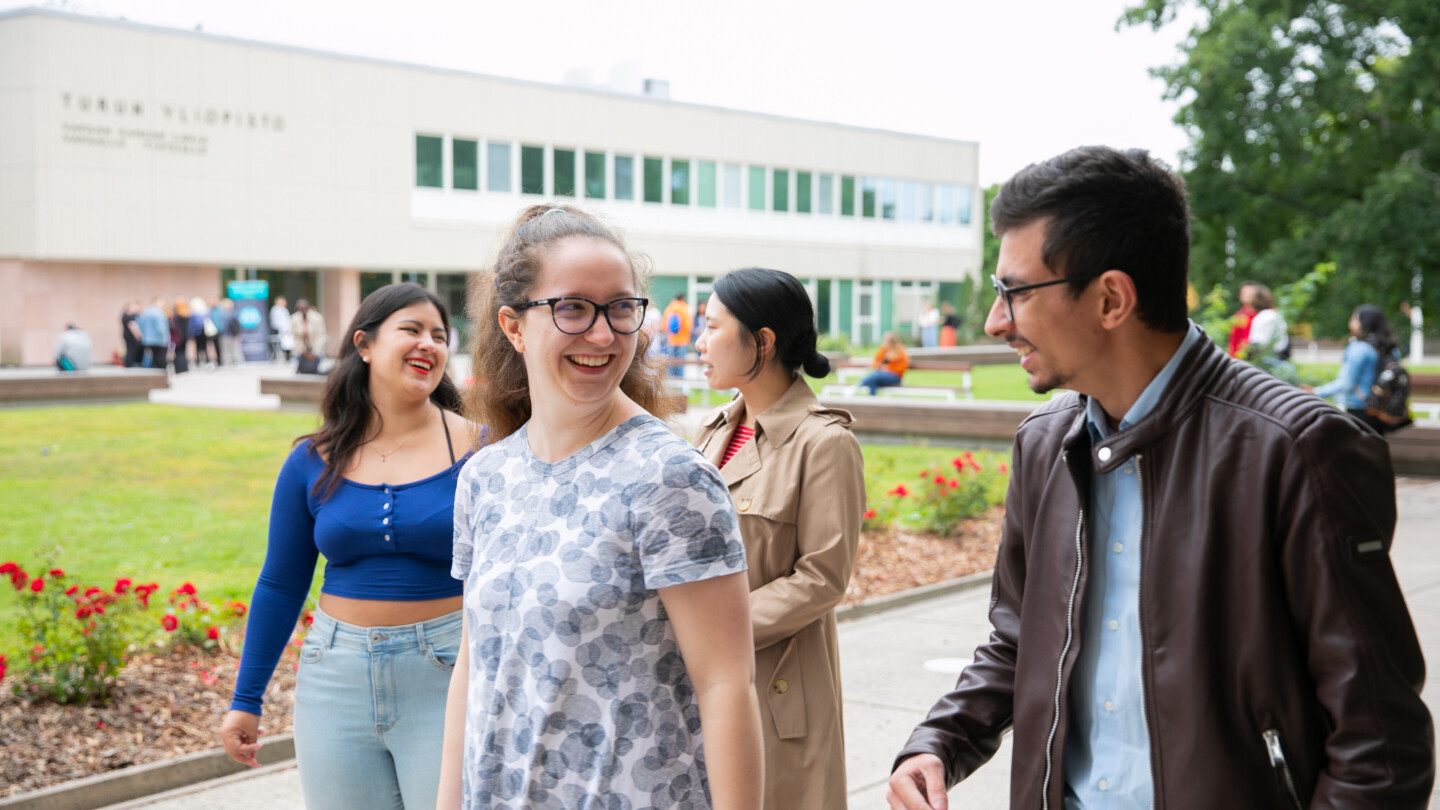
The year 2020 marked the 100th anniversary of the founding of the University of Turku with the donations of ordinary people. The University of Turku now has eight faculties and four independent units. There are 21,000 students across three campuses, 1,600 of whom are international exchange students. Many of them walk by the Main Building on campus every day, where the inscription still aptly describes the spirit of the University: "From a free people to free science.”