Research at Economic Geography
"Economic Geography for Sustainable Futures – from local to global!"
We research economic processes from a geographical perspective - for instance, through the concepts of region, space, place, location, mobility, and networks. Regions around the world create conditions for economic processes and form interconnected economic systems and networks.
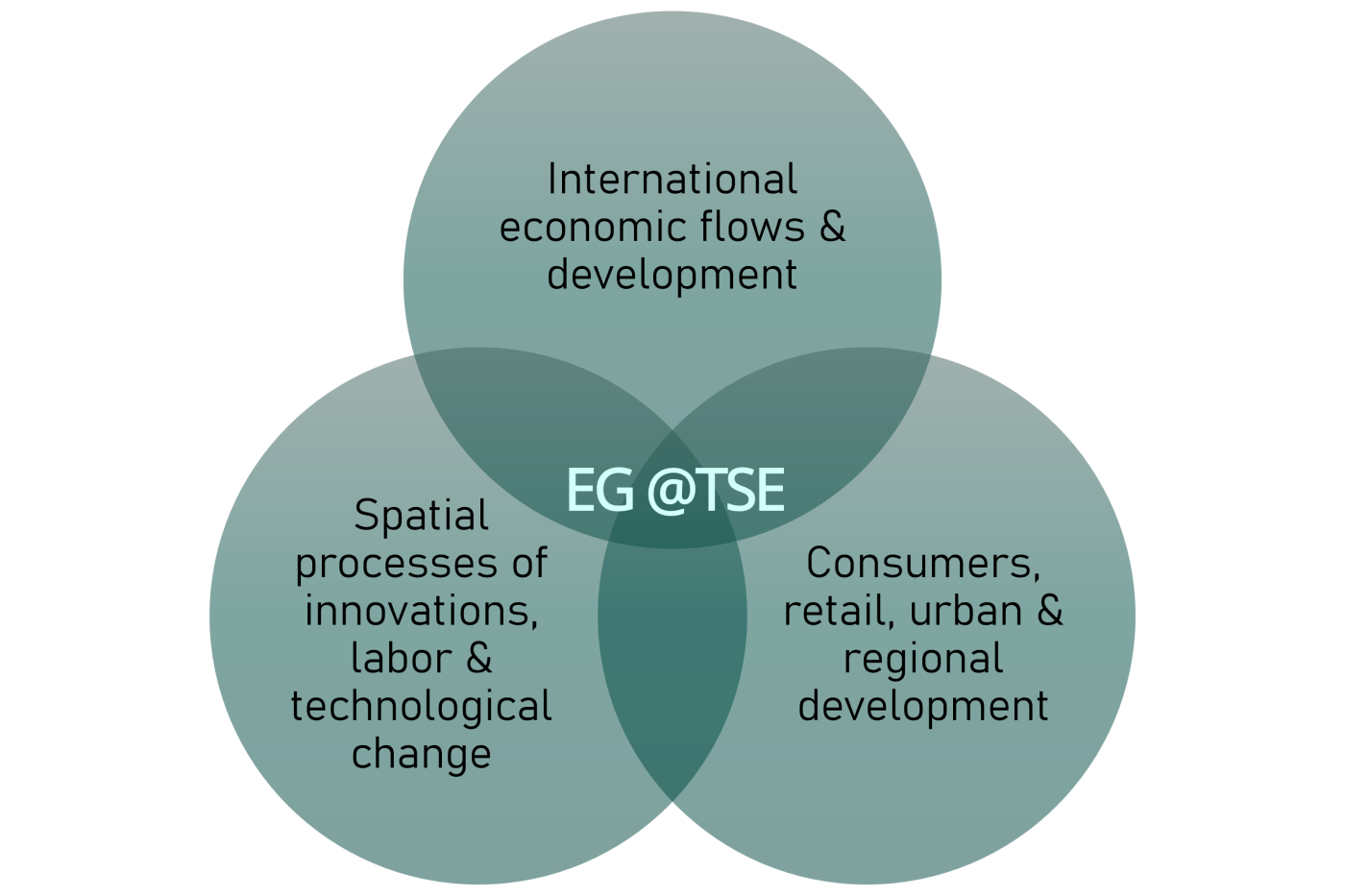
Figure 1. Key research themes of Economic Geography.
Research themes
We study international trade, investments, cooperation, as well as sustainable development in a multi-scalar manner from the perspective of companies, industries, regions, countries, and macro regions. Geopolitical tensions and climate change are reshaping both international and local business environments and have various impacts on business operations, stakeholder relations, and the resilience of local economies. Regarding business environments, we focus particularly on international trade policy and regulatory frameworks that affect companies’ operations, cross-border collaboration, negotiations among diverse societal actors and the preconditions for sustainable development in both the global North and South. Key research themes include security of supply, stakeholder collaboration, food security, inclusive and sustainable development, knowledge co-creation and social innovation. Our approach is multidisciplinary and draws from economic geography, international business, development economics and international political economy. We analyse the interface of international and local economies and how labour, firms, and states interact across spatial scales in Finland and globally e.g. in Asia (Indonesia, Japan, South Korea), Africa (Namibia), and Latin America (Colombia, Peru, Argentina).
Our long-term research projects and themes:
- EU-Asia trade policy and Finnish firms’ strategies, Foundation for Economic Education, 2019-
- Gender, migrants, and sustainable production and consumption, Maj and Tor Nessling Foundation, 2020-2023
- Social innovations and inclusive work life, Scandinavia-Japan Sasakawa Foundation, 2022-
- Good and bad palm oil (PALMOIL), Kone Foundation, 2023-2028
- Global resilience (GLO-RES), Foundation for Economic Education, 2025-2027
- Decent work, economic growth, and labor law enforcement, Foundation for Economic Education & Turku University Foundation, 2026-2028
- EU trade policy and Southwest Finland’s industries, Lieto Savings Bank Foundation, 2027-2028
Contact: Erja Kettunen-Matilainen erja.kettunen-matilainen@utu.fi, Ayu Pratiwi ayu.pratiwi@utu.fi; Lucía Gómez lucia.o.gomez@utu.fi
We conduct internationally ambitious research on innovation processes and the labour in a technologically changing world. Emerging and increasingly autonomous technologies such as artificial intelligence, robots, holograms and digital twins are significantly reshaping innovation processes, expertise and the labour mobility. We understand innovation processes broadly and study, for example, creativity, experts in creative fields, processes of knowledge creation in multi-stakeholder collaboration, technology diffusion and adoption processes. We challenge and advance current academic theories through geographically diverse empirical research in both the global North and the global South. We employ both qualitative (for example, spatial process research, interviews, ethnography, experimenting with technology) and quantitative (for instance, using household survey and administrative datasets employing social networks analysis, causal inference and randomised controlled trial) methods. The key themes include:
- Processes of innovation, knowledge creation and creativity in space, time and in diverse cultures
- Emerging technologies (AI, robots, virtual reality, holograms, etc.), changing agencies, practices and regional development
- Decent work and labour law compliance and enforcement
- Diffusion and adoption of agricultural innovation for efficient market mechanisms in developing countries
- Responsible and sustainable practices of companies, organizations, projects and entrepreneurs — including social innovation through transnational collaboration
Turku School of Economics has a long-standing tradition of research in consumer behaviour and retail geography. The research series, originally launched in 1990 under the name Länsikeskus study, has examined changes in consumer behaviour and retail structure in the Turku region through numerous survey datasets. This series provides researchers with more than 30 years of data on how consumers’ purchasing behaviour, shopping catchment areas, and retail service structures have evolved in response to developments such as the emergence of new shopping centres, the growth of e-commerce, and population ageing. The Länsikeskus (1990–1995), Mylly (2001–2006), KUMU (2011), KATE (2017), and KAMU (2023) studies are based on nine extensive survey datasets that have been widely used in urban and regional development projects also beyond Southwest Finland. The research series has been funded by the Foundation for Economic Education, Turku School of Economics, the Jenny and Antti Wihuri Foundation, municipalities in the study area, regional retail actors, and regional organisations.
Since the early 2000s, the impacts of population ageing on consumer behaviour and retail services have constituted a major research theme within the Economic Geography unit at TSE. Using these survey datasets, ageing consumers have been examined from the perspectives of, for example, wellness consumption and the accessibility of retail services. The datasets have also enabled analyses of generational effects. In addition, focus group discussions conducted with older consumers have been used to investigate how city centres can be developed into attractive and age-friendly shopping environments. This research, grounded in older consumers’ experiences, has been funded by the Foundation for Economic Education and the Turku Urban Research Programme.
The ASKURA studies conducted in 2020 and 2025 focused on the city centre of Turku as a consumption space. Through consumer interviews and online surveys, the studies examined why and how frequently people visit the city centre, how they travel there, and how much and on what they spend their money. The studies were carried out as jointly funded projects by the Economic Geography unit at TSE, the Turku Urban Research Programme, the City of Turku, and the Turku City Centre Association.
Datasets collected through these various research projects are used in teaching materials, master’s theses, doctoral dissertations, other scientific research, as well as retail-sector studies and evaluations. Geographic Information Systems (GIS) methods and their business applications play a central role in the Economic Geography unit at TSE. The consumer surveys and interviews therefore constitute a key empirical resource for GIS-based research. These methods are applied particularly in the analysis of consumers’ spatial behaviour, retail service networks, and the accessibility of retail services.
Further information: University Teacher Anna-Maija Kohijoki
Research Projects
Productive employment and Decent Work are essential for fair globalisation and sustainable economic growth. Yet, even with the ILO’s universal code of labor rights, a persistent gap remains between de jure protections and de facto conditions, as enforcement varies greatly across countries and sectors. This project aims to undertake a comparative, cross-continental approach to labor law enforcement, targeting strategies that strengthen compliance in ways that benefit both workers and ethical employers in five diverse economies — Finland, Japan, Argentina, Indonesia, and Namibia. The project is funded by The Foundation for Economic Education (Liikesivistysrahasto).
Research team: Ayu Pratiwi, Vitria Susanti, Shandy Aditya, Jagannath Kafle
Collaborators: Australian National University (Australia), Kyoritsu Women's University (Japan), University of Namibia (Namibia), University of Buenos Aires (Argentina).
View the project page here.
Research team Erja Kettunen-Matilainen, Ayu Pratiwi, Lucía Gómez
The project seeks solutions for societal resilience in Finland, Europe and globally. The covid pandemic, geopolitical tensions and environmental problems have hampered the security of supply of critical sectors such as food production, ICT, and pharmaceuticals in both the Global North and the South. This research aims to analyze the interaction between the regulatory environment and international stakeholder cooperation and its potential to strengthen societal resilience and security of supply. The project examines 1) EU trade policies that promote sustainable development, 2) knowledge co-creation of companies in stakeholder collaboration, and 3) the impact of regulation supporting resilience in critical sectors. It is assumed that the creation of new knowledge from the perspectives of different parties supports the development of timely policies in international multi-stakeholder cooperation. The two-year project will produce new information on the effects of global crises and geopolitical tensions on critical sectors, and how the security of supply can be supported in Finland and internationally. The results will be disseminated through scientific and popular articles, conferences, business seminars and teaching, thereby supporting political and corporate decision-making. The project is funded by The Foundation for Economic Education (Liikesivistysrahasto).
View the project page here.
BETH is Research Council of Finland Project
University of Turku & University of Vaasa
Research group: Ayu Pratiwi, Nicolas Balcom Raleigh, Roosa Wingström, Justyna Pierzynska, Marianne Mäntyoja
PI Johanna Hautala
BETH explores new ways of creating knowledge as and through virtual avatars, telepresence robots and holograms.
New geographies of knowledge creation processes are currently emerging with new technologies and teleworking practices. Virtual avatars, holograms and telepresence robots allow us to be in more than one place at the same time. We may be able to share embodied and tacit knowledge in ways that were not possible before. Through new technology we can access and operate in virtual and augmented realities, which can support creativity and innovation in interesting ways.
BETH web pages (link: https://sites.uwasa.fi/beth/)
ASKURA – Asiointisyyt, kulkutavat ja rahankäyttö
The ASKURA study examines spending patterns, modes of transport, and reasons for visiting the city centre among consumers who shop and use services in Turku city centre. The interviews were conducted in Turku centre in February–March 2020 (weeks 9 and 11). In spring 2025, the interviews were carried out during the same period (weeks 9–11).
The study was jointly funded and conducted by the Economic Geography at the Turku School of Economics (Professor Heli Marjanen; University Teacher Anna-Maja Kohijoki; Doctoral Researcher Meri Malmari (2020); D.Sc. (Econ. & Bus. Adm.) Petteri Ojala), the Turku Urban Research Programme, the City of Turku, and the Turku City Centre Association.
5/2025: Turun keskustassa viihdytään ja käytetään palveluja, mutta ostosten merkitystä ei pidä aliarvioida
Heli Marjanen ja Anna-Maija Kohijoki
2/2020: Turun keskustan liikenneskenaarioiden yritysvaikutusten arviointi
Heli Marjanen, Meri Malmari ja Anna-Maija Kohijoki
5/2020: Turun keskusta kulutustilana – vetovoimatekijät, kulkutavat ja rahankäyttö
Heli Marjanen, Meri Malmari ja Anna-Maija Kohijoki
Palm oil is a commodity used in the production of food ingredients, non-food consumer products, and biofuels. Most of the world’s palm oil is produced in Indonesia where oil palm cultivation provides a livelihood for over 16 million smallholders and workers. At the same time, oil palm monoculture farming leads to forest and biodiversity loss, enhances climate change and violates indigenous land and human rights. This has been strongly criticized by the European Parliament that banned palm oil imports in 2018, and as a response, Indonesia filed a lawsuit against the EU at the WTO. However, the recent attack war by Russia to Ukraine has resulted in a global food crisis and a paradigm change, where, instead of the EU-Indonesia dispute, attention has turned to global food security. The problem is multifaceted.
This multidisciplinary project takes a broader approach going beyond existing standalone case studies to examine palm oil negotiations and policies from the perspective of small producers in Indonesia, and policymakers and NGOs in the EU and Indonesia. What kinds of views do different stakeholders have on palm oil, and how are the views negotiated and narrated? How do the arguments and narratives reflect the values of the stakeholders, the "good and bad" and the ethics of palm oil cultivation and use? Who influences whom and what kinds of power relations can we discern in the multi-level palm oil negotiations and debates? How can disputes be resolved in order to ensure food security and to find a solution in line with the 2030 Agenda?
The aim of this 5-year research project is 1) to contextualize the paradigm shift in the palm oil narrative, 2) to understand its effects on the power relations and negotiations among palm oil stakeholders, and 3) to analyze the effects on primary producers in Indonesia and more broadly on global food security. We study documentary, interview, survey and social media data and combine the theories and methods of political science, development and regional studies, and political economy (rhetorical analysis, social network analysis, content analysis). We disseminate the results in academic and wider audience publications and presentations in three languages (English, Finnish, Indonesian).
Project length: 2023-2027
Research team: Erja Kettunen-Matilainen, Ayu Pratiwi, Ratih Adiputri
Funded by: Kone Foundation
View the project page here.
This project is a collaboration of five universities: University of Turku (Finland), Hitotsubashi University (Japan), University of Tokyo (Japan), Brawijaya University (Indonesia), and Muhammadiyah University Gresik (Indonesia). The principal investigator in Turku is PhD Ayu Pratiwi (https://sites.google.com/view/apratiwi/), who was awarded a personal grant for the first phase of the project (2020-2021) by Maj and Tor Nessling Foundation.
Background and motivation
With the globally growing demand, aquaculture has become top-performing industries generating employment for the smallholder communities in Indonesia. However, lack of access to market and technical knowledge and climate information causes information asymmetries to smallholder farmers, impeding them not only from bargaining effectively with traders with dominant market power but also from increasing sustainable production capacity and undertaking climate-coping strategies. Although disseminating market and technical information to these farmers is of paramount importance, the current aquaculture extension service offered by the government is mainly traditional, limited to specific geographical locations, and plagued with uneven service coverage and fiscal sustainability challenges. With the adaptation of Information and Communication Technologies (ICT), communication and information exchange costs across different locations could be reduced. Despite its potential, research on ICT and information sharing of smallholders in developing countries is still in an early stage and rarely explored, resulting in limited information regarding the impacts and mechanism of such programs.
Research objectives
The main aim of the project is to explore the opportunities provided by ICT to overcome barriers to the market, technical, and climate information among aquaculture smallholder communities in Indonesia. Specifically, it aims to
- investigate methods to decrease the information asymmetry, promote sustainable production techniques, and increase climate-coping capabilities of smallholders via the use of ICT;
- to explore the impacts of increased use of ICT on farmers’ adaptive and productive capacity, bargaining power over traders and, consequently, on their well-being.
Two approaches will be utilized. The first is to investigate how the user-generated content on climate, market and production information provided by Facebook group communities affects the farmers and whether it changes their farming practices. The second approach examines the impacts of providing the farmers access to a free mobile application with expert-curated content, real-time weather, and market information features.
Timetable
The research will be carried out as a part of a longitudinal survey conducted in three waves in 2021, 2022, and 2023.
KAMU (Kauppa Murroksessa; Retail Disruption) study adds to a series of research projects in which we have monitored, since the early 1990s, the effects of changes in the retail structure as well as their linkages with consumer behaviour, store choice, and access to services. In the 2000s, the Mylly (2001-2006), KUMU (2011) and KATE (2017) studies were conducted. For the KAMU survey, 7,000 randomly selected households from Turku and nearby municipalities (Aura, Kaarina, Lieto, Masku, Naantali, Nousiainen, Raisio, Rusko, and Turku) were invited to participate. The questions were mostly the same as in previous studies, ensuring comparability of results. However, contrary to our previous surveys, the KAMU survey was initially conducted online only. Due to various technical issues and feedback received, the reminder letter offered the option to respond via paper questionnaire. Finally, fifty-five hard copies of the questionnaires were sent out, and 89% were returned. In total, the survey received 2,007 responses, resulting in a response rate of 29%.
The survey was conducted by Professor Heli Marjanen and University Teacher Anna-Maija Kohijoki.
Publications & presentations:
Kauppa Murroksessa - KAMU2023 survey, the first results
A-M. Kohijoki & H. Marjanen (2026) Rethinking Accessibility in Grocery Retailing – Causes and Consequences of City-Centre Residents’ Outshopping. Presentation at the IGU-CDES Conference 2026.
A-M. Kohijoki & H. Marjanen (2025) Päivittäistavaroiden kotiinkuljetus- ja noutopalvelut osana päivittäistavarakaupan palveluverkkoa – viitekehys ja empiirinen tarkastelu. Terra, 137:4.
The project was led by Professor Heli Marjanen
Publications:
Heli Marjanen, Meri Malmari, Janne Engblom, & Anna-Maija Kohijoki (2020). Knowing the past, seeing the future − an exploratory study on the viability of retail patronage models based on revealed behaviour. Urban, Planning and Transport Research, 8(1), 98-124. https://doi.org/10.1080/21650020.2020.1713209
Heli Marjanen - Anna-Maija Kohijoki - Kaisa Saastamoinen - Janne Engblom (2019) Old Dogs Learning New Tricks? The Effect of Age and Generation on Shopping Behaviour. International Review of Retail, Distribution and Consumer Research. 29 (5): 549-567. https://doi.org/10.1080/09593969.2019.1664613
Anna-Maija Kohijoki, Heli Marjanen (2018) Generations go digital: the case of fashion retailing. In: Proceedings of the Colloquium on European Research in Retailing (CERR 2018) Guildford, UK, 11.−13.7.2018.
KUMU (Kuluttajakäyttäytymisen muutos) study adds to a series of research projects in which we have monitored, since the early 1990s, the effects of changes in the retail structure as well as their linkages with consumer behaviour, store choice, and access to services. For the KUMU survey, 7,246 randomly selected households from Turku and nearby municipalities (Aura, Kaarina, Lieto, Länsi-Turunmaa, Masku, Mynämäki, Naantali, Nousiainen, Paimio, Raisio, Rusko, Sauvo, Tarvasjoki and Turku) were invited to participate. The questions were mostly the same as in previous studies (e.g. Mylly), ensuring comparability of results. In total, the survey received 2,010 responses, resulting in a response rate of 28%.
The project was led by Professor Heli Marjanen
Publications:
Marjanen, Heli - Malmari, Meri - Engblom, Janne - Kohijoki, Anna-Maija (2020) Knowing the past, seeing the future - an exploratory study on the viability of retail patronage models based on revealed behaviour. Urban, planning and transport research. 8 (1): 98-124. https://doi.org/10.1080/21650020.2020.1713209
Marjanen, Heli - Kohijoki, Anna-Maija - Saastamoinen, Kaisa (2016) Profiling the ageing wellness consumers in the retailing context. The International Review of Retail, Distribution and Consumer Research. 26 (5): 477-501. http://dx.doi.org/10.1080/09593969.2016.1206950
Kohijoki, Anna-Maija - Marjanen, Heli - Saastamoinen, Kaisa (2015) Generation X - The Unexplored Potential in the Wellness Market. 18th Conference of European Association for Education and Research in Commercial Distribution (EAERCD) 1-3.7.2015 Rennes, France, Conference proceedings.
Marjanen, Heli - Engblom, Janne - Malmari, Meri (2013) Viability of demographic and behavioural independents in quantile regression models in predicting retail patronage. The International Review of Retail, Distribution and Consumer Research, 23 (5), 523–536. https://doi.org/10.1080/09593969.2013.832694
Publications:
Marjanen, Heli - Kohijoki, Anna-Maija - Saastamoinen, Kaisa (2016) Profiling the ageing wellness consumers in the retailing context. The International Review of Retail, Distribution and Consumer Research. 26 (5): 477-501. http://dx.doi.org/10.1080/09593969.2016.1206950
Heli Marjanen - Janne Engblom - Meri Malmari (2013) Viability of demographic and behavioural independent variables in quantile regression models in predicting retail patronage. The International Review of Retail, Distribution and Consumer Research. 23 (5): 523-536. https://doi.org/10.1080/09593969.2013.832694
Anna-Maija Kohijoki (2011) The effect of aging on consumer disadvantage in grocery retail services among the Finnish elderly. Journal of Retailing and Consumer Services 18 (4): 370–377. https://doi.org/10.1016/j.jretconser.2011.04.003
Ongoing Doctoral Theses
- Aditya, Shandy: Sustainable Student Entrepreneurship Journey
- Alwis, Sidath: Empowering regional engagement: University adaptations for the third mission and the process of change in university ecosystem
- Kafle, Jagannath: Poverty alleviation through commercialization of native products with the help of development aid
- Mäkeläinen, Kari: Innovatiivisen metalli- ja konepajateollisuuden kehitys Suomessa, Turkissa ja Etelä-Koreassa
- Nikander, Jarmo: Startup Scene formation as an institutional field
- Polvinen, Pekka: The future of department stores - is there a concept for success and survival?
- Rizal, Mahdi Basroni: How generative AI is integrated into digital creative work: Decision making, skill reconfiguration, and work outcomes in Indonesia
- Sugiharto, Guruh: Transnational value co-creation in sustainable coffee commodity: Linking Indonesian coffee origins and Finnish consumption spaces
- Susanti, Vitria: From Attitudes to Institutions: A Multi-Level Framework for Household Food Waste in Urban Indonesia
- Vuorio, Kaisa: Moniulotteisen kaupunkikeskustan kehityksen mahdollistajat – case Helsinki
Finished Doctoral Theses
- Gómez, Lucía (2024): FDI and technological advancement in the Global South. Perspectives on the emergence of Medellín as an investment hub
- Aarras, Nina (2015) Toisen jäte on toisen raaka-aine - Kierrätys ja uudelleenvalmistus taloudellisesti ja ekologisesti kestävänä liiketoimintamahdollisuutena
- Räikkönen, Juulia (2014) Enabling experiences - The role of tour operators and tour leaders in creating and managing package tourism experiences
- Kohijoki, Anna-Maija (2013) ONKO KAUPPA KAUKANA? Päivittäistavarakaupan palvelujen saavutettavuus Turun seudulla - ikääntyvien kuluttajien näkökulma
- Höyssä, Maria (2013) Where science meets its use - exploring the emergence of the practical relevance of scientific knowledge in the regional context
- Kibler, Ewald (2012) New venture creation in different environments: Towards a multilayered institutional approach to entrepreneurship
- Koistinen, Katri (2006) Vähittäiskaupan suuryksikön sijoittumissuunnittelu -Tapaustutkimus kauppakeskus Myllyn sijoittumisesta Raision Haunisiin
- Marjanen, Heli (1997) Distance and store choice: with special reference to out-of-town shopping.