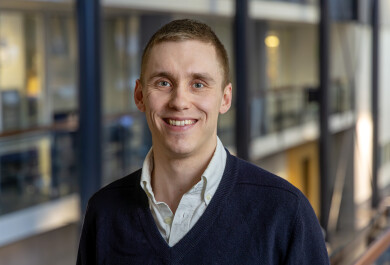
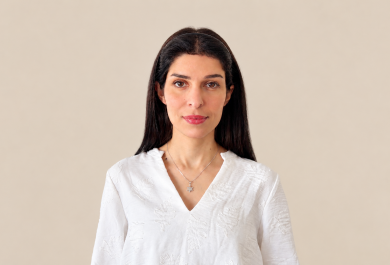
Dissertation defence (Chemistry): FM Reetta Kyynäräinen
FM Reetta Kyynäräinen defends the dissertation in Chemistry titled “Moments of Mistakes: Students' Affective Responses in an Undergraduate Chemistry Laboratory Course” at the University of Turku on 2 April 2026 at 13.00 (University of Turku, main building, Tauno Nurmela lecture hall, Turku).
Opponent: Professor Joseph Krajcik (Michigan State University, USA)
Custos: Professor Mikko-Jussi Laakso (University of Turku)
Summary of the Doctoral Dissertation:
Mistakes happen to everyone – and in the natural sciences, they are a central part of learning. Yet they are often viewed negatively and experienced as failures, even though they can, in fact, enable learning. Researchers have found that performing perfectly mainly reflects one’s existing competence, whereas engaging with mistakes promotes long-term learning.
However, it would be naïve to assume that mistakes conventionally lead to learning, since individuals can react to them in many ways. Still, we know surprisingly little about the emotional and motivational responses that making mistakes evokes in students.
Reetta Kyynäräinen’s doctoral dissertation addresses this question by exploring how university students react to mistakes during a chemistry laboratory course, and which factors influence these reactions. Students’ situational feelings were examined both during laboratory work and in pre-laboratory exercises using experienced-based approach – that is, in situations where the mistakes actually occurred. The study spanned almost 3,000 situations.
The results show that mistakes occur frequently: in 28% of laboratory activities and 64% of pre-laboratory exercises. While mistakes often momentarily reduce positive emotions and students’ confidence in their own abilities, they can simultaneously increase motivation and foster learning engagement. The reactions vary based on individuals and situations, and they are generally not long-lasting.
The study highlights that learning to navigate mistakes is a skill that should be deliberately supported in science education. When students learn to approach their mistakes constructively with curiosity, these experiences can transform from sources of frustration into catalysts for learning – much like in scientific research, where discoveries often emerge through trial, error, and renewed experimentation.