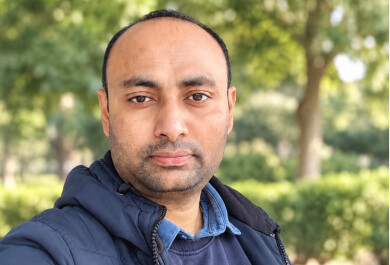
Dissertation defence (Sociology): VTM Juha Klemelä
VTM Juha Klemelä defends the dissertation in Sociology titled “Cooperation Between Politicians and Administrators: A Study of Actor Identities, Action, and Interaction in Finnish Municipal Service-Sector Committees” at the University of Turku on 14 October 2026 at 12.00 (University of Turku, Publicum, Pub 2 lecture hall, Assistentinkatu 7, Turku).
Opponent: Professor Dag Ingvar Jacobsen (University of Agder, Norway)
Custos: Professor Hannu Ruonavaara (University of Turku)
Summary of the Doctoral Dissertation:
POLITICAL – ADMINISTRATIVE INTERACTION AS COOPERATION
The thesis sheds light on the actorness, action, and cooperative interaction of the municipal committee elected officials (politicians) and office-holders (administrators). The main goal is to build a model of the components of cooperation.
In the thesis the central factors and phenomena of political – administrative interaction are lifted forefront. The thesis also gives new theoretical means for their study. The model created is applicable as a general model of the premises of cooperation.
Politicians and administrators have a municipal self
Municipal self refers to one's experience of being and doing things in the municipal organisation. The self consists of rational role-identities, which are: representing (values and people), expertise on action means, and organising (things and people). Both the politician's and the office-holder's municipal selves consist of the same role-identities, but with different weightings.
"Categorical trinity" connects action and the municipal organisation
In detective stories the crime suspect is found through the "categorical trinity": he or she has to have a motive, a means, and an opportunity. This division can be used as an analogy when studying action and cooperation in the municipal organisation. Successful action by both an individual and an organisation requires three factors: reason/goal, means, and opportunities to act. The municipal actors' rational role-identities - representation, expertise, and organising, connect the actors ("micro level") to the organisation ("meso level").
Cooperation is about complementing and supporting each other in task accomplishment
An individual acts, because he or she has goals, and receives rewards and self-esteem from the pursuit and attainment. An individual’s goal-driven action together with others – cooperation – is motivated by complementarity of resources and respectful supportiveness.
Politicians' and office-holders' cooperation process is negotiation driven by social mechanisms.
Decision-making is structured by norms and decision-generating social mechanisms. Mechanisms include consensus-seeking, compromising, exchange, and choice (vote or election). Often mechanisms create decisions that can't be directly deduced from the properties and opinions of individuals or groups.
Office-holders' strong position
Besides modelling the study speaks about the reality of municipal cooperation. With the model reality is also interpretable and partially explainable.
The office-holders' stand out in the data collected from municipalities. Control of resources is regarded as more important for the office-holders than the elected officials. The chances for the elected officials to steer decision-making and action are largely dependent on whether the office-holders give their timely information and opportunities to make a difference. The office-holders' responsiveness affects the elected officials' power. According to the study data the status and deference given by office-holders to the elected officials is slightly weaker than the status and deference given by the elected officials to the office-holders. The office-holders are not much developing, or interested in developing, opportunities to influence for the elected officials – rather, some of the office-holders try to "avoid" the elected officials.
It is of particular importance that both the elected officials and the office-holders regard the office-holders' leadership as stronger than the elected officials' leadership, and both groups also want the office-holders' leadership to be stronger than the elected officials' leadership. The office-holders have a better opportunity to regulate what takes place in the "grey" zone between politics and administration. The processes and mechanisms still do function in a business-as-usual manner, and there is a general satisfaction on the quality of decision-making.