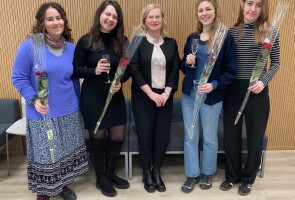
I have always been passionate about languages and human life across cultures. When I lost my sight at the age of 18, I did not think blindness would prevent me from studying and working with languages. With digital texts, screen readers, and growing awareness of accessibility, technology seemed to offer new possibilities.
In many ways, it has done exactly that. Technology has opened doors for me and many other visually impaired people who want to study, work, and participate in professional life.
But there is another side to the digitalisation of work. The same technology that opens a door can also slam it shut.
This can happen in very concrete ways. A digital tool may look accessible and efficient on the surface, but if its buttons are not labelled for screen readers, if keyboard navigation does not reach all functions, or if important information is available only visually, the tool becomes difficult or impossible for a blind person to use independently. Access then depends not on expertise, education, or motivation, but on whether the technology has been designed with different users in mind.
Accessibility is where disability rights become practical
The United Nations Convention on the Rights of Persons with Disabilities recognises the rights of persons with disabilities to accessibility, education, work, and full participation in society. These may sound like broad principles. In everyday life, however, they become very practical questions.
Can I access the software I need for my studies? Can I use the tools required in my profession? Can I apply for the same jobs as others with similar education and expertise?
These questions matter far beyond my own experience. According to the European Commission’s overview of persons with disabilities in the EU, around 87 million people in the EU live with some form of disability. Yet only about half of persons with disabilities are employed, compared with three in four persons without disabilities. They are also more likely to be at risk of poverty or social exclusion, and less likely to attain a higher degree of education.
These figures are not only statistics. They point to a social concern: education, income, professional participation, and valuable expertise are still distributed unequally.
Why accessible translation technology matters
Translation work today depends heavily on specialised digital tools. Translators are required to use translation systems that integrate translation memories, terminology databases, machine translation, project management, and quality assurance functions. These tools are not optional extras. They are often non-negotiable parts of how professional translation work is organised and carried out.
If essential professional tools are not accessible, a qualified person may be unable to work efficiently, accept assignments, or compete for jobs on equal terms. This is not simply an inconvenience. When inaccessible technology prevents professionals with disabilities from using their education and expertise, it becomes a barrier to equal participation and, in practice, a form of discrimination.
In my doctoral thesis, I examine how accessibility is understood, discussed, and put into practice in the field of translation technology. I am particularly interested in the policy-practice gap in the accessibility of translation technologies: the discrepancy between inclusive values and everyday working conditions, and between organisational commitments to accessibility and the practical realities faced by visually impaired translators.
The aim is not only to identify problems, but also to support more inclusive technology development. Accessibility should not be treated as a late correction, a specialist issue, or a favour to individual users. It should be part of how technologies are designed, tested, purchased, and improved.
Translation is about making meaning accessible across and within languages. The technologies used in professional translation should not make the profession itself inaccessible.
Jennifer Stanger is a doctoral researcher in Translation Studies at the University of Turku, focusing on accessibility, inclusion, and translation technology.
References
European Commission. (n.d.). Persons with Disabilities in the EU. https://commission.europa.eu/strategy-and-policy/policies/justice-and-fundamental-rights/disability/persons-disabilities-eu_en
United Nations. (2006). Convention on the Rights of Persons with Disabilities. Office of the United Nations High Commissioner for Human Rights. https://www.ohchr.org/en/instruments-mechanisms/instruments/convention-rights-persons-disabilities