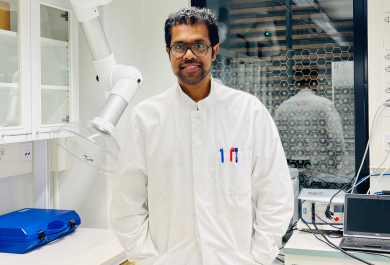
In today’s fast-moving world of biotechnology, oligonucleotides are quiet game-changers. These short strands of DNA and RNA play key roles in diagnostics and therapeutics, but studying them often feels like solving a molecular puzzle. That challenge is exactly what drew me into my Ph.D. project: developing sensitive, and practical, scientific tests to unlock the full potential of these remarkable molecules.
Oligonucleotides are the Swiss Army knives of biology. They are used in drug discovery, diagnostics, and even as delivery systems. But with broader applications comes the need for better tools to study their structure and function. My research focuses on creating assays, specialized scientific tests, that not only address current analytical challenges but also expand the possibilities of bioanalysis, which is the science of detecting and measuring biological molecules to better understand how they behave in the body or in lab experiments.
One major aspect of my work is investigating nucleotide-processing enzymes, particularly nucleases, the cell’s molecular scissors. Monitoring their activity in complex samples like urine or using them for pathogen detection poses a real challenge. with the star of Detection Technology Group at the University of Turku, “NucleoProbe” platform, we’ve achieved sensitive, real-time monitoring of these enzymes, paving the way for new diagnostic and therapeutic tools. Watching enzyme activity light up in the lab is a moment of pure scientific excitement.
My project will explore mRNA, those fleeting messengers in gene expression. Using luminescence-based detection and magnetic bead technology, I’m developing methods to extract and quantify RNA efficiently. These tools aim to simplify workflows in gene expression studies, which are investigations into how and when genes are turned on or off in cells, helping us understand everything from how cells function to how diseases develop, and biopharmaceutical quality control. All of this is taking place within the cutting-edge Detection Technology Group at the University of Turku. Through collaborations with partners across Europe and other continents, we’re combining diverse expertise to push innovation forward.
Ultimately, my work is about developing practical tools that can, for example, help researchers monitor how cancer cells respond to treatment or assist pharmaceutical companies in ensuring the consistency and safety of RNA-based drugs. By making these processes more efficient, reliable, and cheaper, I hope to contribute to faster scientific discoveries and better healthcare outcomes.
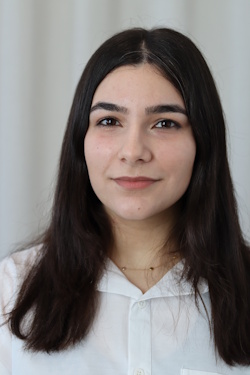
Negin Gooran
The writer is a passionate researcher exploring the intersection of biotechnology, diagnostics, and molecular tools. Her academic journey spans three countries: she earned a BSc in Chemical Engineering from Ferdowsi University of Mashhad in Iran, an MSc in Chemical Engineering from Sungkyunkwan University in South Korea, and is currently pursuing a PhD in Chemistry at the University of Turku in Finland.