As the conversations around energy transitions and green economy continue to gain global momentum, questions are emerging about the ripple effects these shifts may have on allied industries — and the broader implications for employment worldwide. With the mining sector being seen as a key beneficiary of the transition to greener technologies, there are growing concerns about the environmental costs of this expansion. In particular, the surge in demand for critical minerals has fueled a rise in unregulated artisanal and small-scale mining (ASM), a practice which has been widely linked to severe environmental degradation and threats to biodiversity.
Throwing the baby with the bathwater?
Coming from a region deeply affected by ASM, I have seen firsthand not only its environmental toll — I have also witnessed the lifeline it provides to many marginalized people. While much of the conversation around this practice focus on its destructive impacts on land and water systems, there is another side to the story — one rooted in survival and opportunity. To these people who benefit from the practice, ASM is not just an occupation, it is a vital opportunity. Estimates suggest that, over 60 million people worldwide depend directly on ASM for their livelihoods. To others, its appeal lies in the low barriers to entry and the potential for relatively high financial returns.
Artisanal gold mining’s adverse impacts
Its benefits aside, the environmental and public health costs of ASM are increasingly alarming. The rapid and often unregulated expansion of ASM has led to widespread deforestation in some of the world’s most sensitive tropical forests, resulting in biodiversity loss. Worsening this situation is the routine use of harmful chemicals like mercury, cyanide, lead and arsenic which contaminate farmlands and water bodies. When these forests are destroyed, it disrupts the natural homes of many plants and animals — which weakens the earth’s ability to offset carbon and undermines global climate action.
Addressing the menace
Thankfully, there are a number of ways to address this problem—which is the focus of my research. Much as the tropical rainforest is well-known for its incredible ability to heal itself, it is important that for that to happen, the practice of ASM is stopped — or at least, regulated in a manner that is sustainable. So, what happens to the mass of marginalized people whose livelihoods depends on this practice? My research tries to explore alternative livelihood programs that could offer economically viable and environmentally friendly for the affected people. I argue that, through skills training, resource support and entrepreneurship, people’s dependence on ASM for their livelihoods would reduce. My work also advocates for the implementation of various afforestation and ecological recovery initiatives that can serve as a pathway out of the devastations. Another way forward would be to enforce stricter measures to regulate ASM operations while adopting new innovations to make the practice more efficient — as it stands, ASM miners randomly dig up any space they think they could find gold without any scientific basis. In this regard, initiatives such as drone-based mapping, remote sensing to track mineral deposits and the continuous monitoring of plant and wildlife populations remain relevant.
Finding the balance
The conflicting challenge of biodiversity loss with socio-economic dependence on ASM requires carefully planned solutions. When we prioritize the conservation of nature with local community empowerment, refining governance structures and employing cutting-edge technologies, it is likely that the situation of environmental degradation in tropical rainforests could be reversed. Regenerative solutions in this context are not necessarily about reversing the damage alone — they also represent an opportunity to redefine the practice of ASM to align with established environmentally sustainable standards. As a result, each hectare that is reforested, every restored river and every empowered community brings humanity closer to preserving the unparalleled biodiversity of tropical rainforests and nurtures a sustainable future for future generations. This is the end that the collaboration of researchers, communities, policymakers and global stakeholders is fundamental to achieving.
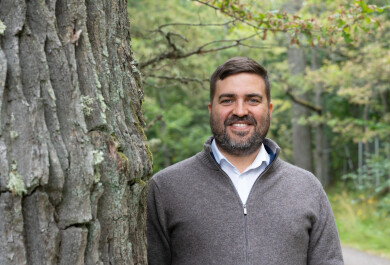
The writer is an UTU-GreDiT fellow and a Doctoral Researcher with the Biodiversity Unit of the Faculty of Biology, Geography and Geology (BGG) in the University of Turku. His work connects regenerative business practices in gold mining with environmental stewardship and biodiversity protection. He aims to contribute to policy solutions through research that transforms the extractive and mining sector into a force for global ecological and social resilience.
This researcher’s work has received funding from the European Union’s Horizon Europe research and innovation programme under the Marie Skłodowska-Curie Actions grant agreement No. 101125250. Views and opinions expressed are however those of the author(s) only and do not necessarily reflect those of the European Union or European Research Executive Agency (REA). Neither the European Union nor REA can be held responsible for them.

References:
World Bank. (2025, February 14). A new era of renewal in artisanal mining. World Bank. https://www.worldbank.org/en/news/opinion/2025/02/14/a-new-era-of-renewal-in-artisanal-mining
Mensah, A. K., Mahiri, I. O., Owusu, O., Mireku, O. D., Wireko, I., & Kissi, E. A. (2015). Environmental impacts of mining: a study of mining communities in Ghana. Applied Ecology and Environmental Sciences, 3(3), 81-94.
Fisher, J., Arora, P., & Rhee, S. (2018). Conserving tropical forests: can sustainable livelihoods outperform artisanal or informal mining?. Sustainability, 10(8), 2586.
Wu, X., Xing, C., Ju, Q., Su, S., Zhang, X., & Zhu, T. (2024). Research progress in mining ecological restoration technology. Journal of Industrial Safety, 100004.
Correia, V., Hartlieb, P., & Falck, E. (2024). The future of mining: Technical progress and its implications. In Geoethics for the Future (pp. 269-284). Elsevier.