The Faculty of Technology at the University of Turku is celebrating its first milestone. Although it was established only five years ago, the faculty is already achieving its set goals.
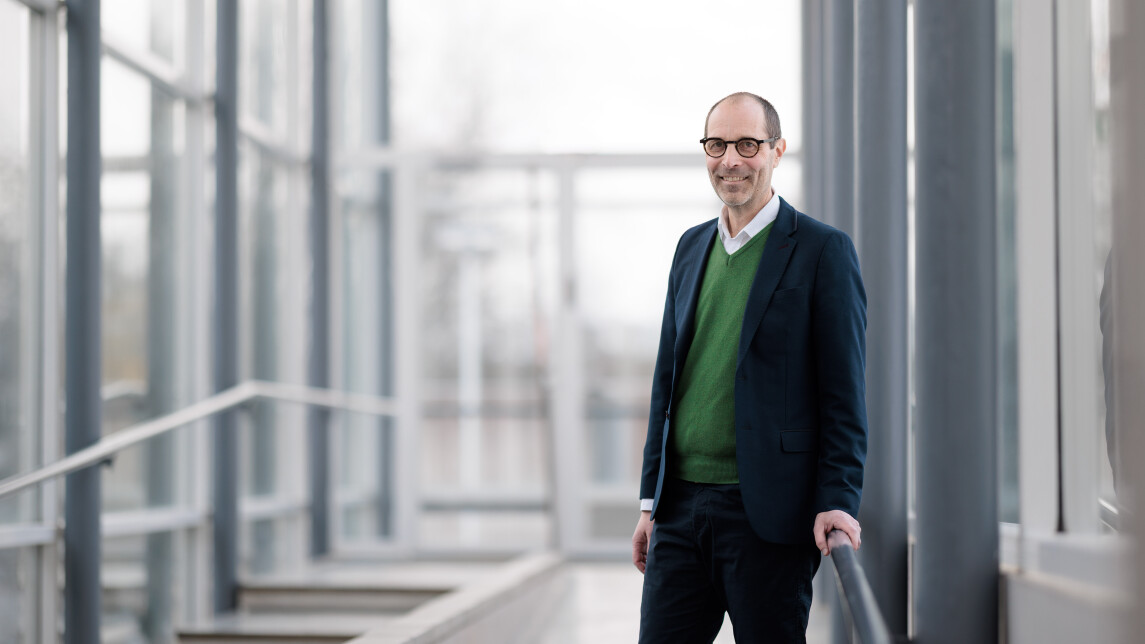
How is the faculty faring now, five years after it was founded? Jaakko Järvi, who has been the Dean of the faculty since the beginning, is pleased with what has been achieved in a short time.
It has not been an easy task to establish a new faculty these past few years.
“Five years ago, we had little to build on in our new disciplines, and many who joined us started by creating new degree programmes from scratch. At the same time, the disciplines that we inherited from another faculty also engaged fully in building our new faculty,” says Dean Järvi.
The new Faculty of Technology was driven in large part by a shortage of engineering expertise in the southwestern Finland. The need to scale up engineering education had been a hot topic in the region for decades. Establishing the faculty was for answering to this need, and many companies have supported the faculty’s development with substantial donations.
“We are grateful for all the support and have tried to run our operation so that the investments will pay off. We believe we have succeeded in this. The new degree programmes have been successfully launched and their impact on the labour market is gradually becoming visible. In the coming years, we will see a significant effect on the entire region,” says Järvi.
In the future, companies in Southwest Finland and the Satakunta region will not need to attract graduates from Tampere or Helsinki to the same extent as before, as experts are also trained more locally.
We know that cities with significant engineering education tend to be economically vibrant, and Turku and its surrounding areas will be no exception.
“Companies will find it easier to employ the technology experts they need, there will be new innovations, and new industrial activities built around them," Järvi promises.
Engineering student culture in Turku
The Faculty of Technology started its operations in January 2021. The new faculty did not start from scratch, as the well-established degree programs in computer science, computer engineering, biotechnology, and biochemistry were transferred to the new faculty along with the Departments of Computing and Life Technologies. The completely new Department of Mechanical and Materials Engineering hosts new degree programmes in mechanical engineering, materials engineering, automation engineering and industrial engineering. The Department of Computing expanded with a degree programme in biomedical engineering and health technology, and the Department of Life Technologies has just launched a five-year degree programme in food technology.
“Our aim was to meet the needs of the region's industry for a broader range of engineering education and to establish the University of Turku as a nationally important higher education institution in engineering. I would argue that we have achieved these goals," Järvi says.
Järvi puts the development into concrete terms with staggering figures. The number of degrees produced per year has more than doubled, as has the number of students: in terms of degree students, the Faculty of Technology is now the largest in the University. The number of personnel has also almost doubled over the past five years.
This rapid growth has been achieved through dedicated effort and steady commitment. The faculty's first few years have involved a great deal of building.
“And we have also been a bit daring at times. Decisions on new degree programmes have been made trusting and with confidence in the future, for example that we will manage to recruit teachers ahead of the pace that the students in the first intake progresses in their studies. All this has required a great deal from many people, but overall, the outcome is very good. It is good to note that our aim is not to expand for the sake of expanding, but to reach a steadier phase — a kind of normalcy,” says Järvi.
According to Järvi, if enthusiasm has an impact on work, the faculty has had plenty of it from the outset. This is reflected not only in the work of the staff, but also in students. Supporting the unique student culture characteristic to engineering disciplines is seen as important. “At the beginning, engineering student guilds were formed quickly, and the students immediately set out to strengthen Turku's engineering student culture by creating new traditions. We have tried to support our students where we can, for example, by providing suitable facilities, and have watched with joy as our students have refined and elevated the student culture around Vappu and freshers’ initiation," Järvi says with satisfaction.
The faculty has also invested in alumni activities and worked closely with the guilds and student organisations. Together, they have organised a wide range of alumni events, from the traditional alumni day to alumni sitz parties and Vappu celebration.
We want to keep close ties to our alumni. We hope that their connection with the faculty will last a lifetime.
Research towards solving the great challenges of our time
If the growth of the faculty’s teaching operation has been impressive, the same can be said of its research. In terms of numbers, the volume of externally funded research has roughly doubled in five years; success in acquiring internationally competitive funding is developing particularly well.
The numbers are only a measure, however. They are driven by the freedom and passion of the researchers who want to advance their discipline.
“We have succeeded in recruiting active and motivated researchers, and they have built up very successful research groups," says Järvi.
Much of the research in the faculty is inspired by the aim to help solve the great challenges of our time.
“Many researchers seem to derive motivation from working on problems with broad relevance. For example, the theme of sustainability repeats in many initiatives," Järvi describes.
Our researchers are developing solutions for solar energy, energy storage, clean fuels, and clean food production.
Active collaboration with the industry also brings relevance to both research and teaching. Järvi emphasises that the faculty recognises the advantages of a symbiotic relationship between engineering education and industry and has actively pursued this goal.
“We have been successful in establishing collaborations with the industry in the region, as is expected in engineering research and education. We are an active partner towards companies," Järvi says.
For example, the faculty organises regular events for companies in different fields and provides opportunities for students to establish contacts with companies through guest lectures, collaboration projects, company visits, and thesis projects.
“Many industrial partners have been very receptive to the new faculty, and we are always open to new collaboration opportunities. Companies should definitely reach out to us, with a low threshold," Järvi encourages.
All in all, the faculty’s activities are well on their way at the five-year mark, and the Dean sees a bright future ahead. Perhaps most of all, he is ultimately delighted by the sense of community and enthusiasm within the faculty.
“We have a diverse community, with people coming to study and work here from all over the world, people who are passionate about their research, but who also are committed to building a community and contributing to the success of this faculty, the university and the entire region. It is a privilege to be involved in something this meaningful,” Järvi concludes.
Text: Liisa Reunanen
Photo: Juuso Korsimo
Learn more about the Faculty of Technology
People of TECH: Faculty of Technology brought Heidi Piili to Turku
"It is important to develop more sustainable manufacturing technologies. And we, in the field of mechanical engineering, can do just that."
People of TECH: Assistant Professor of Data Analytics Shaoxiong Ji
The TurkuNLP group is a powerhouse in language modeling. The synergy between the university's academic rigor and the local industry's appetite for innovation, especially in health-tech...