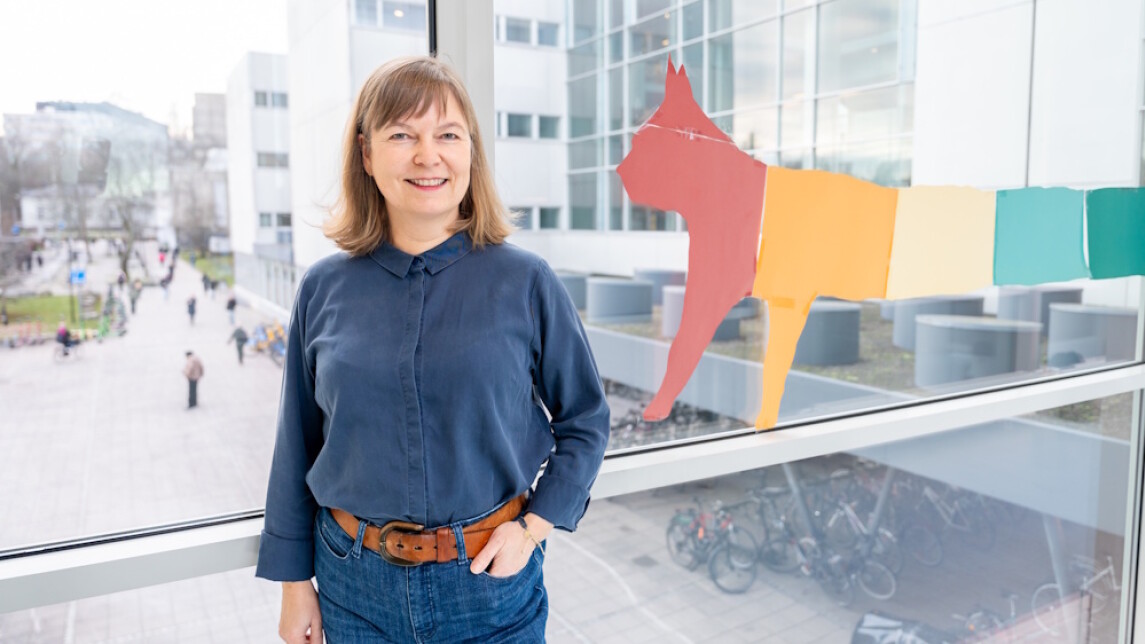
CERLI, Centre for Research on Learning and Instruction, and CELE, Centre for Research on Lifelong Learning and Education, present one researcher each month. In November, Professor of Sociology of Education Sanna Aaltonen from CELE takes the spotlight.
Currently, I do research on young people's views on social class and inequality. I was part of the KIVELI project at the University of Eastern Finland, where we worked together with sociolinguists to produce a large interview database with Eastern Finns of different ages about what they think about social class, its relationship to language use, and what kind of relationship they have with their home region. From this extensive material, I have now selected for examination how young people understand social class and its manifestations in general and in their own lives.
It is important to study this topic because because research related to social class and inequality reveals social structures and individual experiences that are easily overlooked or considered embarrassing to discuss. In addition, there is relatively little qualitative research that specifically examines issues related to young people’s understanding of social class. Many young people also stated in interviews that they had not previously discussed the issue.
As part of my work as a researcher I teach, participate in meetings, do different kinds of evaluations and editing, and do research. Alongside these tasks, there is a thread of brainstorming and developing new research topics. New ideas do not come about without work, but creativity also needs freedom and wandering. A researcher's and anyone's working day should also include lunch, preferably in good company. The department has plenty of that to offer!
Currently, I collaborate closely with CELE staff and colleagues who are particularly interested in youth transitions. Cooperation also continues with the sociolinguists from the KIVELI project on joint publications. Currently, we are working on a joint publication with an Australian colleague who has asked local young people some of the same questions about social class as those asked in the KIVELI project. The Finnish Youth Research Society is also a long-standing and trusted partner, and I am involved in planning its upcoming data collection and publication.
When I don’t do research I’m most probably at home in Helsinki at home, with my family or friends. I enjoy going to theater, art exhibitions, reading, and handicrafts, although lately the ratio of creating to unravelling has been pretty much equal. I do pilates and, with varying enthusiasm, other forms of exercise such as jogging. There is plenty of work outdoors at my summer cottage, which is a good counterbalance to academic work. Using a chainsaw, in particular, requires so much concentration that there is little time to think about Bourdieu!
My greetings to those involved in sociology of education and educational policy research: The research we conduct is important in terms of the development of the field and the accumulation of knowledge, but research on education also has an educational function. Research-based knowledge is an important analytical counterweight in broader debates on education, especially when these debates are accompanied by political passions and moral panic. In such cases, we are needed to provide critical information and insights on how to solve problems in a way that promotes justice and equality.