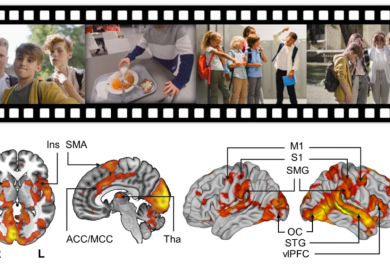
Interacting with a robot that cannot learn from errors might make you act less morally, research says.
“Then you don’t remember a world without robots. There was a time when humanity faced the universe alone […]. Now he has creatures to help him.”
From I, Robot, by Isaac Asimov.
If you have paid attention to recent news or you like scrolling one too many reels on social media, you might have an idea of what a robot looks like. According to the International Federation of Robotics, hundreds of thousands of new robots are installed every year. The higher their number, the higher the chances of errors occurring. Consequently, psychologists have been studying people’s reactions to errors made by robots for years.
Up to now, most research has focused on the influence that robots’ errors have on repeated interactions with humans. This has entailed how people change their behavior towards robots depending on whether they happened to make a mistake. A common finding has been that people tend to trust robots less after seeing them make a mistake [1]. After all, would you trust again a stranger again who just let you down?
However, most of our reactions towards unreliable people and robots are not as cold and rational as this might sound. When something happens that we did not expect, we often react emotionally. The way we feel in the moment can make us behave in ways that we would otherwise not be so proud of. After all, when we interact with someone who makes an error that we could profit from, whether we take advantage of it or not might have more to do with what they are capable of than with who we are. And if our honesty does not entirely depend on us, then would we still be entitled to blame dishonesty and moralize each other?
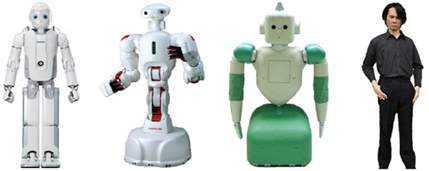
Robots commonly used in research on human-robot interactions, from [2].
At the University of Turku, members from the MOIM laboratory investigate human-robot interactions. In a recent series of studies, we told participants to imagine being in a grocery store, and asked them what would happen if either a robot or a human cashier were to accidentally bill them a smaller price than the correct one. Importantly, cashiers could be described as fast or slow learners, that is, as particularly (un)able to improve future performance in case errors were to be reported by customers. Would participants selflessly report the error to the store no matter what? Would they indulge themselves and simply keep the money? Or would they be influenced by the nature of the erring cashier?
If, just like me, you also are a person who likes to identify with their own moral stances, then you might feel a hint of disconcert – if not even anguish – knowing that interacting with a slow-learning cashier increased participants' dishonesty. Surprisingly, this was true for the robot cashier only, while no difference was seen when the error had been made by a human. That is, facing a slow-learning robot seemed to increase the frequency of actions that would be frowned upon if committed towards humans, casting a shadow on the coherence of our moral mind.
Hence, the moral principles at the core of our identity might be more malleable than we may be willing to admit. At the same time, the way we interact with robots seems to be somewhat different from how we relate to other humans. In light of these findings, one would easily question the nature of human morality, and whether our moral selves may simply be dim reflections of one’s own aspirations, rather than a true part of us. Like Kant said: “from such crooked wood as that which man is made of, nothing straight can be fashioned”.
As recent technological developments might suggest, our immediate future may look like one of Isaac Asimov’s tales more than we could have fancied just a few years ago. Whether we will preserve our humanity and ethics or not while this transformation unfolds, will likely depend on how we decide to treat not just our fellow humans, but the robots around us.
Paolo Buttazzoni
The author is an early-stage doctoral student at the University of Turku. His main research interests revolve around the ethics of artificial intelligence (AI) and the mechanisms underlying perception of AI-generated visual contents.
References:
[1] Ye, S., Neville, G., Schrum, M., Gombolay, M., Chernova, S., & Howard, A. (2019, October). Human trust after robot mistakes: Study of the effects of different forms of robot communication. In 2019 28th IEEE International Conference on Robot and Human Interactive Communication (RO-MAN) (pp. 1-7). IEEE.
[2] Laakasuo, M. (2023). Moral Uncanny Valley revisited–how human expectations of robot morality based on robot appearance moderate the perceived morality of robot decisions in high conflict moral dilemmas. Frontiers in Psychology, 14, 1270371.