Bullying activates alertness and stress systems in the brain
Bullying activates a wide range of emotion and stress systems in the brain in both adolescents and adults, shows a new study.
A new study conducted at the Turku PET Centre and the University of Turku in Finland shows that being bullied causes serious alarm and stress reactions in the central nervous system. The researchers studied both adults and adolescents aged 11–14.
In the study, participants were imaged with functional MRI while they watched videos filmed at school depicting bullying situations and positive social interactions.
The videos were filmed from the viewer's perspective. When participants saw bullying that was directed at them as a viewer, large areas of the brain related to emotional and stress regulation were activated as well as parts of the cerebral cortex related to sensory perception and bodily sensations.
“The brain responses of both adolescents and adults to bullying were remarkably similar, although in adolescents the responses were stronger and more profound in regions cortical regions processing bodily sensations. This suggests that being bullied is a strong bodily threat for adolescents,” says Professor Lauri Nummenmaa of the Turku PET Centre.
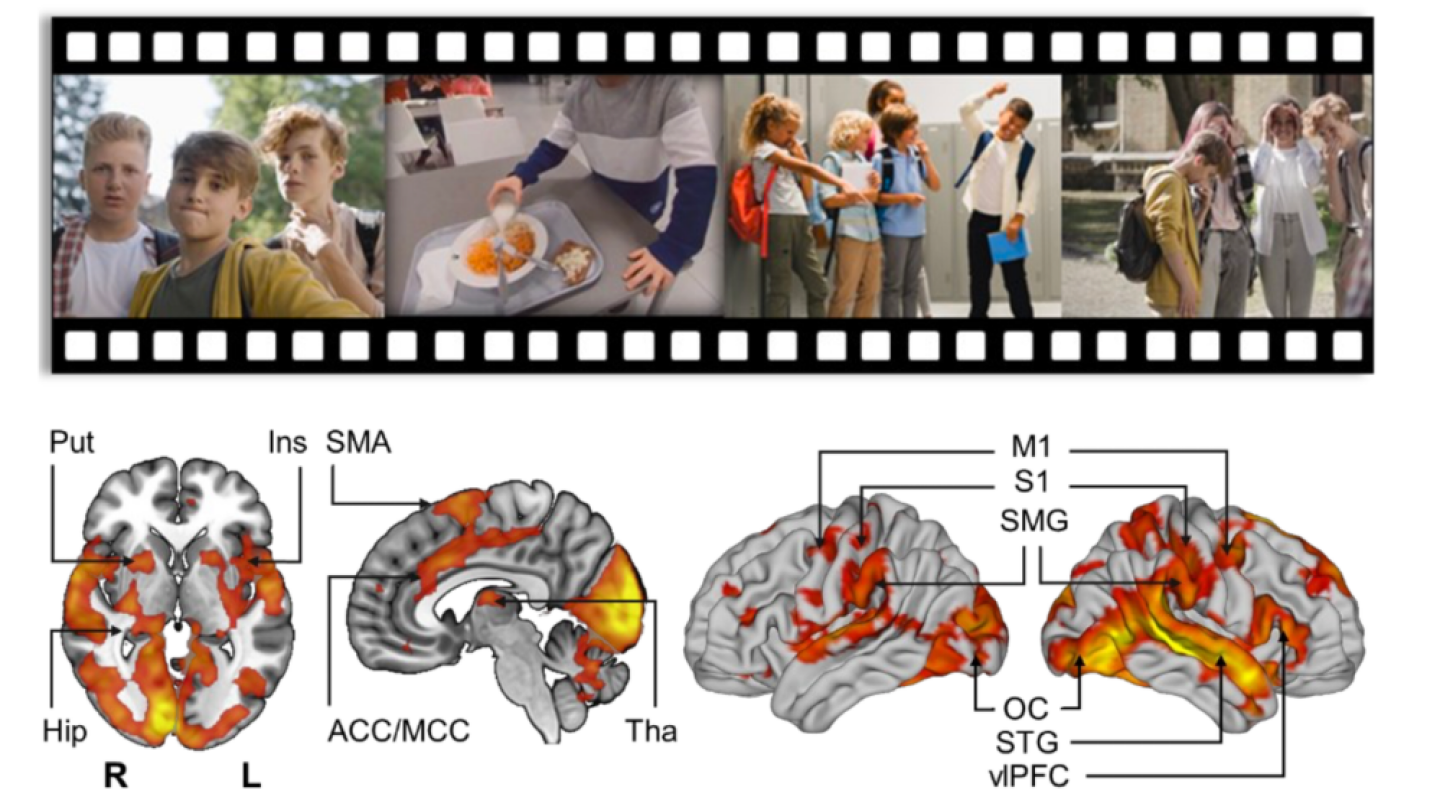
Bullying affects the central nervous system
In adolescents who reported being bullied at school, the brain responses were stronger in the areas involved in emotion regulation. In adults, however, bullying experienced in school was associated with weaker responses, which may indicate long-term adaptation or accommodation to distress in the brain.
“Our results show that bullying is not just a social phenomenon. It has also direct and measurable effects on the central nervous system. Being bullied triggers alarm systems in the brain similarly as physical threats,” explains Doctoral Researcher Birgitta Paranko from the Turku PET Centre.
“Bullying can have serious and long-lasting effects on mental health. Our new findings highlight the need to prevent bullying at an early stage, as even single bullying situation can trigger a stress response in the brain,” says Christina Salmivalli, Professor of Psychology at the INVEST Research Centre of the University of Turku.
The research was funded by the Eino Jutikkala Fund, Hospital District of Southwest Finland, Olvi Foundation, Finnish Brain Foundation, Paulo Foundation, Jane and Aatos Erkko Foundation, and the European Research Council ERC. The results were published in the Journal of Neuroscience.