Imagine your brain as a buzzing nightclub. The Music’s pumping, the lights are flashing, memories are twirling across the dance floor. And in the middle of it all is dopamine—your brain’s natural hype crew, keeping the energy up, the movement smooth, and the mood high. Dopamine is the life of the party (or in this case your brain), regulating the function of the nervous system and how the messages are sent across the brain.
Now picture what happens when the hype crew doesn’t show up.
That’s essentially what goes wrong in certain brain disorders like Alzheimer’s or Parkinson’s. In the first case, the brain slowly forgets the playlist. In the other, the rhythm stumbles. Both involve dopamine levels slipping out of balance—and when that happens, everything starts to go sideways.
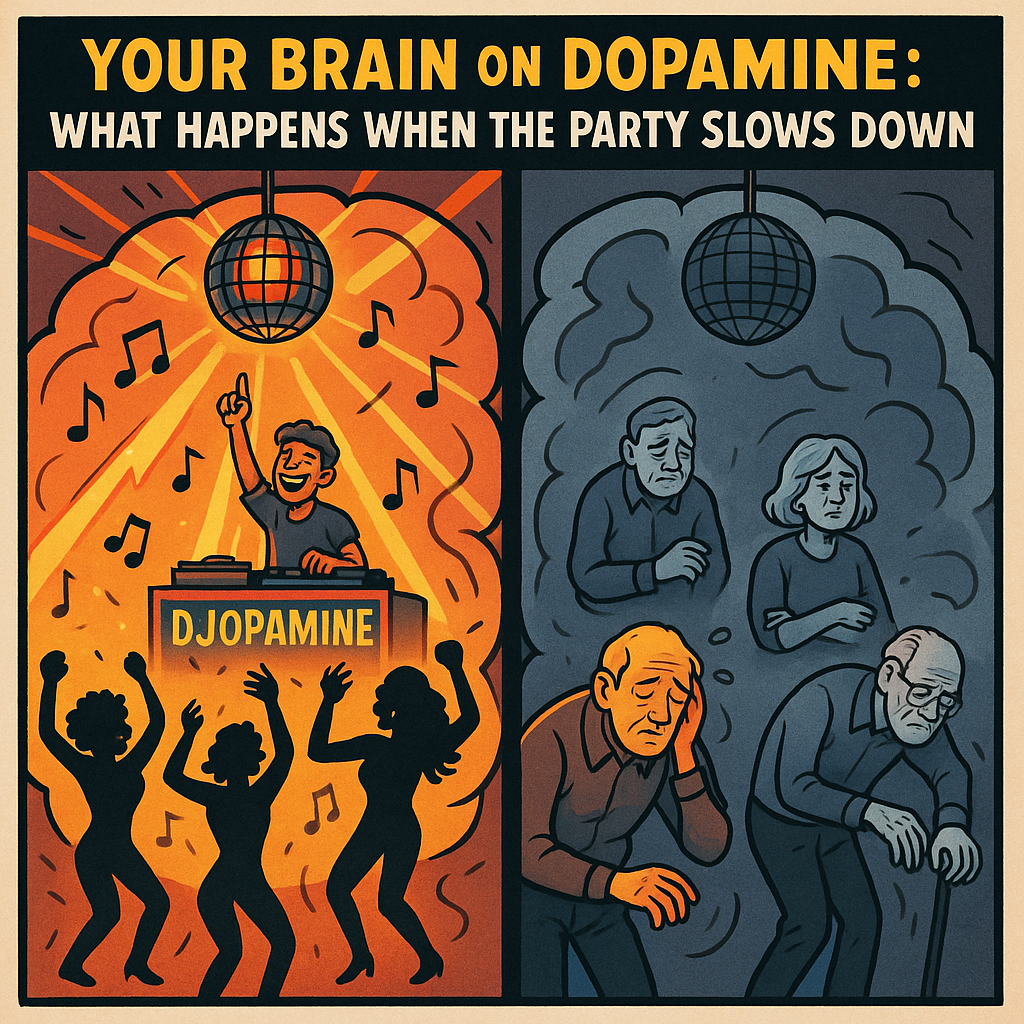
In the first scenario (Alzheimer’s), the early signs are subtle: misplacing objects, forgetting names, repeating stories. It’s not that dopamine disappears—it’s that the connections between different brain areas start to break down. So dopamine is essentially out of job as a message delivery guy. Communication slows, focus fades, and short-term memory begins to unravel. Over time, even familiar faces and places can become unrecognizable.
In the other (Parkinson’s), the problem shows up in motion. The body stiffens, hands tremble, and even blinking can feel like effort. This is what happens when the brain stops producing enough dopamine. The usual signals that keep muscles coordinated and movement smooth just don’t get through.
So, what if we could actually watch these changes as they happen? Not guess. Not wait. But truly see what’s going on in the brain in real time? That’s the idea behind a new kind of brain implant. Imagine something thinner than a human hair, but loaded with sensors and tools. It would track chemical changes—like shifts in dopamine levels—as well as other vital signs, helping doctors detect early signs of trouble before symptoms ever show up.
Now that’s a game-changer, am I right? Today, these conditions are usually diagnosed only after the damage is done with big expensive machines called MRIs, that need entire hospitals build around them. But if we could monitor dopamine levels directly—or detect early stress signals in vulnerable brain regions—we could intervene sooner and more precisely.
In my own research, I’m working on building that kind of sensor. I’m experimenting with carbon-based materials to find one that’s flexible, non-toxic, and safe enough to be placed in the brain. Then I add tiny metallic (either gold or platinum) particles to the surface to boost the sensor’s ability to detect chemical messengers like dopamine—basically trying to make it as sensitive and efficient as possible.
This isn’t science fiction. It’s science catching up to what the brain has been trying to tell us all along: the warning signs are there—you just need the right tool to listen.
So yes, your brain is like a nightclub. And dopamine is still the one working the lights and keeping everything in sync. But when that rhythm starts to slip, a tiny implant might one day be the reason the party keeps going.
Bahar Mostafiz
The author is a Doctoral Researcher in the Materials in Health Technology group within the Department of Mechanical and Materials Engineering at the University of Turku. Her PhD research focuses on exploring the role of metallic nanoparticles on carbon nanomaterials for the enhanced electrochemical detection of neurotransmitters.