New study highlights the importance of lived experience, local knowledge, and community voices in climate change communication. The researchers call for climate policies and communication strategies in the Global South to move beyond broad, one-size-fits-all approaches and instead recognise the lived realities of the communities most exposed to climate change.
While people across the globe are experiencing various impacts of the changing climate, governments and communicators often use top-to-bottom, uniform communication strategies to inform people about climate change.
Challenging the assumptions behind these communication approaches, researchers found evidence that people living in different coastal socio-ecological settings can experience, understand and respond to climate change in different ways, even within a broadly similar geographic and socio-ecological settings. The findings, published in the journal Ocean & Coastal Management, from the coastal region of Kerala within southern India reveal an important gap between awareness of climate change and scientific understanding of its causes.
The researchers studied people’s perceptions, beliefs and knowledge about climate change in two coastal regions, one low-lying island and the other a mainland coast. For example, people from Vypin, a low-lying island, expressed concern about sea-level rise, recurrent flooding, and land subsidence, while people from Kozhikode mainland coast often spoke about declining fish abundance and changes in the size of sardines.
The researchers documented many such accounts, demonstrating that lived experience can provide a detailed understanding of climate change even when people may not use scientific terminologies to describe it. The study also found that people do not interpret climate change solely through scientific explanations. Participants connected climate change with deforestation, pollution, plastic waste disposal, urbanisation, and other local environmental changes. Some also explained climate change through religious and cultural worldviews, including ideas of divine control, punishment or an approaching end of the world. Other misconceptions included the idea that climate change is caused by local environmental issues, such as dumping of plastic waste.
“These perspectives should not simply be dismissed as ignorance; rather, they reveal how communities make sense of a complex and uncertain phenomenon through culturally embedded ways of understanding the world. These different understandings are also suggested to influence people's sense of agency,” says Doctoral Researcher P. Afna from the Indian Institute of Forest Management, Bhopal.
Afna also points out that some misconceptions about the causes of climate change may create an inflated sense of responsibility among individuals and local communities, who may believe that changing their own behaviour alone can address a problem driven by much larger structural processes. This can potentially shift attention away from the responsibilities of governments, high-emitting sectors, and other powerful actors to provide adaptation support, climate finance, and other forms of assistance.
The findings also show that climate vulnerability is not experienced uniformly. Participants described concerns ranging from livelihood losses and temporary relocation to threats to homes, education, health, and psychological well-being. Some participants expressed fears that rising seas could eventually take their homes, while others considered migration as a possible response to increasing vulnerability.
Importantly, communities were not simply passive victims of climate change. They described a range of responses, including afforestation, reducing plastic pollution, coastal protection, and nature-based approaches. In Vypin, for example, some participants identified mangroves as a means of reducing erosion and protecting settlements, and some had planted mangroves around their homes. The study also found a substantial difference in perceived agency: 65% of participants in Vypin said they could do something to address climate change, compared with 16.25% in Kozhikode.
Rethinking how climate change is communicated
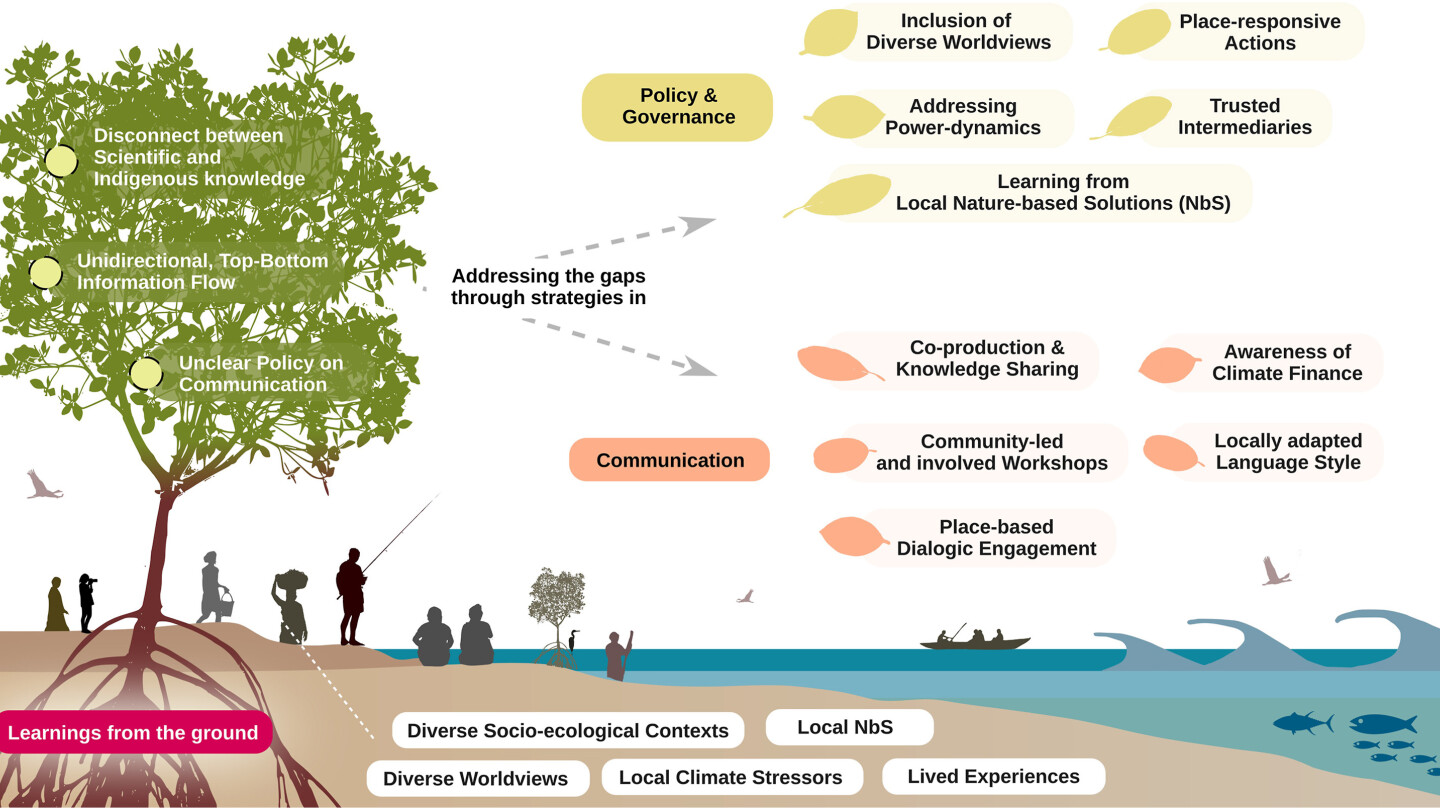
By analysing these results, and comparing it with the current climate change policies in Kerala, India, the researchers argue that climate communication cannot rely only on broad, top-down messages or scientific terminologies. Instead, communication needs to connect scientific knowledge with what people see, experience, and value in their own environments.
“People living at the forefront of climate change already possess important and relevant knowledge about the changes occurring around them. The challenge is to connect this lived experience with scientific understanding without dismissing local knowledge, cultural beliefs or community perspectives,” says Doctoral Researcher Jithin Vijayan from the Department of Biodiversity Sciences, University of Turku in Finland.
The study calls for more place-responsive approaches that bring together scientific knowledge, local and indigenous knowledge systems, community experiences, and diverse cultural worldviews. They recommend locally adapted communication materials, participatory dialogues, experiential education, and the co-production of climate knowledge with communities, with examples. Researchers also suggests a roadmap for implementing the findings within the policy framework.
The study was carried out by a collaborative team of researchers from the Indian Institute of Forest Management, Nature Conservation Foundation-India, and the Department of Biodiversity Sciences, University of Turku, Finland.
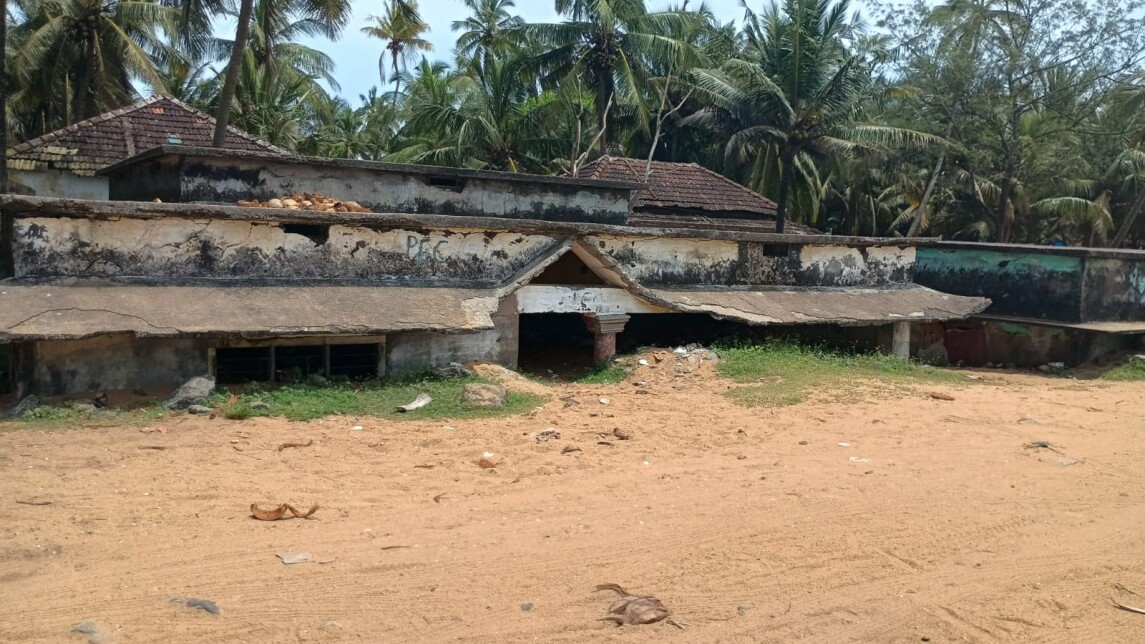
Main image: An aftermath of climate change in coastal Kerala; Ponnani, Malappuram. Credit: P. Afna