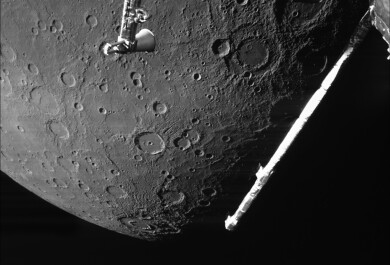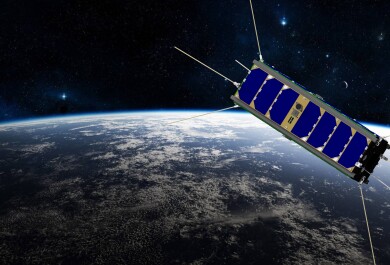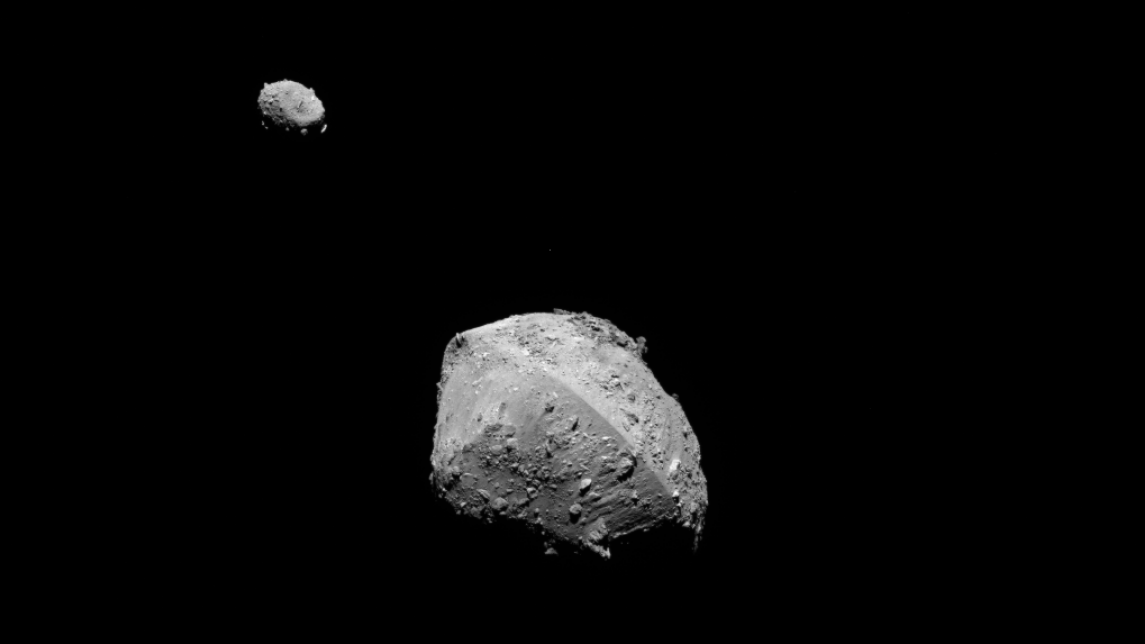
On Wednesday, November 25. European Space Agency released imagery of the first-ever planetary defense test outcome on binary asteroid Didymos-Dimorphos as captured by Hera spacecraft. Finnish researchers participate in the scientific research of the Hera mission.
On September 26, 2022 NASA Double Asteroid Redirection Test (DART) spacecraft intentionally collided with asteroid Dimorphos – the 160 m-sized moonlet – shortening its orbit around 760 m-sized asteroid Didymos by 33 minutes.
While telescopes on Earth measured the orbit change, one fundamental question remained unanswered: what had actually happened to Dimorphos?
“Scientists debated whether Dimorphos had sustained an impact crater, changed its shape or stayed the same,” explains Hera Principal Investigator Patrick Michel, Director of Research at CNRS / Observatoire de la Côte d'Azur. “Much to our surprise the answer turns out to be all three at once!”
Dimorphos has one face flattened with a stadium-sized crater
ESA Hera spacecraft approached the Didymos-Dimorphos system in October this year to document in detail the outcome of the DART impact and provide proper scientific analysis.
Hera imagery revealed that Dimorphos now has one face flattened with a sports stadium-sized crater which extends across the asteroid’s entire width. Meanwhile, the other part of Dimorphos does not exhibit evidence of major changes: the boulder fields covering its other regions look just like they did in DART's 2022 images.
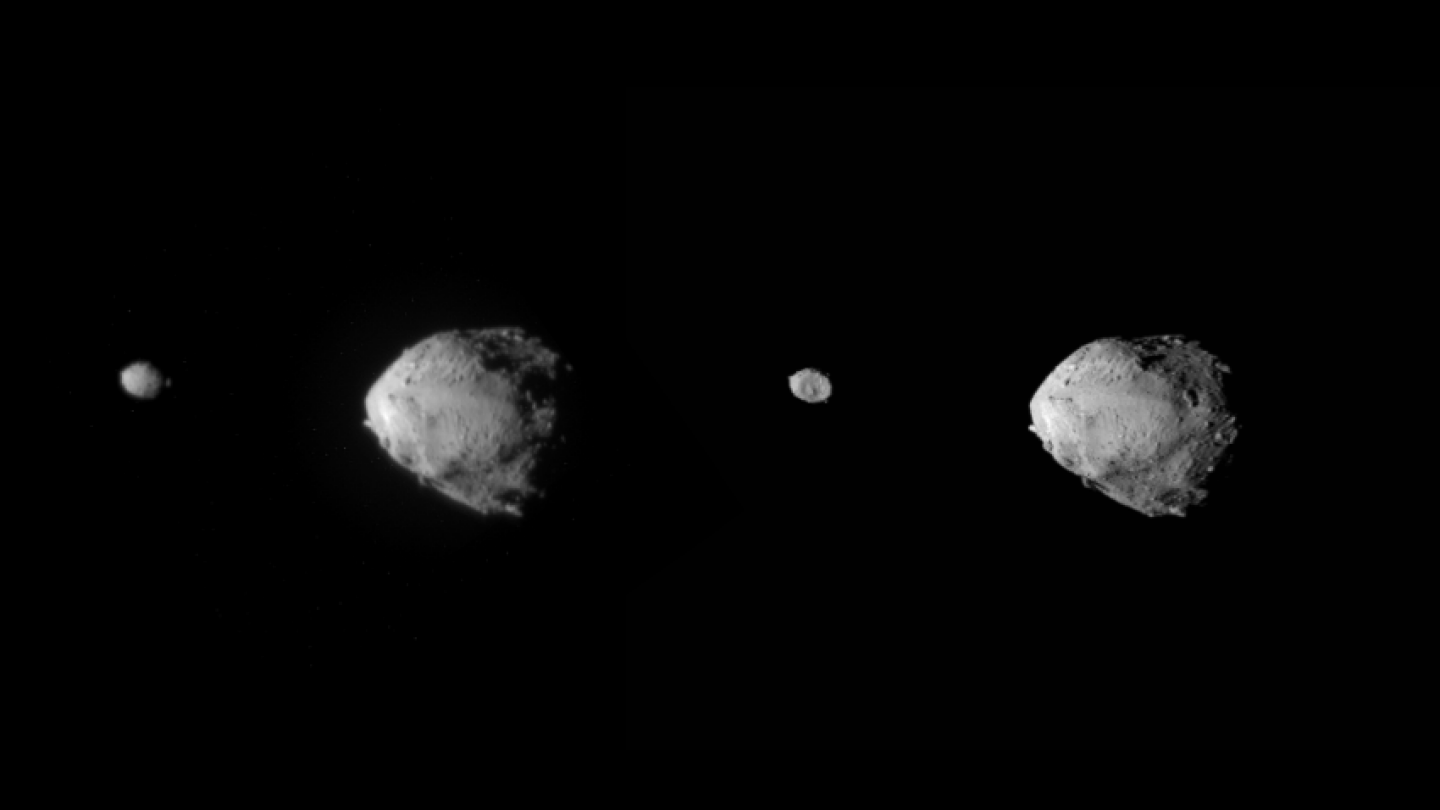
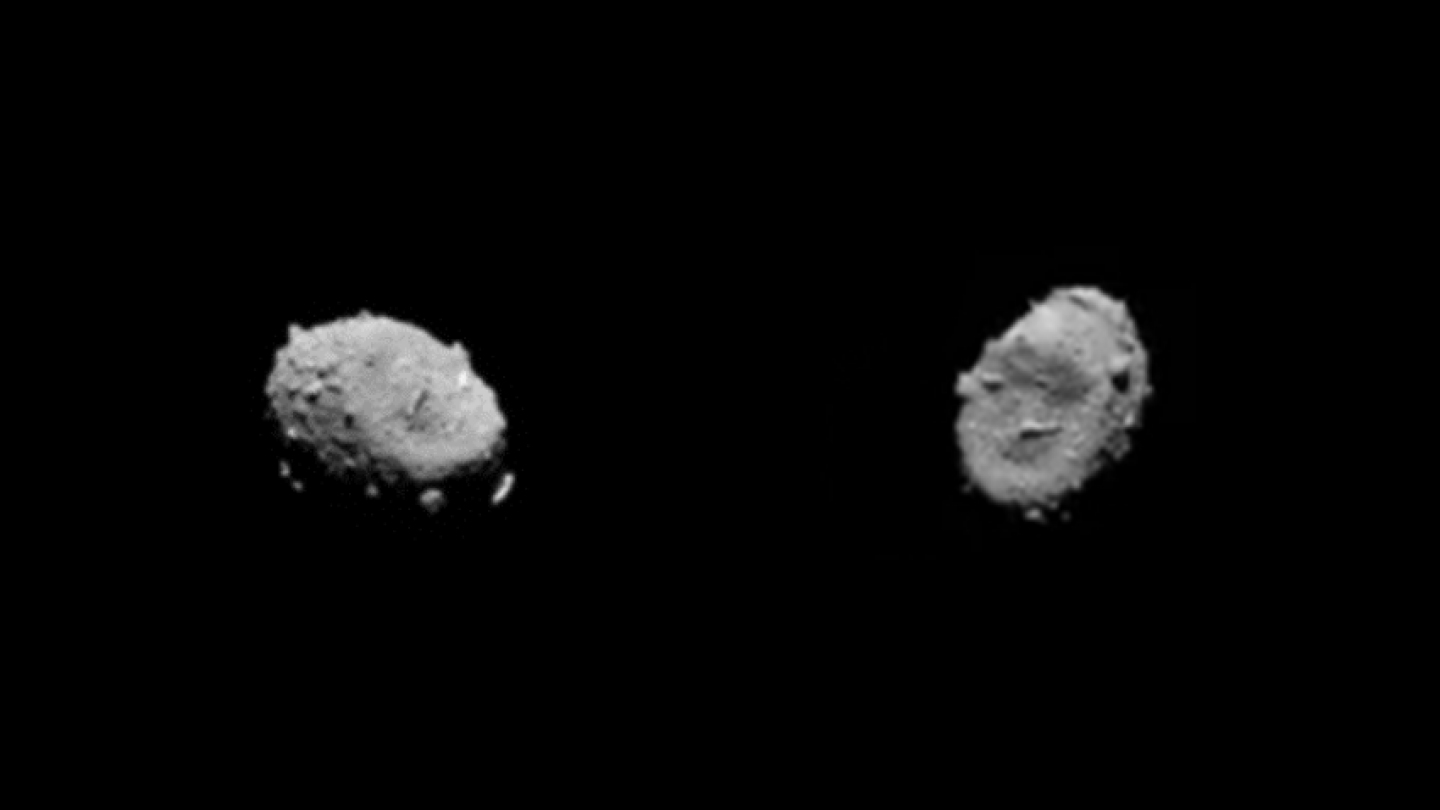
“In addition, as Hera returned more images, it became clear that the DART impact has left Dimorphos tumbling wildly in its orbit,” says Michael Kueppers, ESA’s Hera mission scientist.
“Understanding what portion of DART impact energy was consumed on asteroid deformation, ejection of fragments, and Dimorphos orbit change will help us to estimate the overall deflection efficiency,” adds Tomáš Kohout from the University of Turku, Pori Space Lab.
Both asteroids are rich in boulders. The larger Didymos shows prominent central ridge, which runs the length of the equator that Dimorphos orbits around.
“The asteroids are so called rubble piles, loose conglomerates of boulders held together by gravity and weak cohesion forces,” says Antti Penttilä from the University of Helsinki.
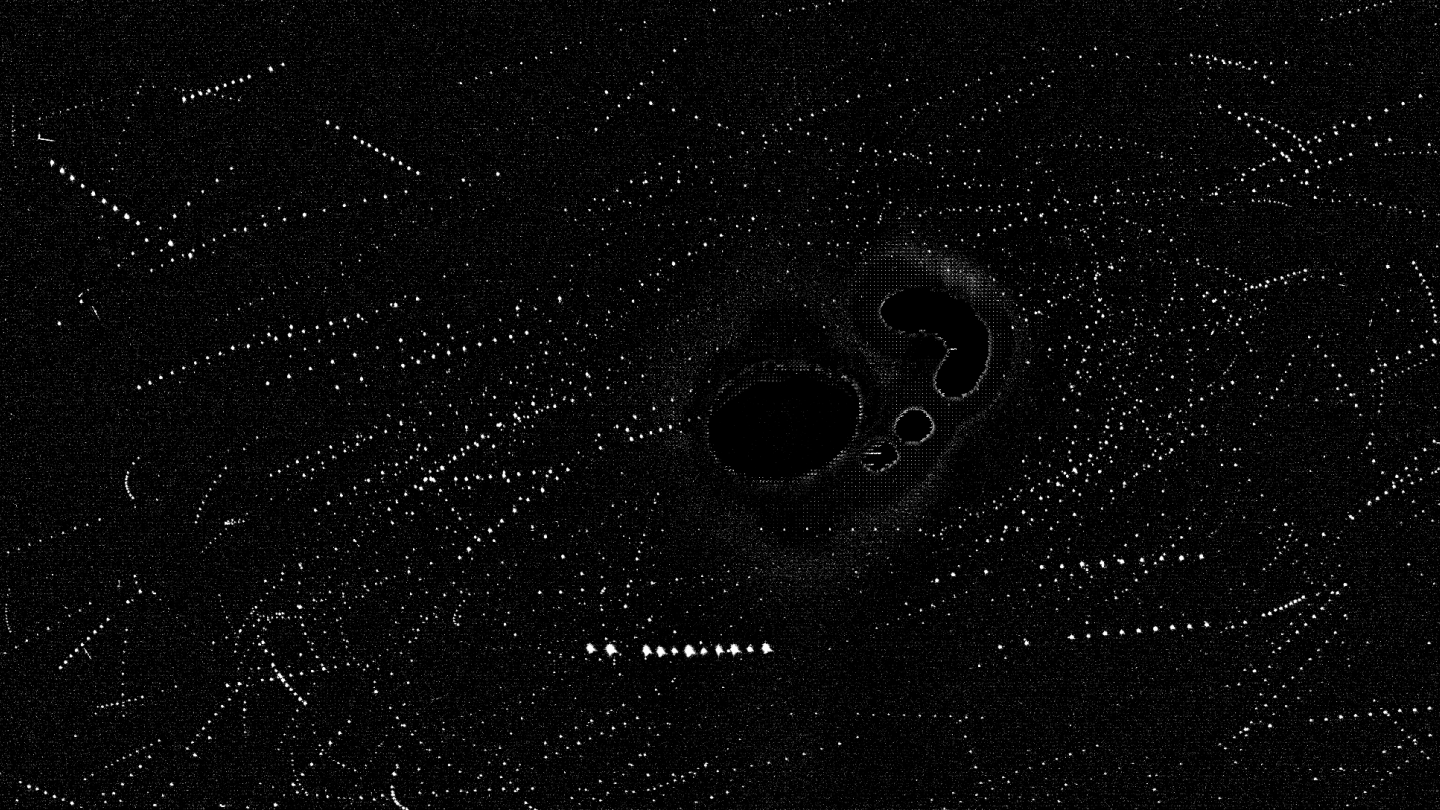
Hundreds of previously unknown boulders encircle the binary pair.
Another big surprise is that Hera is showing that the asteroids are surrounded by hundreds of orbiting boulders, just a few metres in size. The team will have to take account of these objects in the coming weeks as the mission moves in closer to acquire higher-resolution images of the asteroids.
“While we considered to encounter small boulders in the asteroid vicinity, we were astonished by their huge number creating truly dynamic environment,” says Kohout.
Significance of planetary defense
This test demonstrated for the first time human ability to alter asteroid orbits. Similar technique can be applied to redirect asteroids on collision trajectory with Earth should such be discovered in future.
"Sixty-six million years ago, an asteroid impact changed the course of life on Earth causing dinosaurs extinction. Today, for the first time in history, humanity is validating how to prevent such an event from happening again,” says Hera mission manager Ian Carnelli.
“While small meter-sized objects enter Earth atmosphere almost daily, they possess no harm. On the contrary, impacts by approximately 50-metre asteroids are estimated to occur, on average, once every few hundred years. An impact of this size could cause severe damage to an area comparable in size to a medium-sized city,” Kohout adds.
To highlight the significance of planetary defense, United Nations and International Astronomical Union officially recognize year 2029 as an International Year of Asteroid Awareness and Planetary Defense.
Finnish contribution
University of Turku researchers at Pori Space Lab (PSL) together with colleagues from University of Helsinki (HY) are participating in analysis of the first Hera data. Prof. Tomáš Kohout (PSL) is a member of the Hera Investigation Team and is Principal Investigator of the ASPECT hyperspectral camera located on Milani sub-satellite. Milani will be released by Hera on January 30, 2027. Researchers Nathan Phopariphat (PSL) and Valtteri Pitkänen (PSL) are responsible for ASPECT observation planning and data processing. Senior researcher Antti Penttilä (HY) is responsible for instrument performance simulations and image corrections.
Coming next: moving closer
Milani is, together with Juventas, one of the two Hera’s sub-satellites. Milani will conduct close-up observations of both asteroids mapping their composition and surface disturbance using ASPECT hyperspectral camera. ASPECT features a unique ability to capture colors outside of the human eye’s visible spectral range enabling us to identify unique diagnostic signature of various minerals.
ASPECT was developed at VTT Technical Research Center of Finland in cooperation with Gofore Finland, Kuva Space, Gofore Czech Republic, University of Helsinki, Aalto University, Institute of Geology of the Czech Republic and Brno University of Technology. Milani sub-satellite was built by Tyvak International Italy.
More information:
Prof. Tomáš Kohout, tomas.kohout@utu.fi, 050 448 6268
Doc. Antti Penttilä, antti.i.penttila@helsinki.fi, 029 415 1227