A doctoral researcher explores how sound shapes our relationship with nature.
Think of your favorite film without its score. Mine is Interstellar, and I genuinely can't imagine it. Sound doesn't just accompany experience; it shapes it. Trained in classical music back in India, I've long experienced this. In Carnatic and Hindustani traditions (two types of South Asian classical music), certain ragas are composed specifically to invoke the mood of a time of day or a season.
But I recently came across a Harvard medical school piece arguing something deeper: our sensitivity to sound may be a remnant of early mammalian evolution — most of our ancestors were nocturnal, relying on listening and smelling to survive. That got me wondering whether effect of sound go beyond emotion.
Think you know sound?
Research shows that background music in a restaurant can influence what you order. What do you think is the main effect?
A. You eat faster
B. You spend more
C. You prefer sweet food
Studies confirm music can influence consumer behavior, from supermarkets to restaurants (see P.P.S). As a conservation scientist interested in human-nature relationships, my mind jumped to an obvious question: can sound change how people feel and act toward nature? Can the audible landscape, or ‘soundscapes’ (overall combination of sounds including natural and human-made ones) influence our connection with nature?
There's early evidence it can. But most of the existing research on media’s impact on human behavior towards biodiversity focuses on visual media. Also, most studies are from Western, Educated, Industrialized, Rich, and Democratic contexts. And almost no one has asked: what exactly inside a soundscape is doing the work?
What's inside a podcast?
Imagine a podcast about a rare bird. Which element would make you more likely to donate to protect it — or volunteer for its conservation?
A. The bird’s call
B. Scientist’s narration of the bird
C. A story about the bird
D. Music with the bird’s sound
These are exactly the questions I investigate during my PhD, funded by the Maj and Tor Nessling Foundation. I'll run online and in-field behavioral experiments across two very different cultural and natural landscapes: Finland and India, collaborating with sound artists and conservation organizations in both countries.
Curios about my questions and the context? Here you go:
🌍Does the same soundscape work differently across cultures?
🔁Does repeated listening change its effect?
🧠Do personal memories and familiarity shape the response?
🎧Which sound elements actually drive behavior change?
Why India and Finland though?
This is one of the most exciting parts of my study design! The Finland–India pairing is deliberate and rich with contrast across almost every dimension that matters for this research:
- The varying cultural relationship with nature – nature woven into the art, spirituality and life in India, with diverse languages and musical styles. This is while Finland having its own profound nature connection, rooted in concepts like everyone's right (jokamiehenoikeus) and a cultural identity deeply tied to forests and lakes, in a very different way!
- The diversity and differences in the biodiversity contexts: ranging from tropical vs. boreal to megadiverse vs. relatively species sparse. Does a Finnish forest bird sound move an Indian listener? Does it matter?
- Soundscapes in both contexts are strikingly different with diversity of sounds, music styles, preferences, and quietness.
- Finally, strong conservation traditions and active civil society, and interest in music and soundscapes in both countries make collaborations possible!
‘Sounds’ interesting? Stay tuned for updates from my adventure!
P.S.: Did you know that Finland is the first country in the world to create a National Soundscape?
P.P.S.: Studies have shown all three can influence what you order at a restaurant! Listening to music while eating has been found to increase eating speed, and classical music can make us spend more at restaurants while increasing our preference for sweeter food.
Jithin Vijayan
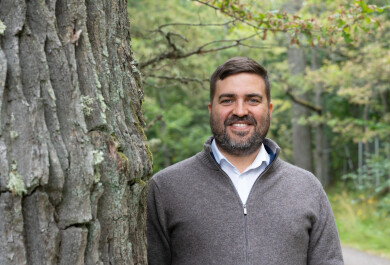
The author is a doctoral researcher at the Department of Biodiversity Sciences, working with Dr. Ricardo Correia (University of Turku, Finland), and Dr. Diogo Veríssimo (University of Oxford, UK). His research interests span human-nature relationships, biodiversity conservation, and applied ecology.
More Reading (and listening!):
- Indian Musical Experience Museum (2022). Birdsong – Virtual Exhibition. https://birdsong.indianmusicexperience.org/
- Eck, B. A. (2025, November 13). How music resonates in the brain. Harvard Medicine Magazine. https://magazine.hms.harvard.edu/articles/how-music-resonates-brain
- Waking Up to No Sound: Music Psychology and Climate Action | IMPACT. (2026). Boston University. https://sites.bu.edu/impact/previous-issues/impact-winter-2024/waking-up-to-no-sound/
- Veríssimo, D., Blake, K., et al. (2024). Changing human behavior to conserve biodiversity. Annual Review of Environment and Resources, 49(1), 419–448. https://doi.org/10.1146/annurev-environ-111522-103028