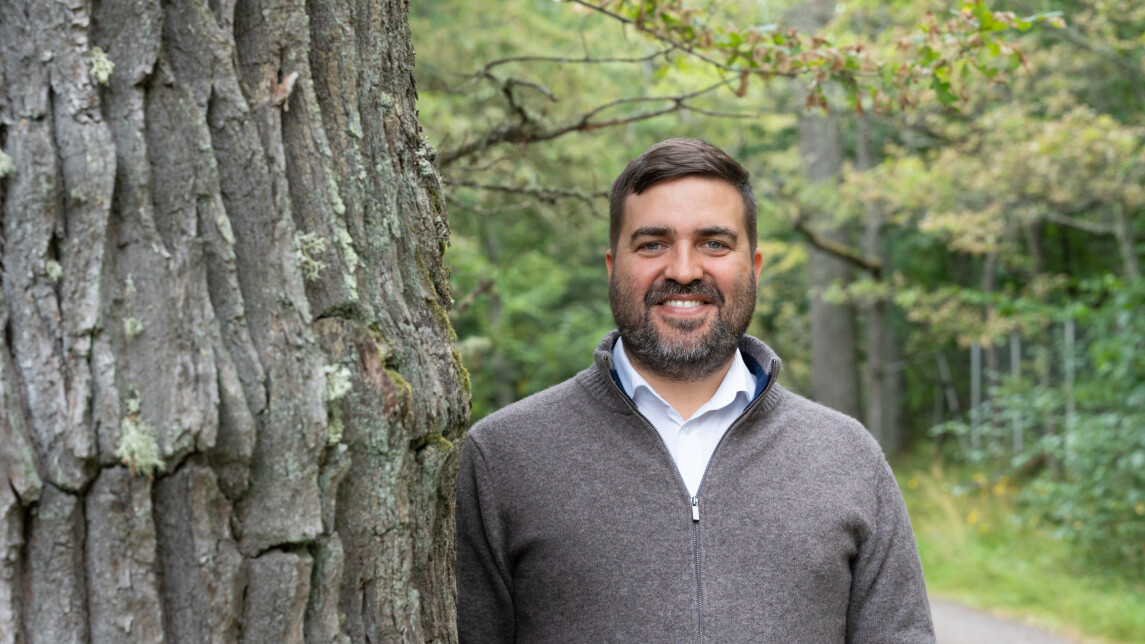
In Finland, people living in urban areas have only a short distance to nature environments, but throughout the world, millions of people live in densely built cities where nature experiences are a rare luxury. According to Correia, this can also impact how we perceive the passage of time.
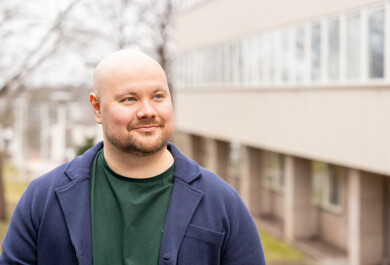
Associate Professor Ricardo Correia leads the new NATURETIME project that studies how we perceive time in nature as compared to urban environments.
“Previous studies indicate that time spent in nature is perceived as longer, but in a positive way, and the passage of time feels different than in an urban environment. Our aim is to investigate whether increasing the amount of nature environments in cities could, in terms of experience, give us more time, a more flexible perspective on time, and thereby improve people’s well-being,” says Correia.
The project recently received the esteemed ERC Consolidator Grant, which enabled the expansion of the project into several phases.
The first phase is realised in virtual reality, as different landscape dimensions can be controlled more precisely in a laboratory environment.
“In virtual reality, we can measure and change different dimensions of the landscape, such as the number of trees and other greenery, biodiversity or the soundscape, and compare what kind of an impact do the different environments have on the participants’ experience of time. We will also compare the duration of nature experiences and the impact of movement on the participants’ experiences,” Correia describes.
The next step is to use this information in real environments. With the results gained in the laboratory setting and validating them using real world data, the researchers aim to be able to predict how people experience time in different kinds of urban environments.
“In Turku, for example, we could characterise the greenery and soundscape in different neighbourhoods and try to predict how the environment impacts the residents. Our goal is to develop models that could eventually be used in urban planning in the future.”
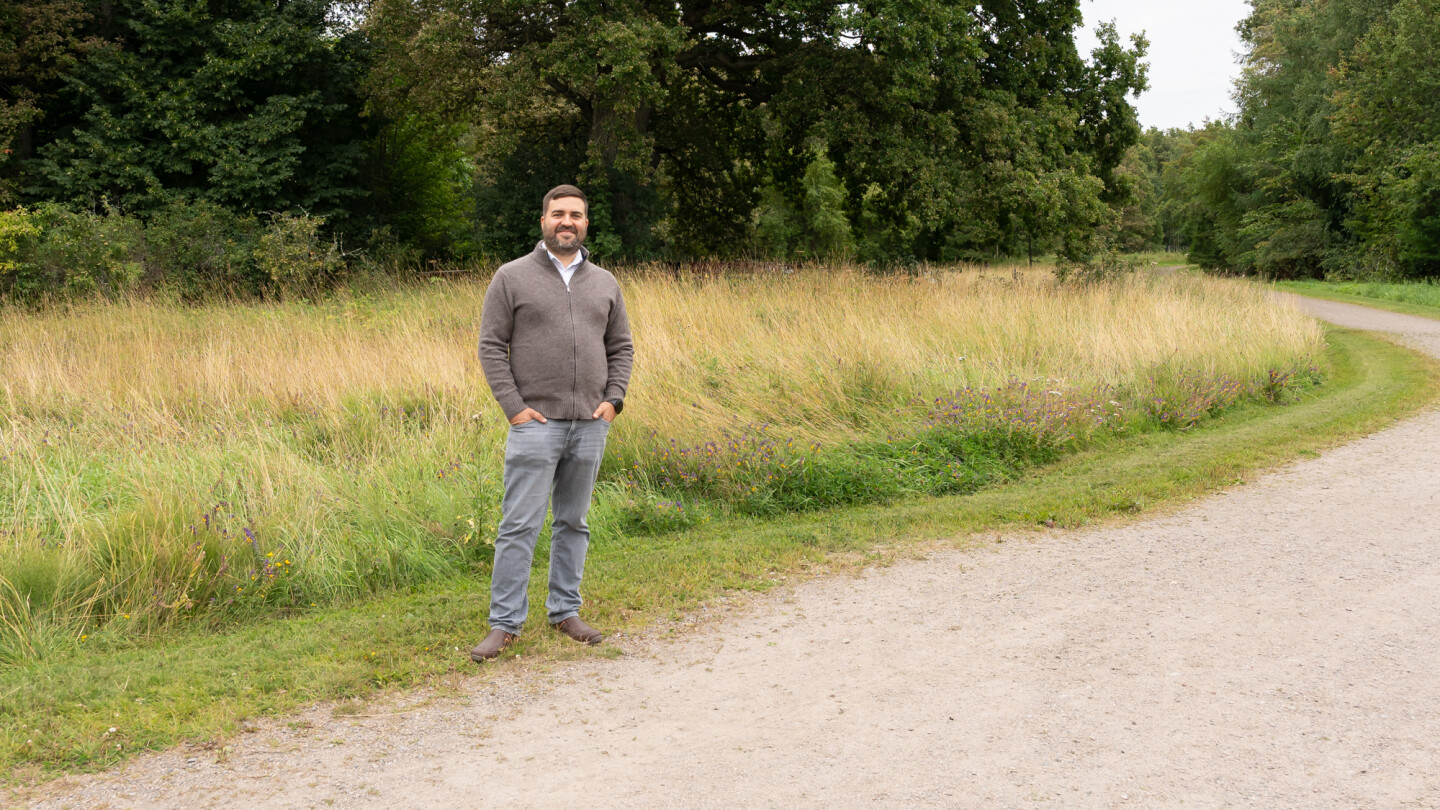
Successful nature conservation requires understanding human psychology
Correia says that he has always been curious and questioned various phenomena.
“I always said that I either want to be an astronaut or a scientist. I got the chance to be an astronaut for a week at an international children’s space camp, but a career as a scientist seemed more natural to pursue after my undergraduate studies in ecology,” Correia laughs.
His first research topics focused particularly on nature conservation. Correia gradually developed an interest in human-nature interactions in different research projects, first in Portugal in an agroforestry project, next while completing his doctorate in the UK, and later as a postdoc in Brazil.
“In Brazil, I was working in a project where we strived to demonstrate the broader value of protected areas to society while there was a political push against nature conservation projects. Protected areas were downsized or downgraded entirely as they were seen as a barrier towards socio-economic development. I began to comprehend more deeply how important it is to understand how people relate to and want to act towards their environment.”
Valuable urban nature at everyone’s reach in Finland
People’s relationship and interaction with nature still hold Correia’s interest and they are the central theme of his new research project. The other aspect of the project, impact of nature experiences on people’s perception of time, occurred to Correia during the COVID pandemic.
During the strict lockdowns, the daily rhythm vanished and time seemed to become fuzzier.
At the beginning of the pandemic, Correia had just become a father for the first time and started a new job in Finland.
“My family was still living in Turkey and I experienced the pandemic in two different countries. The restrictions were stricter in Turkey than in Finland, and during the harshest lockdown measures, people weren’t even allowed to go out of the house. In Finland, outdoor activities were allowed, and life was much easier here during the pandemic restrictions. I realised just how important spending time in nature is for our overall well-being, but especially for our perception of the passage of time.”
According to Correia, Finnish cities are green and nature is close when compared to large cities in many other countries.
“Here in Turku, we have nature right in the middle of the city, but the same cannot be said of many cities around the world. For example, in the Mediterranean countries, many big cities are built so densely that nature experiences have to be sought at a greater distance or even outside the city entirely.”
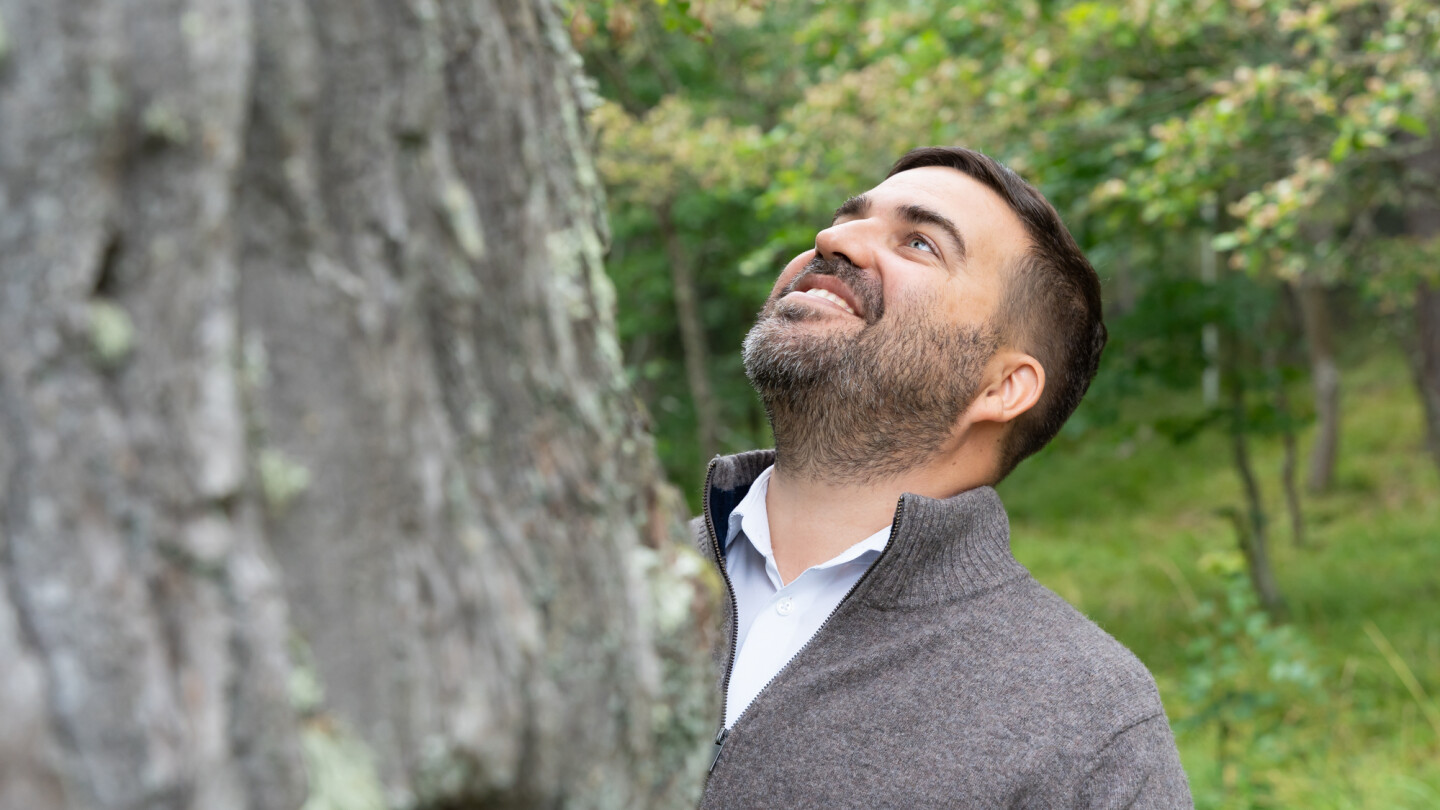
If people have to travel tens of kilometres to reach natural environments, experiencing nature becomes a luxury that not all city residents have equal access to or can afford. In many cities, access to nature can also be related to the socio-economic status of different neighbourhoods.
“A key aspect of future urban planning should be taking equality into account. If the goal is to increase nature in urban environments, should priority be given to areas that lack access to nature? In which neighbourhoods will nature environments be created, and will they be accessible to all city residents?”
One of the goals of the research project is to create concrete recommendations to support decision-making, and offer models of environments that could increase people's nature experiences in the urban context, have an impact on their perception of time, and eventually improve their relationship with nature and overall well-being.
“The hypothesis of our study is that there is a feedback link between our environment, time perception, and behaviour. By acting on one aspect—namely, nature experiences—we could potentially create a positive cycle that both improves well-being and fosters a sustainable relationship between people and nature,” says Correia.
To improve the well-being of both people and the environment is one of Correia’s key motivators.
“The change we represent might perhaps not be as large as I would hope, but that I get to do something meaningful and at least try to spur change continues to inspire me. It is also important to me to support early career researchers. A researcher’s career is marked by constant uncertainty and intensifying competition, and there have been times in my own career when I wasn’t sure if I could continue my research. Now, I’m able to offer the younger members of my research group the possibility to really engage in their work, at least for a few years. This feels meaningful as well,” Correia concludes.
Text: Liisa Reunanen
Photos: Suvi Harvisalo
Translation: Mari Ratia