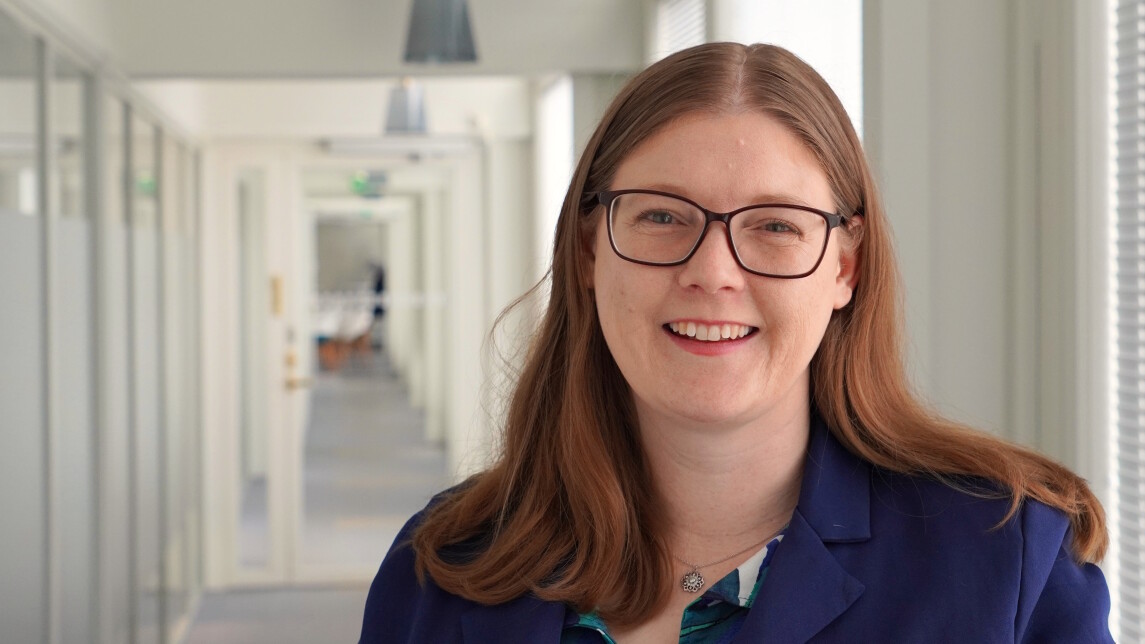
Postdoctoral Researcher Anna Scheer is studying sex-specific risk factors that affect heart health. Her research focuses on the effects that health conditions, such as pre‑eclampsia and gestational diabetes, have on the hearts of the women affected by them.
Postdoctoral Researcher Anna Scheer arrived in Turku in October 2025, starting her work in the University’s MSCA‑co‑funded SYS-LIFE programme. Before starting her fellowship at the University, Scheer worked in research at Curtin University in Perth, Australia.
Initially a physiotherapist, Scheer’s research interests include developing exercise-based rehabilitation for patients with heart disease. For her PhD she investigated the outcomes of different types of exercise in people with heart disease, specifically coronary artery disease.
Besides her PhD, Scheer has been involved in many other research projects in the field of exercise and heart health. She has, for example, participated in setting up a research programme in Perth, centred around what happens to women’s hearts after pre‑eclampsia.
Health conditions during pregnancy can have long term impact on the heart
Currently Scheer is researching a similar subject. She is looking at sex differences in the heart and focusing on female-specific risk factors:
“My main area of interest is women who’ve had conditions like pre‑eclampsia or gestational diabetes during pregnancy and the long-term impact these conditions have on the heart, the brain, the kidneys, and the liver.”
Such topics have long been overlooked in research. Scheer hopes to shed light on what happens to women affected by these conditions down the line:
“The follow-up of women’s heart health after conditions like pre-eclampsia has been inconsistent around the world. Quite often after the discharge, there’s little follow-up about the heart risk. We’re trying to figure out who’s most at risk, and help to develop a screening mechanism that could be used for these women.”
To develop this screening, Scheer is looking at hand-grip exercise as a manner of conducting exercise stress tests on patients. She is looking at what happens to the function of the heart using echocardiography (heart ultrasound), alongside looking at what happens to the blood flow to the heart and other organs using PET imaging. This will provide new information on the relationships between organs after these conditions, and indicate whether echocardiography during handgrip may be investigated as a future screening test for the heart.
“We’re looking at the hand-grip exercise and how it can stress the heart, and how that might be a way to unmask changes in the heart before issues appear. Squeezing something with hand-grip exercise places strain on a specific heart function, which can sometimes be impaired in women after pre‑eclampsia.”
Stressing the heart with exercise allows the researchers to examine the heart’s diastolic function – how well the heart relaxes. This is important, because diastolic function may suffer after pre‑eclampsia, leaving the heart at risk of developing heart failure with preserved ejection fraction, which is when the heart muscle has difficulty relaxing. The hand grip test could help detect this at an early stage:
“Other studies on men have found that a hand grip test can be similar to doing a bike stress test. We want to see if that’s the case for women as well, and if we can use it to pick up on these early changes.”
Raising awareness for women’s heart health
Scheer wants to raise awareness for women’s cardiac health. According to her, cardiovascular diseases are often thought of as a male problem, even though women are affected by them as well. The symptoms of cardiovascular disease can sometimes be different between males and females:
“Women can get more breathlessness or different sorts of sensations to what men typically feel with heart conditions. It’s important to be aware of your body and keep on top of things like blood pressure. If something doesn’t feel right, get it checked out.”
Scheer’s postdoctoral fellowship is in its beginning phases. In future, Scheer would like to keep researching women’s health. She is interested in applying her knowledge as a physiotherapist and as a researcher by creating ways for women to manage their heart conditions after pregnancy. Typical strategies, such as going to the gym and joining training groups, are time-consuming and may not fit new mothers, who have to take pelvic floor considerations into account and who are typically quite tied to their newborn.
“New moms are juggling work and kids and all sorts of things. I would like to come up with something that they could do at home. Exercise, good nutrition, and blood pressure management are all key things for heart health, and supporting new mothers to be able to take care of those things in a safe, achievable, and beneficial way is really important.”
SYS-LIFE, Systemic Approaches to Improve Cardiometabolic and Brain Health during Lifespan is Marie Skłodowska-Curie postdoctoral programme cofunded by University of Turku and European union (project 101126611) in 2023–2028. SYS-LIFE supports excellent international early and mid-career stage researchers by providing 22 three-year bottom-up project grants in cardiometabolic and brain research, complemented with training and possibility for secondments outside academia. SYS-LIFE partners include Turku University Hospital, Business Turku, Siemens Healthineers and Ghent University.
Text and photo: Iida Taskila