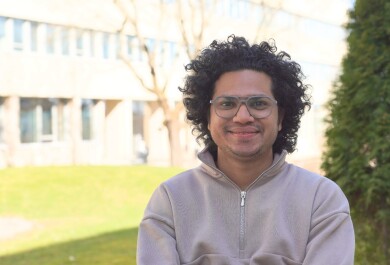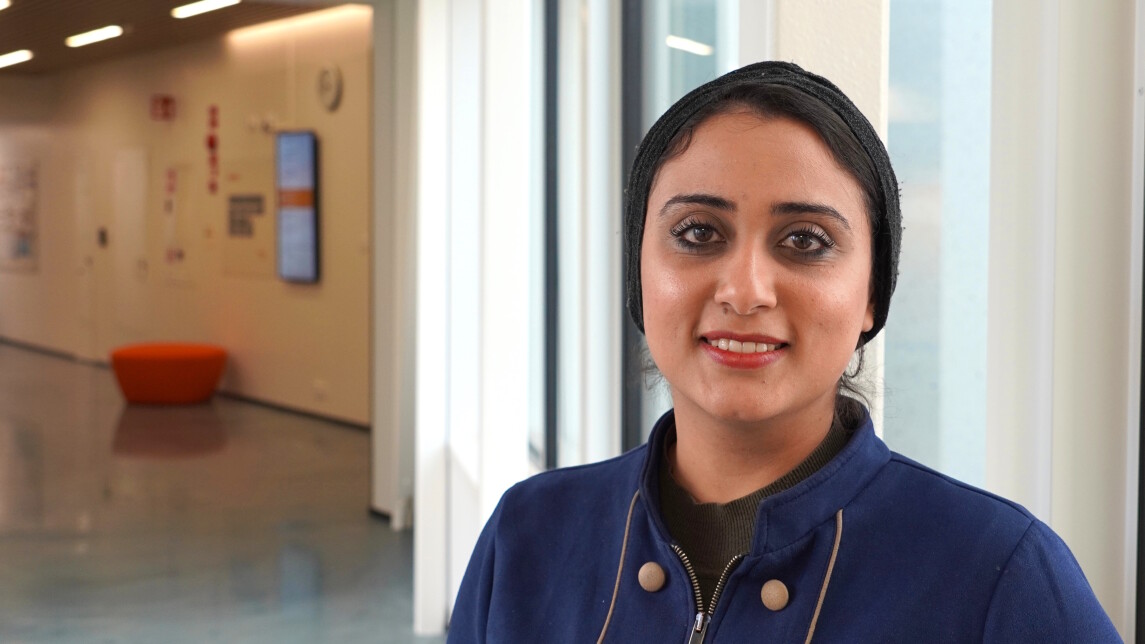
Senior Researcher Baraa Abuasaker is researching novel ways to treat melanoma patients. Abuasaker’s research focuses on studying TAK-981, an inhibitor that targets a cellular process known as SUMOylation.
Baraa Abuasaker, senior researcher at the University’s MSCA-co-funded SYS-LIFE programme, is studying possible novel treatment strategies for metastatic melanoma. Abuasaker has years of experience in cancer research:
“I did my master’s degree and my PhD in Barcelona, Spain, and specialised in developing a novel treatment for pancreatic and colorectal cancer. During my PhD I was able to register patents for two compounds that target a specific mutation, which has high prevalence in these cancers.”
During her time in Barcelona, Abuasaker developed different biological strategies for studying the effects of the novel compounds on colorectal and pancreatic cancer. Now she has turned her focus to melanoma, particularly metastatic melanoma.
Inhibiting the growth and treatment resistance of melanoma cells
According to Abuasaker, melanoma is one of the highest prevalence cancers in Europe, and especially in Finland. Melanoma can be detected in its early stages, but once the disease progresses, the melanoma cells gain more features and become able to migrate to other parts of the body. In melanoma’s case, the main target of these metastatic cells is the brain.
Abuasaker’s current research examines melanoma cells with BRAF mutation, which is known to drive tumour growth and contribute to resistance to certain treatments. Her work focuses on understanding how SUMOylation, a natural protein modification process, may influence cancer progression.
In addition to being responsible for tumour growth, BRAF mutation also causes the cells to develop resistance to some treatments, like chemotherapy. SUMOylation is also suggested to play a role in tumour growth and treatment resistance:
“In the project I’m currently working on, our target is to study an inhibitor called TAK-981. It targets SUMOylation in melanoma cells. We are studying if by targeting this process in BRAF mutated melanoma cells, we could inhibit the cell proliferation and make the cells less resistant to chemotherapy.”
Future therapy use requires deep understanding of the effect of TAK-981
Abuasaker is investigating the effect of TAK-981 inhibitor on BRAF mutated commercial and primary cell lines. She is also testing the inhibitor on patient biopsies received from clinics:
“We process them here in the lab and develop organoids, which means that we’re growing these cells in a 3D culture. This enables these cells to grow together multidimensionally, as they would be in the body.”
This allows Abuasaker to study the effect of TAK-981 in various models, using different concentrations of the drug at different conditions. She is also looking at the proliferation rate of the cells to see how far they will grow after being treated with TAK-981, as well as studying different intracellular mechanisms that can be affected by treatment with TAK-981.
“The whole interaction profile of different proteins inside the cells will be studied and examined in order to understand the molecular behaviour of TAK-981 in melanoma cancer cells. It will also help us understand how we can benefit from this information in order to decide the future combined therapy which gives more promising results in melanoma cancer patients.”
Providing hope through knowledge
Abuasaker wants to increase the lifespan of cancer patients. She hopes to explore the possibility of a combined therapy method, in which TAK-981 would be used in tandem with other methods to fight against cancer cells. She wants her research to provide hope and help for people affected by cancer:
“We can give hope to melanoma patients, and other cancer patients as well. This topic is one of the most important health topics and we need to put all of our efforts into it to find solutions for people worldwide. We really need to develop this field, because anyone anywhere can be affected by cancer.”
SYS-LIFE, Systemic Approaches to Improve Cardiometabolic and Brain Health during Lifespan is Marie Skłodowska-Curie postdoctoral programme cofunded by University of Turku and European union (project 101126611) in 2023–2028. SYS-LIFE supports excellent international early and mid-career stage researchers by providing 22 three-year bottom-up project grants in cardiometabolic and brain research, complemented with training and possibility for secondments outside academia. SYS-LIFE partners include Turku University Hospital, Business Turku, Siemens Healthineers and Ghent University.
Text and photo: Iida Taskila