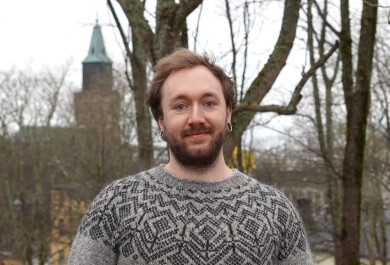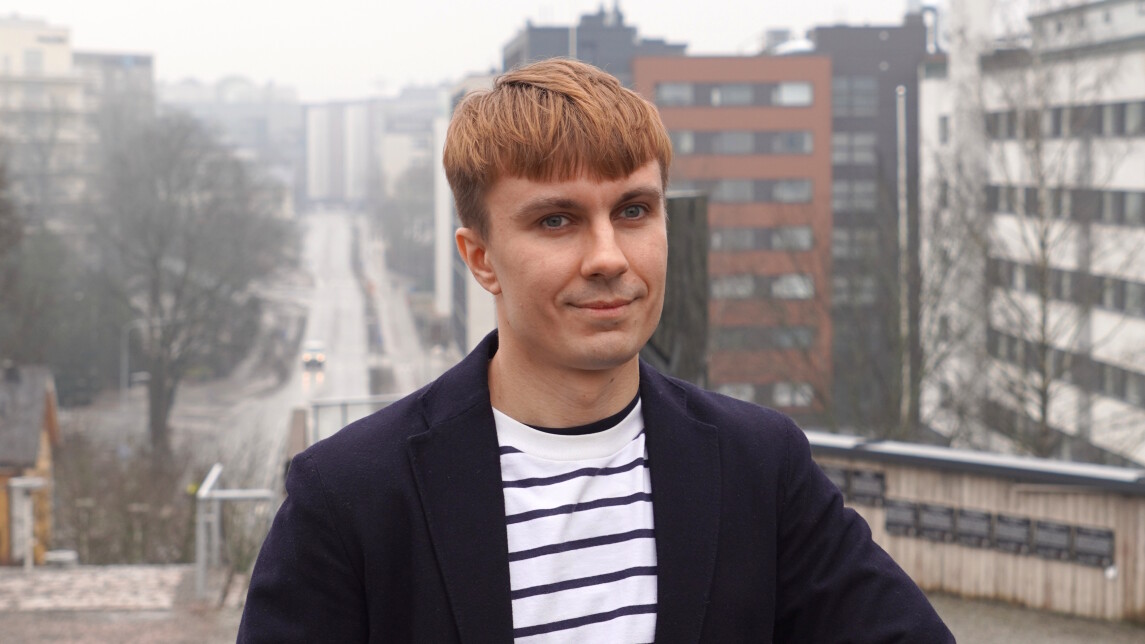
Postdoctoral Researcher Usevalad Ustsinau is working at the Turku PET Centre to explore the interplay between ageing, obesity, and type 2 diabetes, and how they affect metabolism in the liver, heart, and adipose tissues. His findings could lead to a better understanding of metabolic health and how it can be maintained in different circumstances.
Usevalad Ustsinau is one of the Postdoctoral Fellows at the University’s MSCA‑co‑funded SYS‑LIFE programme, which focuses on cardiometabolic and brain health. Ustsinau is studying metabolic health in populations affected by ageing, obesity, and type 2 diabetes.
Ustsinau arrived in Turku in November 2025. His decision to apply for a postdoctoral fellowship in Turku was no coincidence, as he was already very familiar with the Turku PET Centre:
“I’ve known about Turku PET Centre since my first steps in science. My earliest scientific ideas and research questions were found on the PET Centre’s website, which is one of the most useful handbooks for anyone working with, studying, or researching positron emission tomography.”
Ustsinau has enjoyed working in Turku, and finds the international atmosphere at the University to be enriching and inspiring:
“In the group that I work with, there are many people from different parts of the world. They have different ideas, perspectives, and views, and they have studied all around the world. It’s a melting pot of ideas, which is what real science should be.”
Studying the interplay between organs and health conditions
Before his time in Turku, Ustsinau did his PhD in Vienna, focusing on nutrient metabolism from a PET perspective. At this time, Ustsinau’s research included the effects that obesity and type 2 diabetes have on metabolism.
In Vienna, Ustsinau also started as a Postdoctoral Researcher funded by MetAGE, which is a network of researchers focusing on healthy ageing. The aspect of ageing was introduced to his research during this time:
“After my PhD, I had expertise in nuclear medicine, obesity, and diabetes. With MetAGE, we added another layer, ageing. All these processes – ageing, diabetes, and obesity – interplay with each other. Sometimes ageing causes obesity and diabetes, and sometimes obesity and diabetes actually cause early stages of ageing.”
It is Ustsinau’s goal to learn more about the interplay between these processes, which is why he is continuing working on the topic in Turku, while also continuing his collaboration with MetAGE.
Ustsinau’s project is based on the idea of using metabolic radiotracers [18F]FDG and [18F]FTHA to explore glucose and fatty acid metabolism in the liver, heart, and adipose tissues. The liver–heart–adipose tissue axis, as Ustsinau calls it, is a group of interlinked organs that regulate energy metabolism and are among the main consumers of glucose and fatty acids. Ustsinau aims to understand the metabolic interplay between these organs, as well as the ways they are affected by ageing, obesity, and type 2 diabetes.
Healthy ageing, health span, and lifespan
Previous studies on animals have shown that metabolism changes with ageing. For example, in the myocardium in fasting condition glucose metabolism goes down while lipid metabolism goes slightly up. This has been tested and proven in animal models, but there’s no certainty that it is true for humans:
“Changes in metabolism have been studied on animals, but so far, there has not been much research done on a clinical level and employing advanced nuclear medicine techniques. I would like to gather as many PET datasets as possible and unite them to see if they are homogenous, and see if I can prove or disprove on humans what has already been confirmed with animals.”
By finding out more about the human metabolism, Ustsinau is hoping to help people take good care of their metabolism, and thus increase their lifespan, as well as their health span:
“Lifespan refers to how many years an average person can live. In many places it’s already as high as 80 or even 90 years. Usually, however, the last 10 to 20 years of a person’s life are less active, and they may already need support during them. This is what health span refers to: how long you can live up to normal life standards on your own, without support.”
A long lifespan is best accompanied by a long health span, which is why studying metabolic ageing is important. Gaining knowledge about metabolism lets us know how it should be taken care of in different conditions and at different stages of life.
“Ageing affects everyone. I believe our findings will help people by providing knowledge on how to keep the body active, ensure good nutrition, and keep the metabolism in good condition. This can extend the health span and help people have more healthy years in front of them.”
SYS-LIFE, Systemic Approaches to Improve Cardiometabolic and Brain Health during Lifespan is Marie Skłodowska-Curie postdoctoral programme cofunded by University of Turku and European union (project 101126611) in 2023–2028. SYS-LIFE supports excellent international early and mid-career stage researchers by providing 22 three-year bottom-up project grants in cardiometabolic and brain research, complemented with training and possibility for secondments outside academia. SYS-LIFE partners include Turku University Hospital, Business Turku, Siemens Healthineers and Ghent University.
Text and photo: Iida Taskila