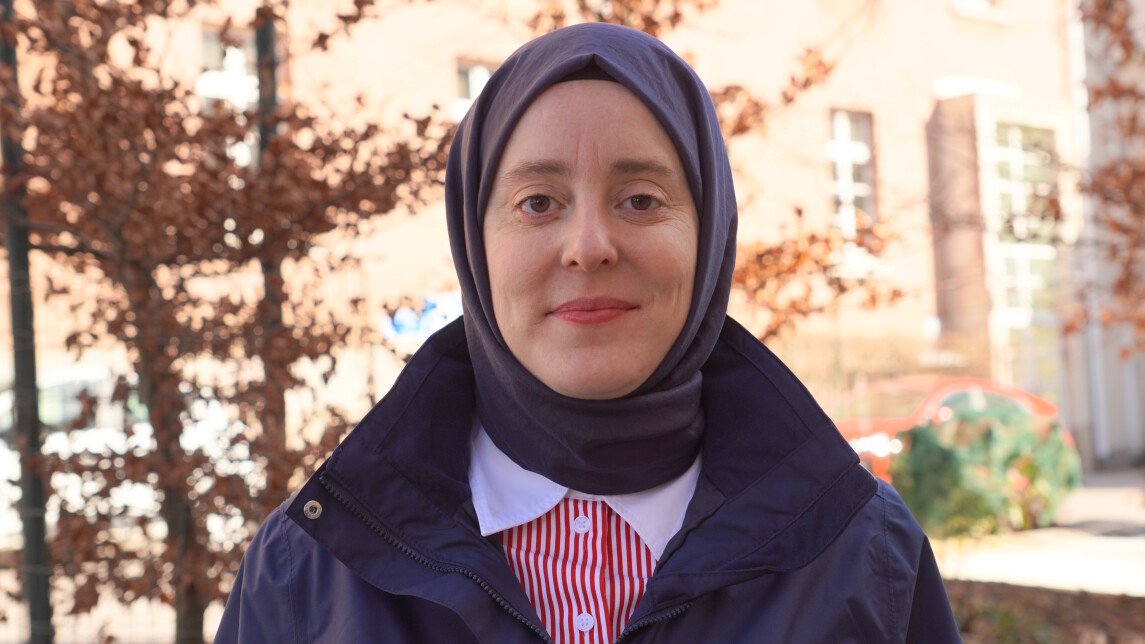
Hüsna Kaya Kacar, Postdoctoral Researcher at the University’s MSCA‑co‑funded SYS‑LIFE programme, answers ten questions about her research on maternal diet.
1. What are the aims of your research?
I aim to better understand how nutritional exposures during pregnancy, including eating behaviours, diet quality, and dietary patterns, may influence children’s long-term health and developmental outcomes. I also investigate how maternal eating behaviours shape children’s eating behaviours and whether the pregnancy or postpartum period is more important in shaping these behaviours.
2. How did you end up studying maternal diet?
I used to work as a dietitian in a hospital, where I supported pregnant women with gestational diabetes. During that time, I witnessed and came to appreciate the powerful role that diet plays in regulating blood glucose levels and influencing both maternal and infant health outcomes. This experience motivated me to pursue postgraduate studies in the UK, focusing on maternal nutrition. Since then, I have continued working in pregnancy nutrition, particularly on food insecurity and excessive gestational weight gain.
I am currently involved in a mother–child clinical study at the Early Nutrition and Health Research Group, where mothers were recruited during pregnancy and their children have been followed up to the age of six.
3. How did your previous work on obesity, weight management, and food insecurity shape your current research direction?
Through my previous work, I came to understand that dietary factors are influenced not only by individual choices but also by broader social and economic conditions. For example, food insecurity can limit access to healthy foods, contributing to challenges in both weight management and overall health. This naturally led me to focus on maternal nutrition, as pregnancy is a particularly important period during which nutritional requirements increase and external factors can have long-lasting effects on both the mother and the child.
4. What types of data or populations do you study?
I study data from a longitudinal mother–child cohort that was originally designed as a double-blind, placebo-controlled randomised trial. The dataset includes mother–child pairs selected from an initial cohort of pregnant women. The study began at the University of Turku and Turku University Hospital in autumn 2013, when women in early pregnancy were recruited, and the 5–6-year postpartum follow-up visits were completed in 2023. The research collected a wide range of data, including information on maternal health, dietary habits, and child neurocognitive development.
5. What inspires you most about this research topic?
Understanding how early nutritional exposures during pregnancy shape a child’s long-term health and developmental outcomes inspires me the most. I am particularly motivated by the longitudinal nature of the work, following mother–child pairs from pregnancy through early childhood. This allows for a more meaningful understanding of developmental pathways rather than isolated associations at a single time point. It provides a stronger basis for identifying patterns that are consistent over time and potentially relevant for early prevention strategies.
I also find it compelling that this research has clear translational relevance. Studying maternal diet can directly inform practical pregnancy guidance that supports healthier outcomes for children, making the work both scientifically meaningful and socially impactful.
6. Why is it important to study the influence of maternal diet on children?
Pregnancy represents a sensitive developmental window during which nutritional exposures can have lasting effects on growth, physiology, and disease risk. Maternal diet not only supports foetal development in the immediate sense but may also shape long-term health trajectories. Studies show that prenatal nutrition is linked to outcomes from birth weight and brain development to a person’s later risk of obesity, diabetes, and cardiovascular disease. Understanding these relationships is therefore essential for identifying modifiable factors that contribute to lifelong health.
7. How does maternal diet during pregnancy affect the neurodevelopment of the child?
The foetus relies entirely on the mother for nutrients that support nervous system development. Key nutrients including folate, iodine, choline, iron, and omega 3 fatty acids are critical for neural tube formation, brain growth, myelination, and synapse development. Deficiencies can have lasting effects on cognition, attention, and learning. Overall diet quality also matters. Diets rich in fruits, vegetables, whole grains, and healthy fats are linked to better neurodevelopmental outcomes.
Previous work from the Early Nutrition and Health Research Group found that higher maternal diet quality was associated with better child language development. Similar benefits have also been observed with higher maternal fish consumption and improved child neurodevelopment.
8. What are other major risk factors that can affect a child’s neurodevelopment besides maternal diet?
A child’s neurodevelopment can be influenced by many interacting factors both before and after birth. Major risk factors include genetic and epigenetic conditions, maternal illnesses and infections during pregnancy, exposure to environmental toxins such as lead, mercury, tobacco smoke, and air pollution, as well as prematurity, low birth weight, and birth-related complications that reduce oxygen supply to the brain. Prenatal exposure to substances such as alcohol, nicotine, and drugs can also impair brain development.
In a study conducted by our research group, gestational diabetes mellitus was associated with weaker expressive language skills in children, while higher maternal adiposity was linked to poorer cognitive, language, and motor outcomes.
9. How can your findings be translated into public health policies and practical guidelines for families?
Our findings can inform public health policies by highlighting modifiable maternal and early-life factors that shape child neurodevelopment. Evidence linking gestational diabetes, maternal adiposity, environmental exposures, and nutrition to children’s cognitive and language outcomes may support earlier screening, targeted nutritional counselling, and preventive maternal healthcare during pregnancy.
These findings can also guide clearer recommendations for families and healthcare professionals, including promoting healthy maternal diet and weight management, reducing harmful environmental exposures, and raising awareness of the long-term impact of early-life conditions on child development.
10. What unanswered questions remain in this field?
Despite growing evidence on the importance of maternal diet, many questions remain. We still do not know whether there are critical periods when diet has the greatest impact. It is also unclear how long these effects last and whether they extend into adolescence and adulthood. Another key question is how a mother’s diet shapes the baby’s gut microbiome and how this influences brain development and behaviour.
Researchers also need to better understand how genetics interacts with nutrition, since the same diet may affect children differently. Finally, most studies have focused on high-income countries, leaving major gaps in knowledge about maternal nutrition in low- and middle-income settings.
SYS-LIFE, Systemic Approaches to Improve Cardiometabolic and Brain Health during Lifespan is Marie Skłodowska-Curie postdoctoral programme cofunded by University of Turku and European union (project 101126611) in 2023–2028. SYS-LIFE supports excellent international early and mid-career stage researchers by providing 22 three-year bottom-up project grants in cardiometabolic and brain research, complemented with training and possibility for secondments outside academia. SYS-LIFE partners include Turku University Hospital, Business Turku, Siemens Healthineers and Ghent University.