Think about a nice place. What sensations do you feel? What kind of emotions fill your body? Concentrate on the sensory experiences and memories. What do you smell, hear and see? What do you feel on your skin?
When asked to think about a nice place, I bet many think about a place that they already knew in their childhood. Something where they felt safe, where they had a lot of emotional and sensory experiences that now can be recalled. In that place they were surrounded by family members, sometimes friends. For some people, the place was their own, hidden from others and that made it precious.
In my research I study the relationship between Finnish people and the Baltic Sea. The research shows that nostalgia has a big role in forming the relationship with the sea and other places in nature as well. Nostalgia is longing for a place that does not exist anymore as it once did. The place has changed or vanished, people who once were there have changed or deceased. It is not possible to sense the place as it once was anymore. Nostalgia boosts the importance of the place and connects us to places of our own. The connection to places in nature is important in a wider sense as well: if we have a good relationship with the environment, we wish to keep it in good shape and want to care for it. As said, the good relationship with our own place(s) helps us to fight against or at least adjust to the global phenomenon known as climate and environmental change.
The relationship with nature can be strengthened throughout life by being in nature, feeling it, doing something in nature that leaves a mark in one’s memory, and spending time in nature with family. When we think about what kind of environment we’d like to have in the future, we should look back in time as well, learn from history when thinking about the possible futures of our own places.
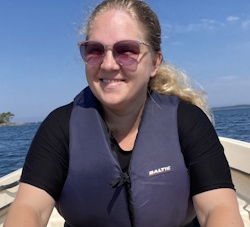
Katariina Murtolahti
Writer is a PhD researcher in Ethnology at the University of Turku. Her research interests are human-nature relationship, oral history as a method and theory and feelings, emotions and affects in cultural studies. Her goal is to save the World.
References:
Becker, Tobias & Trigg, Dylan. 2025. Nostalgia and Affect. In Becker, Tobias & Trigg, Dylan (Eds.) The Routledge Handbook for Nostalgia (p. 1-12). London and New York: Routledge. https://doi.org/10.4324/9781003364924
Enges, Pasi, Heimo, Anne, Mahlamäki, Tiina & Timo J. Virtanen. 2017 (3rd edition). Tila, paikka ja ympäristö. In Kouri, Jaana (Ed.) Askel kulttuurien tutkimukseen (p. 133–150). Turku: Turun yliopisto
Korkiakangas, Pirjo. 1996: Muistoista rakentuva lapsuus: Agraarinen perintö lapsuuden työnteon ja leikkien muistelussa. Helsinki: Suomen muinaismuistoyhdistys. https://jyx.jyu.fi/jyx/Record/jyx_123456789_94290
Magga, Päivi. 2022. Saamelaisten eletty, koettu ja kerrottu paikkatieto.Vuomaselän siidabiografia. In Savolainen, Ulla & Taavetti, Riikka (Eds.) Muistitietotutkimuksen paikka (p. 218–242). Helsinki: Suomalaisen kirjallisuuden seura
Murtolahti, Katariina. 2026. Versatile Relationship with the Changing Baltic Sea. [Under peer review for Budkavlen]
Pärjälä, Eeva & Pöllänen Sonja 2022. Kehon kertomaa: Paikkaan kiinnittymisestä tietäminen. In Kinnunen, Taina & Venäläinen Juhana (Eds.) Kulttuurintutkimus tietämisen tapana (p. 375–405). Vastapaino
Vehkalahti, K. & Jouhki, E. 2022. Lapsuuden ja nuoruuden historian näkökulmia muistitietotutkimukseen. In Savolainen, Ulla & Taavetti Riikka (Eds.) Muistitietotutkimuksen paikka (p. 366–391). Helsinki: Suomalaisen kirjallisuuden seura