Imagine a classroom where each student's lessons are tailored to their performance in the class, and where timely intervention from teachers is provided when needed. That’s where Knowledge Tracing (KT) comes into the picture. KT models are like intelligent systems that track how students are performing over time with different skills, identifying when they are struggling, when they need assistance, and what they need to study next to improve the skills they lack.
What exactly is Knowledge Tracing?
KT models are a set of algorithms that understand the knowledge states of students through their interaction with the system. The data related to the exercises or from the tests is collected for each student from the backend database. These data then undergo data cleaning, where missing values and data ambiguity are addressed. Further, the cleaned data are being processed into the selected models, which can understand the current knowledge state of the student and can also predict the possible future outcomes, including drop-out rates as well.
The selection of models for KT depends on the needs and end goal to be achieved. The KT models vary from the early Bayesian models, which are very simple to understand, to the recent machine learning and deep learning models that can spot more complex patterns. For my research, I am training and testing my models based on the recent machine learning and deep learning models to predict the knowledge states of the student, as they are very good at capturing the trends.
Even these KT models can be integrated with the Large Language Models (LLMs), so with the power of predicting the student states, and with integration of LLMs, we can probably make an intelligent feedback system which can even guide the students as per their needs, where student needs to focus. Which is a very cool thing that I will work on later in my research.
I am currently working in the VILLE learning platform, which is the place where I get my data from for these KT models. The learning platform has been used by 70% of the primary education schools in Finland, which makes it an apt choice for carrying out this research.
Regarding my contribution to this research, I am training and testing different KT models that will be based on the data available from the VILLE learning platform. Also, I plan to integrate these models into the learning platform as well as the intelligent feedback system after carrying out the appropriate research.
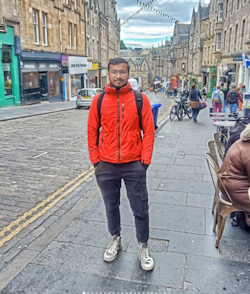
Prince Adhikary
I am doing my PhD in Learning Analytics at the Turku Research Institute for Learning Analytics (TRILA) in Finland. My work is all about exploring how artificial intelligence can help students learn better and exploring the future direction of learning. If you fancy, you can also read and get to know more about my work from the preprint for my first article from my PhD, which will be published soon.