Social investments and interventions, making informed choices between them, and monitoring and adapting the effectiveness of interventions throughout their life cycles. This summarises the new welfare state model for Finland, which is more sustainable from both economic and social perspectives. It was created by INVEST, a research flagship led by the University of Turku.
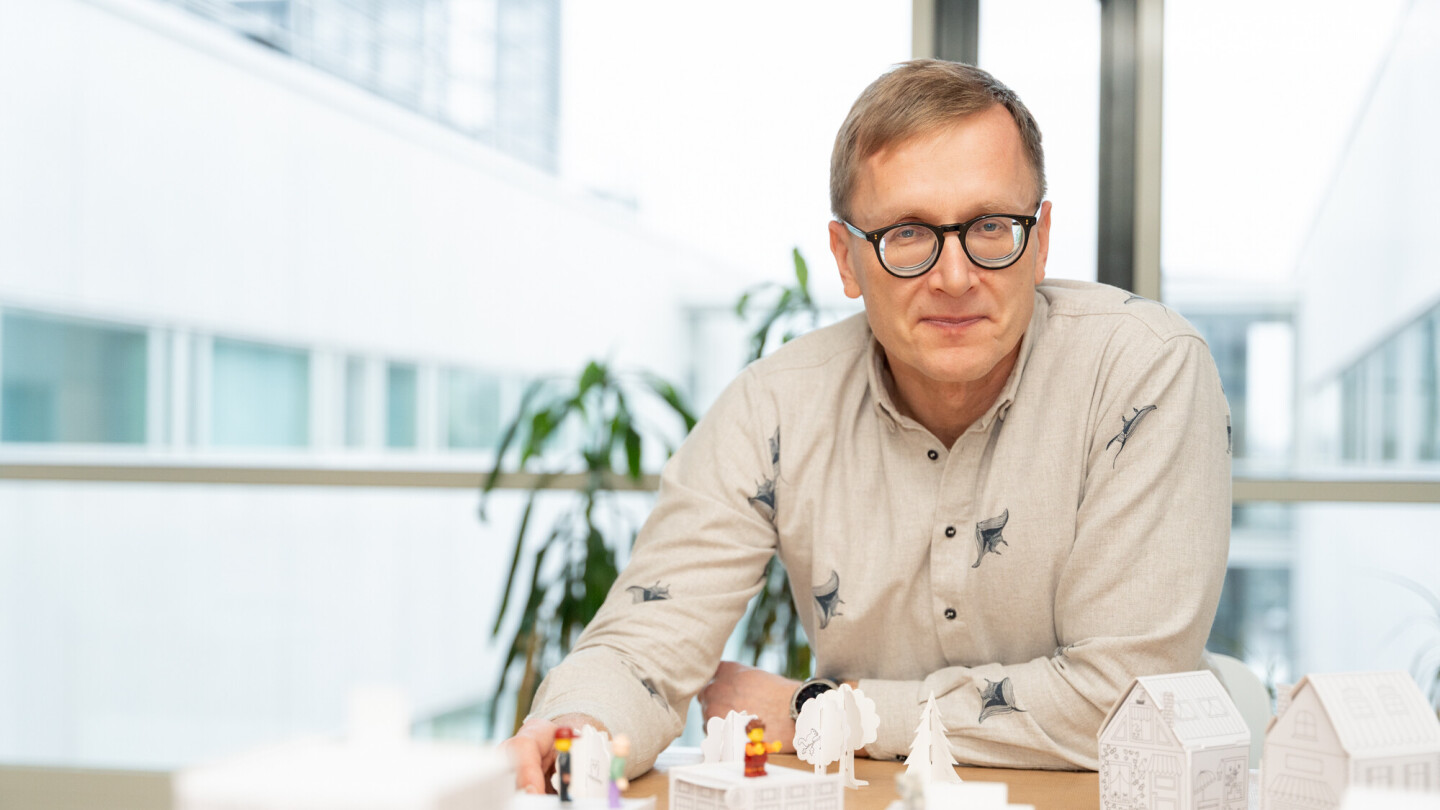
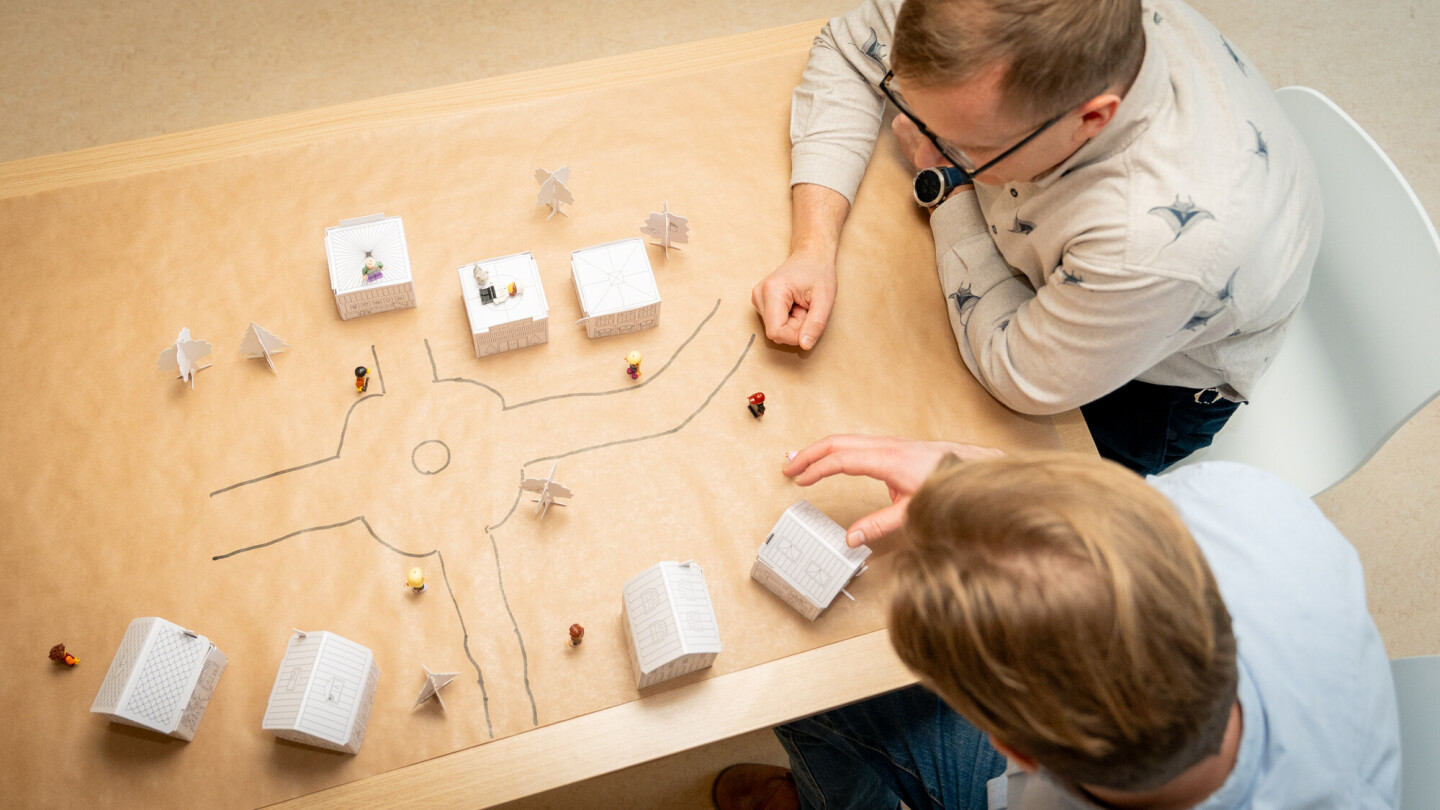
Professor of Sociology Jani Erola and Doctoral Researcher Markus Laaninen are sitting in the break room of the INVEST Research Flagship Centre at the University of Turku. The figurines on the table inspire the duo to consider the impact of a child's age when they start daycare or school, whether they attend school with children from similar or different family backgrounds, and the importance of education for their future.
The discussion quickly shifts to researched information on the impact of education. The focus is on how society can influence the lives, career success, and productivity of young people from different backgrounds by investing in education — consequently improving the well-being of society as a whole.
This, along with hundreds of other studies, has formed the basis of the work that the INVEST Flagship, led by Erola, has been carrying out since 2019 to find a more effective welfare state model for Finland, and potentially for the other Nordic countries and Europe as a whole.
Radical idea combines investment and intervention
INVEST's full name, Research Flagship Centre for Inequalities, Interventions and New Welfare State, reflects what the research consortium funded by the Research Council of Finland is aiming to achieve. The aim has been to create a new welfare state model, develop interventions to support its implementation, and find ways to reduce inequalities.
The fruits of years of work have been compiled into a book called Beyond the Nordic Welfare State – Extending Social Investments with Interventions, which was published in February 2026 and was edited by Professor Erola and Professor Pasi Moisio and Senior Researcher Johanna Peltoniemi from the Finnish Institute for Health and Welfare.
It is often not possible to assess effectiveness unless preparations have already been made during the implementation phase.
The tools offered by the model are social investments and interventions. Neither of these basic elements is entirely new — social investments became a topic of discussion 20 years ago, and interventions have also been in use for a long time.
“When INVEST was launched, the idea of combining investments and interventions was radical and new. People were not used to thinking about them together,” says Erola.
INVEST combined them in a model that focuses on their systematic use and the continuous evaluation of their effectiveness.
“In the current model, the effectiveness of new policy measures is assessed before implementation. In our model, however, the assessment would extend throughout the measures’ life cycle. The model also allows measures to be changed, enhanced, corrected or even removed based on the information obtained in the assessment. After all, the world keeps changing too,” says Erola.
The change would also present a challenge for training experts. According to Erola, ministries have strong expertise in assessing the impact of measures through literature reviews, for example. However, when impact needs to be assessed over time through data analysis, expert research competence is required.
"It is often not possible to assess effectiveness unless preparations have already been made during the implementation phase," Erola adds.
Quick interventions, far-reaching investments
Erola and Laaninen shed light on the nature of investments and interventions.
Investments are far-reaching decisions that support activities whose benefits will be visible long afterwards. This is the case, for example, with early childhood education, which is studied by Laaninen, and educational choices, which are studied by Erola.
“The idea of investments has been emphasised in the dialogue between economists. Nobel laureate in economics James Heckman has spoken about the importance of early investments because they have time to grow,” says Laaninen.
Interventions, on the other hand, are quick actions aiming to solve an identified problem.
“Rather than asking what caused the problem, the focus of the intervention is on finding a solution. Finland's approach to solving homelessness through intervention is a great example of this. The focus in the intervention is not on why someone has become homeless, but on providing them with housing,” Erola explains.
INVEST itself has a strong expertise in interventions. When the Flagship was launched, two interventions previously developed at the University of Turku became part of the new consortium: the KiVa Antibullying Program and the Strongest Families intervention programme for parents, which is designed to address children's behavioural issues at an early stage. During the flagship period, further interventions have been developed and their effectiveness studied, with proven practices disseminated throughout society.
Although an intervention is a quick fix, its goals are long-term: to eliminate the problem permanently.

"Society provides security when people experience disadvantage"
The traditional welfare state model is based on compensation. It provides support in situations where people are facing challenges. Its tools have included unemployment benefits and a health insurance system.
"The traditional model has very strict eligibility criteria and rules around how support is provided. For example, eligibility may be based on whether or not someone has paid unemployment insurance or pension contributions. The investment and intervention models do not have the same strict conditions," says Erola.
The new model does not completely remove the insurance-based system. The effective parts are still included.
“The logic is the same in the new model: society provides security when people experience disadvantage. This promise is still relevant," says Erola.
There is no conditionality attached to interventions, the decisive factor is that the person experiences a problem.
However, the new model takes a different approach. The focus has shifted towards proactive action: the aim is to prevent social risks before they arise rather than correcting them afterwards.
“Adopting the intervention model changes the philosophical basis for action: there is no conditionality attached to interventions, the decisive factor is that the person experiences a problem," says Erola.
A full understanding of the entire process, from causes to effects, and which parts of that exactly should be prevented, is key to everything. Erola highlights how studies show that single parents are over-represented among families with children experiencing poverty.
“But we do not want to ban divorce, we want to eliminate poverty among families with children," says Erola.
Values are also involved in the assessment of impact. In the era of the debt brake, should success be assessed solely on economic factors, or should citizens’ well-being, improved social justice, and other aspects of sustainability be also considered?
A wealth of research data at hand
Erola and Laaninen assure that there is plenty of research data available for informed decision-making. For example, there is clear international evidence of the benefits of early childhood education and care, but it is often the children who would benefit the most who do not participate.
“In Finland, the child home care allowance encourages those in a weaker labour market position to care for their children at home for longer than average,” says Laaninen.
However, international research literature highlights that children's participation in early childhood education from the age of two or three has proven to be the most effective in terms of educational outcomes. Similarly, children with an immigrant background would particularly benefit from learning the language as early as possible.
“My own research shows that children from families with low levels of education would benefit more from early childhood education than others," says Laaninen, and adds that children's participation in early childhood education improves mothers' labour market position.
Implementation of the model depends on politicians
The model has now been published, but the researchers are not yet satisfied. Erola says that the researchers will now actively share information about the model and have already met with representatives of leading political parties. Their next step is to share information to civil servants, legislators, members of the European Parliament, and, of course, ordinary citizens.
The model encourages policy-makers to make more informed decisions on how to tackle an identified problem. Should they choose an investment that will yield net positive benefits in the future, or an intervention that will provide a quick solution? How will the effectiveness of the measure be assessed? Are decision-makers prepared to change policies if they prove to be ineffective?
“As researchers, we can offer guidance on what should be done. For example, the legislative process has not been written in accordance with continuous impact assessment, so a normative change should be made," says Erola. And leaves the ultimate decision to the politicians.
Text: Erja Hyytiäinen
Photos: Suvi Harvisalo
Translation: Mari Ratia