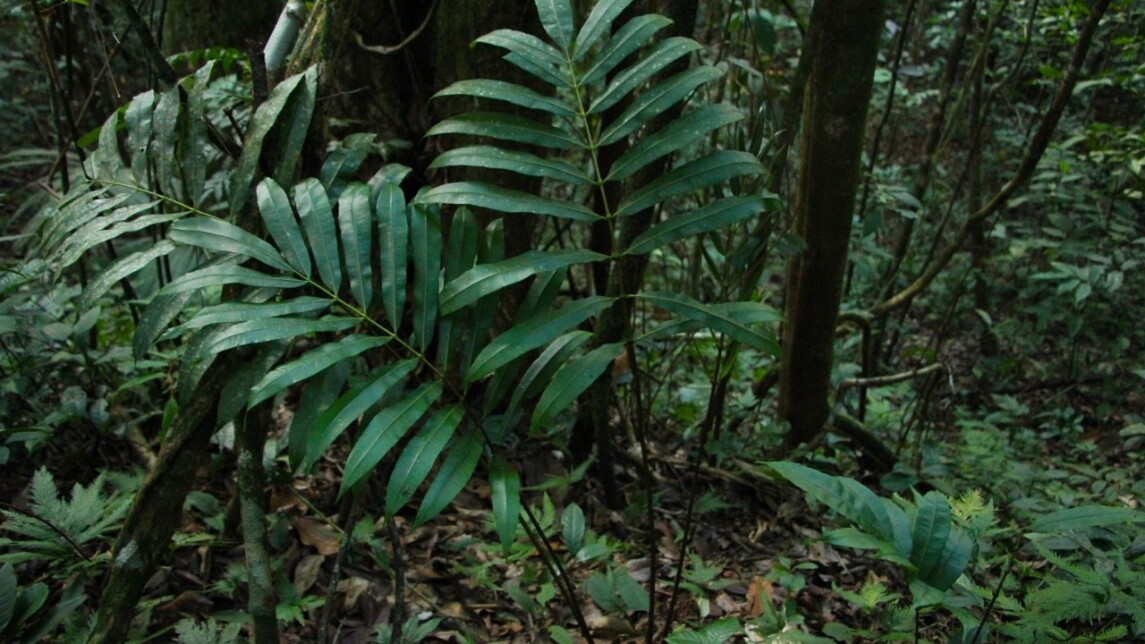
The staggering number of species in tropical rainforests has often been attributed to their long and relatively stable history. A new study shows that many fern species in tropical America have evolved quite recently, even though their evolutionary lineages may be ancient. New species emerged as the species adapted to changing environmental conditions, including those caused by the uplift of the Andes.
How did the rich biodiversity in the tropics originally emerge? One traditional explanation is that tropical regions have provided species with favourable habitats for millions of years. While, for example, Europe’s flora and fauna have been subjected to repeated ice ages, many ancient evolutionary lineages have persisted for a long time in the tropics.
However, tropical regions have not remained unchanged. The uplift of mountain ranges, the drying of coastal bays, and the formation of different types of soil have forced species to adapt to new conditions and have opened up opportunities for the emergence and spread of new species.
Researchers from the University of Turku in Finland and Aarhus University in Denmark investigated the link between environmental changes and the evolutionary history of the Danaea fern genus that grows in tropical America.
“We have conducted extensive research at the University of Turku in order to understand the biodiversity of the Amazon rainforest,” says Professor of Ecology Hanna Tuomisto.
“In the last 25 years, we have discovered and described 47 new Danaea species previously unknown to science, and have clarified the distribution and phylogenetic relationships of the species in the Danaea genus. We have now been able to link this information to the geological and climatic history of tropical America.”
Ancient family, young species
According to the study published in the journal Frontiers in Biogeography, the Danaea genus diverged from its closest living relatives already in the Early Cretaceous period, some 128 million years ago, and the common ancestor of the present-day Danaea species lived around 53 million years ago.
While the genus has a very long evolutionary history, around half of its extant species only emerged within the last six million years.
This relatively recent speciation coincided with significant geological and climatic changes. During the Miocene epoch, the uplift of the Andes reshaped the climate and soil of tropical America, and the vast megawetlands of the western Amazon were drained. At the same time, new landmasses emerged in Central America, enabling species to spread and diversify.
Danaea ferns most diverse in the Amazon
In general, fern species are most diverse in tropical mountain forests. However, in the case of the Danaea genus, the greatest number of species has developed in the Amazon throughout the history of the genus.
The difference could be explained by the living habits of various fern genera.
“Mountain rainforests are home in particular to an abundance of epiphytes—plants that grow on top of other plants. Danaea ferns, on the other hand, grow on the forest floor. These research results are, in fact, similar to those obtained for trees, which are also the most species-rich in lowland rainforests,” says Postdoctoral Researcher Venni Keskiniva from the University of Turku.
Research into different plant groups may therefore reveal quite different responses to the same environment, which may explain tropical biodiversity to some extent.
Adapting to mountainous environments opened up new avenues for dispersal
The study found that Danaea lineages adapted to mountainous conditions began to appear as the uplift of the Andes accelerated around 20 million years ago.
Interestingly, the lineages that had spread into the mountain forests often dispersed to new areas further away from the equator. On the other hand, lineages specialised in the lowland conditions of the Amazon tended to stay put in the Amazon.
“As the plants had already adapted to the cooler climate of the mountains, it may have been easier for them to spread to areas where the temperature differences between the seasons are greater,” says Keskiniva.
The study shows that the dynamic geological history of the American tropics has contributed to the development of the region’s staggering biodiversity. Although the plant lineages in rainforests may be very old, their current species may be surprisingly young.
“The biodiversity in rainforests is the result of a long history, but its formation has also been greatly influenced by events that are relatively recent on a geological time scale,” Keskiniva concludes.