Research Profile
- Consumer-centered food research integrating health, sustainability, and sensory experience
- Strong emphasis on biodiversity-respecting food systems, food choice behavior, and food experience innovation
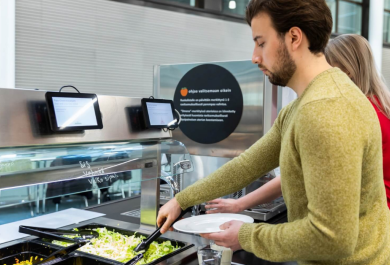
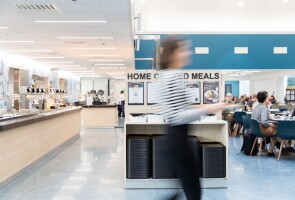
- Experimental research conducted in real-life food environments (e.g. Flavoria Research Platform)
Key Research Themes & Projects
Biodiversity & Sustainable Diets
- BIODIFUL (STN): Norms, leadership, and biodiversity-friendly food choices
- LUKAKER: Preventing biodiversity loss through sustainable food production and food services
- Applying LCA-based tools for biodiversity-respectful food service development
Food Waste Reduction & Smart Food Services
- Dining Flow (Business Finland, KONE ecosystem): Data-driven solutions to reduce food waste in self-service restaurants
Fish & Blue Food Innovation
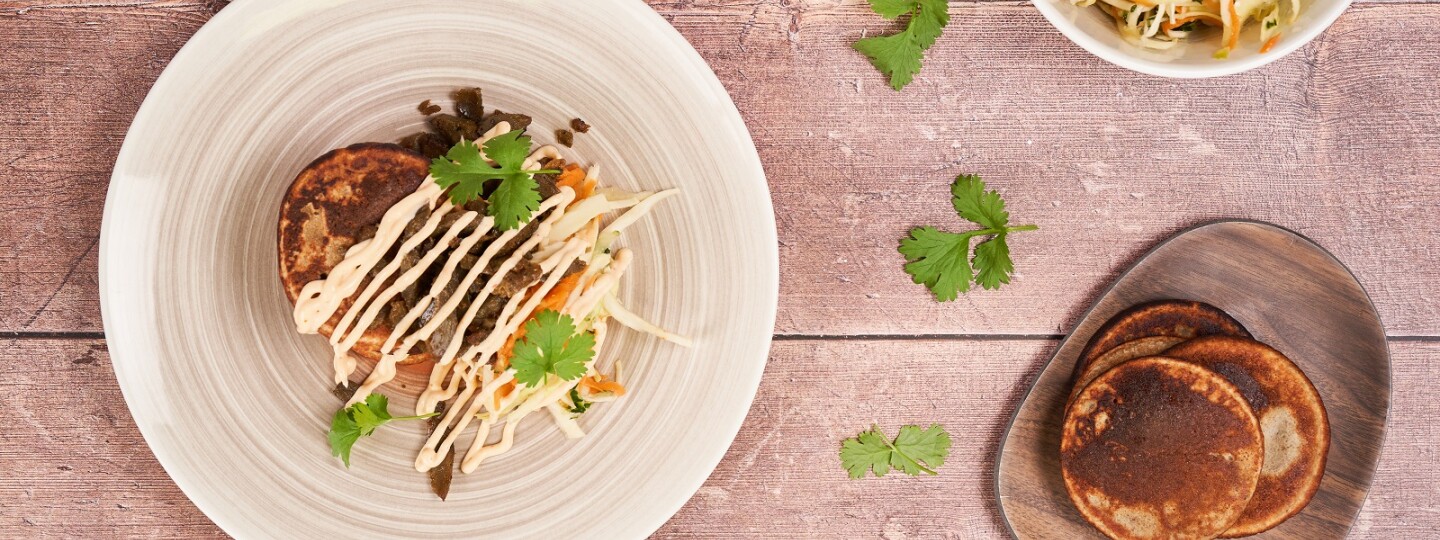
- Blue Products 3.0: Consumer acceptance, sensory quality, and product development for underutilised fish species
Emerging Technologies in Food Experience
- VR and XR applications to enhance local and sustainable food experiences
Output
- Active international collaboration (EU projects, US & European conferences)
- Continuous pipeline of peer-reviewed publications and applied industry outputs
Other Activities
Strong industry integration
- Applied research embedded in food services, restaurants, and food value chains in close collaboration with companies and regional ecosystems.
Policy & regional influence
- Active role in shaping regional food strategies and innovation ecosystems, linking research evidence to decision-making.
Education & skills development
- EU-funded education projects (Erasmus+) developing next-generation competencies in sustainable food systems and food waste reduction.
Public engagement & science communication
- Long-running Science and Gastronomy Food Clubs and widely accessed open platforms connecting researchers, professionals, and citizens.
Interdisciplinary innovation
- Unique combinations of food science, consumer research, sustainability, technology, and arts to create novel food experiences and learning environments.
Research Meets the Public
What it is
- A recurring event series where food science, sensory research, and cultural perspectives meet gastronomy
- Organized by the University of Turku together with partners (Agronomiliitto & Seinäjoki Summer University)
- 8 events per year, hybrid format (on-site + Zoom)
How it works
- Each event is built around a research-inspired question related to food
- Short expert talks (natural sciences + cultural/historical perspectives)
- Guided blind sensory evaluations conducted with participants
- Results are analysed and discussed together, following the logic of scientific inquiry
- Findings are published openly (www.molekyyligastronomia.fi)
Why it matters
- Makes the scientific process visible and tangible to non-academic audiences
- Trains participants in critical thinking and evidence-based interpretation
- Acts as a living laboratory for sensory research, science communication, and public engagement
Current Projects
The scientific and societal goal of the BIODIFUL consortium is to support and enable a shift towards leadership that respects biodiversity at individual, organizational, and societal levels. The project specifically focuses on the food system and the recreational use of nature.
Developing the use of underutilized fish species and creating more sustainable, versatile, and extensive product lines using domestic fish for food products, as well as creating value chains for producing high-value products from domestic fish raw materials.
In the Dining Flow project, the aim is to enhance the experiences of diners and service providers, and increase sustainability in Self-Service Restaurants (SSRs). Concrete data-driven decision support tools and solutions are provided to service providers, combining research on the activities and experiences of diners with data from stakeholders, hardware, and the environment (i.e., buildings and their users).
The "Food Capital" theme is part of Seinäjoki's urban strategy. The project aims to develop local food culture and culinary tourism, constructing a city food strategy for Seinäjoki. Within the food sector, opportunities for growth are explored, focusing on food exports, sustainable food solutions, and fostering collaboration between large and small food companies.
The project aims to enhance the capability of stakeholders in the South Ostrobothnia food chain to address the challenges of the food transition, with a particular focus on the role and opportunities of the food chain in preventing biodiversity loss.
A community engagement project for food and sensory research. A collaborative, open event by the University of Turku, and the South Ostrobothnia Summer University, meeting eight times a year. The group examines food, cooking, and the enjoyment of food from scientific, cultural-historical, and gastronomic perspectives. The evenings are free and open to all interested parties.
An international food innovation, education, and cultural project drawing from local food traditions. The project focuses on developing foods for societal and nutritional needs based on the best culinary and traditional practices, ingredients, and dishes.
The project explores the possibilities of virtual reality (VR) and augmented reality (AR) as part of the food experience. The project is carried out in collaboration with the University of Copenhagen.
The project calculates biodiversity footprints for key domestic food ingredients. Additionally, guidance tools for food industry professionals are developed for planning biodiversity-friendly meals, along with ready-made model meal recipes for food services.
A training program focused on sustainable food systems for secondary education institutions. The project aims to enhance vocational education teachers' capabilities to teach about food from the perspective of green values and sustainable development, covering lifestyle changes, consumption, and production. The project tests and creates training modules and materials openly available for vocational education, aiming to increase awareness, for example, about food waste among the general public.
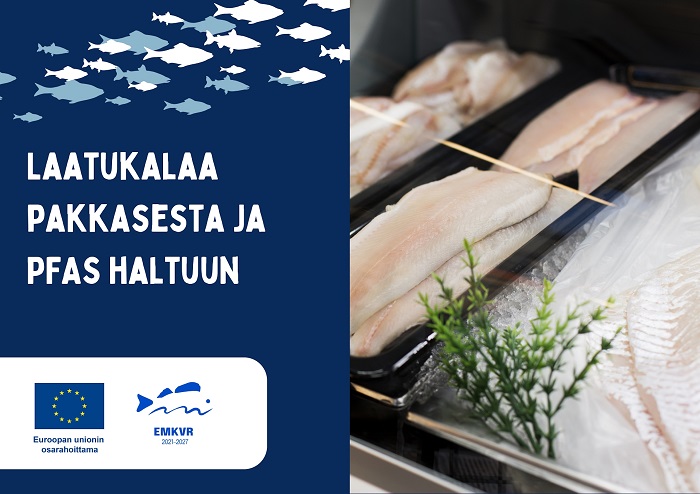
The freshness of fish has always guaranteed quality for the Finnish consumer. However, fish caught on the same day can rarely be found in the store’s refrigerated display case because the logistical chain of natural fish is often very long. However, frozen fillets with considerably longer shelf-life can be made from fresh fish.
PFASs are organic compounds that are harmful to health and slowly decompose. PFASs are becoming a major quality problem for fish in the Baltic Sea, and it can prevent or make it difficult to use the fish. High concentrations of PFASs have been found in many fish species. Most fish in the Baltic Sea are used as raw material for fishmeal, and it is unknown how the compounds can be removed in fishmeal production.
The project will be carried out in two phases, one focusing on freezing fish to balance the supply of domestic fish in the retail market and the other on testing technological ways to remove PFAS from fish using fishmeal as a model.
The project is coordinated by Österbottens Fiskarförbund, co-executed by the University of Turku, Natural Resources Institute Finland, Pro Kala ry, and Aktion Österbotten. The project receives funding from the European Maritime, Fisheries and Aquaculture Fund through the Centre for Economic Development, Transport and the Environment in Southwest Finland. The project will be implemented between 01.05.2024 and 31.12.2026.
The purpose of the WiseFood project is to strengthen the market for resource-wise food products in the Turku region. In order to strengthen the circular economy in the food chain in the Turku region, circular measures must be promoted and the market for resource-wise raw materials and products must be further developed in a targeted manner. The target groups of the project are food chain companies (from a food, service and technology perspective), educational institutions, research, development and innovation actors and networks.
Work Packages
- Innovation Activities of Resource Wise Food Chains
- Business Co-operation Model for Food Education
- Circular Economy Solutions in Food Chains – Case Turku Market Hall
Duration
September 1, 2023 – November 11, 2025
Participants
Main Project: City of Turku
Sub Project: University of Turku
Funding
Total Budget: 522.000 €
EU Funding: 313.000 €
The project is co-funded by the European Regional Development Fund (ERDF).
(Innovation and Skills in Finland 2021−2027, EU regional and structural policy programme)
Biodiversity on the plate (LuLa)
The LuLa-project aims to promote the sustainability of tourism in Southwest Finland by developing the local food chain. Nature is one of the most significant selling points of tourism in the region. However, the food system is the main factor contributing to biodiversity loss in the Archipelago Sea. The LuLa-project seeks to address this issue in collaboration with tourism operators in the Archipelago sea area in Southwest Finland.
The concepts of sustainability and healthiness are rarely associated with tastiness in our minds. Why is that, and how could this be changed? This is the question that the University of Turku’s KURU project aims to address in collaboration with educational and advisory organizations as well as companies.
Project description
The FoRDI – Accelerating RDI in the Food Sector through New Operating Models project develops three operational and collaboration models tailored to the needs of companies, higher education institutions, and other innovation ecosystem stakeholders. These models aim to promote the full utilization of the food sector’s RDI potential:
A food value chain collaboration forum for Southwest Finland, enabling participation from all ecosystem actors to foster and support the creation of new innovations.
An innovation model built on workshop activities, facilitating the development and refinement of new food innovations based on the activities of both companies and researchers.
An operational model that enhances consumer understanding, developed in cooperation with the retail sector.
The project’s activities will enable an increase in RDI investments across the food value chain in line with the targets for Southwest Finland, support the development and adoption of new innovations, increase the number of companies participating in innovation activities, improve the business and export potential of food value chain enterprises, and strengthen collaboration between companies and higher education institutions.
Target groups
The project’s primary target groups are food value chain companies, regional higher education institutions, as well as research and development organizations.
Project duration
The project will be implemented from 1 January 2026 to 31 December 2027.
Project partners
Main project: Business Turku Ltd
Sub-project: University of Turku, Nutrition and Food Research Center
Funding
The project has received funding from the European Regional Development Fund (ERDF). It is part of the Renewing and Competent Finland 2021–2027 EU regional and structural policy programme.
Contact
Ella Koivuniemi
elmkoi@utu.fi
 |  |
Past Projects
In the Hiililounas (Carbon lunch) project, carbon footprint information is calculated for domestic plant-based proteins, and nutritionally balanced lunch dishes with a smaller carbon footprint are developed for mass catering.
Me, My Health & My Food investigates and develops individualized nutrition advice and solutions to promote healthy eating habits. By studying and analyzing personalized factors and data related to consumers, the goal is to support consumers in choosing products and services tailored to their well-being.
The project raises awareness of local food entrepreneurs and preserves traditional foods among citizens. The University of Turku collects and archives food traditions and the region's culinary culture.
Our Research Group
Anu Hopia, Research Director | anuhop@utu.fi
Saska Tuomasjukka, Senior Researcher | sastuoma@utu.fi
Kati Mokkala, Senior Researcher | kamamo@utu.fi
Ella Koivuniemi, Senior Researcher | elmkoi@utu.fi
Ella Simonen, Laboratory Technician | ella.m.simonen@utu.fi
Leo Lepistö, Doctoral Researcher | leo.lepisto@utu.fi
Aino Tarkkio, Doctoral Researcher | aaktar@utu.fi
Nora Logrén, Doctoral Researcher | nodalo@utu.fi
Emma Sivula, Project Coordinator | emma.sivula@utu.fi
Nanna Rintala, Project Specialist | nanna.rintala@utu.fi
Julia Talvitie, Project Worker | julia.talvitie@utu.fi
Johanna Teräsjärvi, Project Coordinator | johter@utu.fi
Marta Stachnik, Project Researcher | marta.m.stachnik@utu.fi
Mitja Jakonen, Project Specialist | mitja.v.jakonen@utu.fi