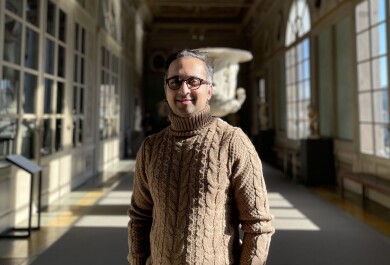
Väitös (lääketieteellinen biokemia ja genetiikka): MSc Mauricio Ramm
MSc Mauricio Ramm esittää väitöskirjansa ”Autophagy and Rab24 in Health and Disease” julkisesti tarkastettavaksi Turun yliopistossa perjantaina 21.8.2026 klo 12.00 (Turun yliopisto, päärakennus, Tauno Nurmela -sali, Turku).
Vastaväittäjänä toimii apulaisprofessori Thomas McWilliams (Helsingin yliopisto) ja kustoksena professori Eeva-Liisa Eskelinen (Turun yliopisto). Tilaisuus on englanninkielinen. Väitöksen alana on lääketieteellinen biokemia ja genetiikka.
Tiivistelmä väitöstutkimuksesta:
Every second, billions of cells in our bodies are quietly taking out the trash. Worn-out proteins, damaged cell structures, and other unwanted material are collected, broken down, and recycled so their building blocks can be used again. This cellular recycling system, known as autophagy, is essential for keeping our cells healthy throughout life. When it fails, waste accumulates inside cells and can contribute to diseases such as neurodegenerative disorders and cancer.
Despite its importance, many of the proteins that coordinate this recycling process remain poorly understood. My dissertation explored one of these proteins, called Rab24, and investigated how cells regulate their recycling machinery.
The first part of my research focused on compounds that influence autophagy. I found that some drugs originally developed for completely different purposes can also affect cellular recycling. These findings help researchers better understand how these compounds work and provide valuable tools for studying autophagy and evaluating whether it can be manipulated for therapeutic benefit.
Next, I investigated where Rab24 is found in the body. By studying tissues from mice at different stages of development and analysing samples from a wide range of human cancers, I created the first comprehensive map of Rab24 protein levels across healthy tissues and many tumour types. The results showed that Rab24 is not equally important everywhere: its abundance varies between organs, changes during development, and differs markedly between different cancers. These patterns provide important clues about where Rab24 may play key biological roles.
Finally, I investigated how Rab24 functions inside cells. I discovered that Rab24 interacts with a molecular "bridge" that helps bringing recycling compartments and the cell's recycling centres together so they can fuse, which allows their contents to be broken down and recycled. This finding reveals how Rab24 contributes to one of the final and most important steps of the cellular recycling process.
Together, these findings improve our understanding of one of the cell's most fundamental housekeeping systems. Although this research does not immediately lead to new treatments, it provides important knowledge about how healthy cells maintain themselves and why this process sometimes fails in disease. In the long term, understanding proteins such as Rab24 may help researchers develop better strategies for treating diseases in which cellular recycling is disrupted, including neurodegenerative disorders and cancer.