Väitös (lääketieteellinen genetiikka): MSc Dhanaprakash Jambulingam
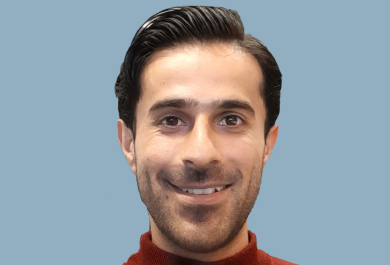
MSc Dhanaprakash Jambulingam esittää väitöskirjansa ”From sequencing to knowledge: Design and Implementation of Tools for Genomic and Transcriptomic Data Analysis and Visualization” julkisesti tarkastettavaksi Turun yliopistossa perjantaina 6.3.2026 klo 12.00 (Turun yliopisto, Biocity, Presidentti-auditorio, Tykistökatu 6, Turku).
Vastaväittäjänä toimii professori, tohtori Veli Mäkinen (Helsingin yliopisto) ja kustoksena professori, tohtori Johanna Schleutker (Turun yliopisto). Tilaisuus on englanninkielinen. Väitöksen alana on lääketieteellinen genetiikka.
Tiivistelmä väitöstutkimuksesta:
The genetic information of every living organism is stored in molecules called DNA, made of small building blocks known as nucleotides. Segments of DNA that provide instructions to make proteins are known as genes. The resulting proteins are the structural and functional unit that does most of the work inside our cells.
Sequencing is the process of reading the order of nucleotides. Advances in technology have made it possible to sequence DNA faster and at lower cost. Researchers can now study the entire genetic information of an organism, or only parts that code for proteins (exons), or measure which genes are active in cells by analysing RNA, a molecule produced when genes are expressed (used).
Sequencing produces an enormous amount of data. Generating the sequence was a challenge a few decades ago, now the challenge lies in analysing the data accurately and consistently. Sequencing analysis is a multi-stage process that requires multiple specialised computational tools, introducing variability and making results harder to replicate.
My doctoral thesis focuses on improving how sequencing data are analysed. I have developed an automated and reproducible analysis framework consisting of three tools named - Kuura, Sampo and BioCPR, to analyse DNA sequencing, RNA sequencing and gene expression data respectively.
Every person’s DNA is slightly different, most differences are harmless but some can increase the risk of diseases, these differences are known as variants or commonly mutations. DNA sequencing analysis tool - Kuura, analyses DNA sequence using different statistical methods at the same time and combines their results to help find reliable variants that can have biological significance.
Even though every cell has the same DNA, not all genes are active at the same time. RNA sequencing helps determine how active different genes are and how their activity changes. RNA sequencing analysis tool - Sampo, helps measure which genes are switched on or switched off and generates visualisations to understand gene activity and how gene expression differs between samples/conditions.
Analysis and visualisation tool - BioCPR, helps identify patterns in gene expression which in turn helps in understanding which genes might be involved in diseases.
Reliable genetic analysis is essential in studying cancer and other complex diseases. As genetic testing becomes more common in healthcare, we need tools that produce accurate and reproducible results. The work done in this thesis helps move research in that direction.
In simple terms, by improving how we analyse genetic data, we move closer to understanding disease mechanisms and developing more personalised healthcare.